News Snacks
This article examines the significant Supreme Court ruling that cancelled bail in the Mandangi murder case, highlighting judicial scrutiny and the pursuit of justice over 16 years.
- By
- BailNow Research Team
- Published
- Reading time
- 4 min read
On this page
Jurisprudential Turning Point: Why the Cancellation of Bail in the 2010 Mandangi Murder Case Matters
The Supreme Court Intervention and Judicial Scrutiny
Political Fallout, Adivasi Activism, and Broader Financial Probes
By Legal Reporter
New Delhi: November 11, 2026:
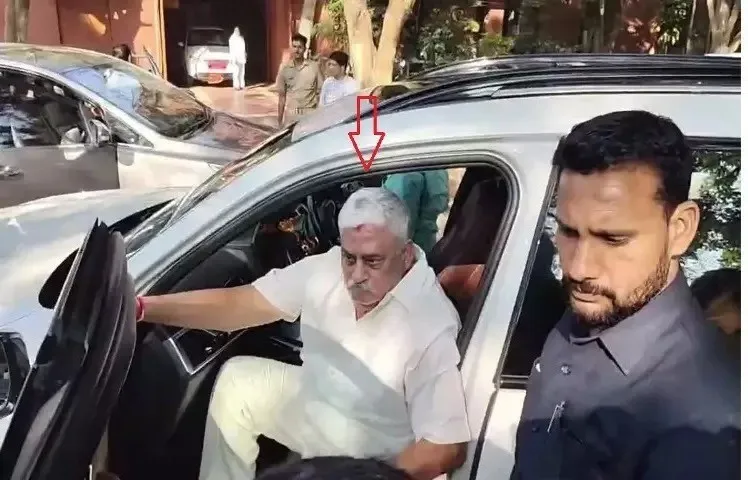
The legal noose has tightened around former Biju Janata Dal (BJD) Rajya Sabha MP N. Bhaskar Rao and three co-accused, who surrendered before a Sub-Divisional Judicial Magistrate (SDJM) court in Odisha’s Rayagada district. The surrender comes in the wake of a definitive Supreme Court ruling that overturned the regular bail previously granted by the Orissa High Court.
This development marks a critical turning point in a 16-year-old high-profile criminal case that has tested the patience of the local tribal community and highlighted the complex intersection of regional politics, judicial oversight, and systemic delays in India’s criminal justice delivery.
The Anatomy of the 2010 Case
The case dates back to December 15, 2010, when Bhagirathi Mandangi, a tribal leader and activist, was abducted and brutally murdered. His charred body—with hands and legs tightly bound—was eventually discovered floating in a reservoir dam across the border in Andhra Pradesh.
According to investigations and legal filings, Mandangi had allegedly uncovered and flagged significant financial irregularities regarding the management of a local temple. His vocal opposition to these irregularities is widely believed to have triggered the conspiracy against him.
For years, the probe conducted by the state machinery faced accusations of inertia. Frustrated by the lack of progress, the victim's family, led by his brother Jagannath Mandangi, persistently fought for accountability. The case gained renewed momentum when the Rayagada SDJM court issued non-bailable warrants against the accused under sections 302 (murder), 201 (causing disappearance of evidence), and 34 (common intention) of the erstwhile Indian Penal Code (IPC).
Judicial Reversal and Escalating Legal Troubles
The central legal debate hinged on the relief granted by the Orissa High Court, which had initially extended regular bail to Bhaskar Rao and other key accused. However, challenging this order, Jagannath Mandangi moved the apex court through a special leave petition.
On October 26, a Supreme Court bench set aside the High Court's order, ruling that the gravity of the charges warranted unconditional surrender. Complying with the directives, Rao, alongside co-accused Epili Sanyasi Raju, P. Dilip Kumar, and G. Krishna Rao, appeared before the Rayagada court, which promptly rejected their fresh bail pleas and remanded them to judicial custody. Of the original six accused, one has passed away, while another remains at large.
Compounding his legal isolation, Bhaskar Rao is simultaneously facing separate investigations by the Economic Offences Wing (EOW) of the Crime Investigation Department (CID). The EOW recently executed raids on his properties in connection with an alleged ₹80-crore embezzlement scandal involving a local truck owners' association, recovering vital documents and cash.
Frequently Asked Questions (FAQs)
1. Who is N. Bhaskar Rao, and why did he surrender?
N. Bhaskar Rao is a former Rajya Sabha MP belonging to the Biju Janata Dal (BJD). He surrendered after the Supreme Court cancelled the regular bail granted to him by the Orissa High Court in connection with the 2010 abduction and murder of tribal leader Bhagirathi Mandangi.
2. What were the specific charges against the accused?
The accused have been booked under key provisions of the erstwhile Indian Penal Code (IPC), specifically Section 302 (murder), Section 201 (causing disappearance of evidence), and Section 34 (common intention).
3. What role did local protests play in keeping the investigation alive?
The Adivasi Mahasangha and local tribal organizations in Rayagada staged massive protests in 2021 and 2023, demanding a transparent, expedited investigation. They alleged that Mandangi was targeted because he spoke out against systemic corruption and temple management irregularities.
4. Are there other criminal charges pending against Bhaskar Rao?
Yes. Aside from the murder case, the Economic Offences Wing (EOW) of the Odisha CID has initiated proceedings against Rao regarding an alleged ₹80-crore financial misappropriation involving a regional truck owners' association.
Related articles
 Regular Bail
Supreme Court Rules: Bail Matters and Criminal Trials Cannot Rest on Personal Notions of Morality; Long Incarceration Favours Relief
The Supreme Court emphasized that personal notions of morality cannot influence bail decisions, safeguarding constitutional protections of liberty in criminal trials.
7 min read
 Regular Bail
Supreme Court Says Liberty Cannot Be Sacrificed Indefinitely Under PMLA, Grants Bail to Bengal Industrialist
The Supreme Court has granted bail to Bengal industrialist Sanjay Sureka, emphasizing that prolonged incarceration cannot infringe upon personal liberty as specified under Article 21, amid serious allegations of money laundering.
10 min read