Supreme Court Denies Bail to Pediatrician in Madhya Pradesh Cough Syrup Case Linked to 26 Child Deaths: A Comprehensive Legal and Medical Analysis
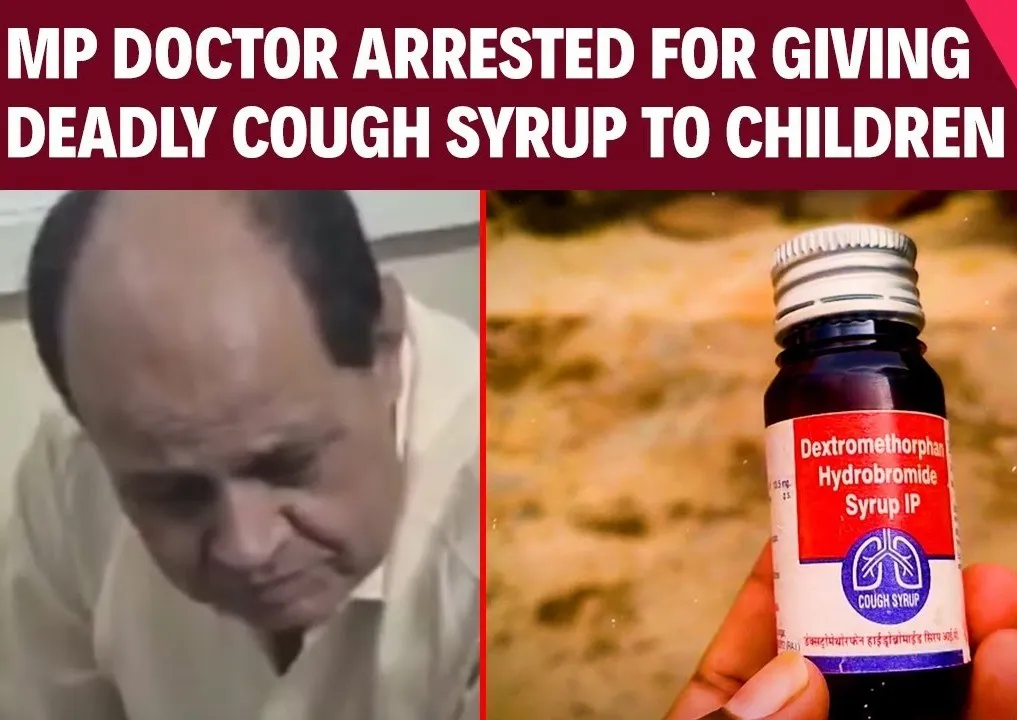
The Supreme Court of India recently denied bail to Dr. Praveen Soni, a pediatrician accused in a case linked to the tragic deaths of 26 children due to contaminated cough syrup, emphasizing the gravity of the situation and accountability in healthcare.
- By
- BailNow Research Team
- Published
- Reading time
- 9 min read
On this page
Supreme Court Highlights Extreme Gravity of Contaminated Cough Syrup Case; Refuses Relief to Accused Doctor
Key Legal Background, Toxicological Findings, and Regulatory Failures Behind the Chhindwara Tragedy
By Legal Editor
New Delhi: November 09, 2026:
The Supreme Court of India has firmly rejected the bail plea of Dr. Praveen Soni, a pediatrician based in Madhya Pradesh’s Chhindwara district, who is facing severe criminal charges in connection with the tragic deaths of 26 children. The case, which revolves around the widespread prescription and consumption of the toxic-contaminated *Coldrif* cough syrup, has ignited intense national scrutiny regarding pharmaceutical safety, regulatory enforcement, medical ethics, and accountability within India's healthcare system.
This comprehensive report examines the Supreme Court proceedings, the toxicological evidence uncovered by investigators, the regulatory guidelines governing paediatric medications, the legal sections invoked against the accused, and broader systemic takeaways to safeguard public health.
1. Overview of the Supreme Court Proceedings
On Friday, a bench comprising Chief Justice of India (CJI) Surya Kant, Justice Joymalya Bagchi, and Justice V. Mohana heard the bail petition filed on behalf of Dr. Praveen Soni. The petitioner, who served as a paediatrician at the Civil Hospital in Parasia, Chhindwara, had approached the apex court challenging the Madhya Pradesh High Court's earlier rejection of his bail application.
Key Observations from the Bench
Gravity of the Offense: The apex court underscored that the loss of 26 young lives is an exceptionally grave matter. The bench explicitly remarked that the professional qualifications of the accused—being a trained medical doctor—make the allegations even more serious, as a physician is bound by a fiduciary duty to protect human life rather than endanger it.
Family Connections and Distribution Channels: During the hearings, the court noted that the stockist and the pharmacy involved in distributing the disputed medicine had close familial ties to the accused (specifically noting that the pharmacy was connected to his wife), pointing toward an intricate nexus that warrants rigorous trial scrutiny.
Framing of Charges: Pointing out that trial charges had only recently been framed, the bench observed that releasing the accused at this nascent stage of trial proceedings would be premature.
Potential for Life Imprisonment: The court cautioned that unless the defence can conclusively demonstrate an absence of requisite knowledge regarding the lethal nature of the administered drugs, the trial could attract maximum penal consequences under culpable homicide provisions, carrying sentences up to life imprisonment.
Ultimately, while dismissing the petition, the Supreme Court granted the defence the liberty to renew its application for bail after a period of one year, subject to progress in the trial.
2. Chronology of the Tragedy and Initial Arrests
The tragic sequence of events unfolded in late 2025 across Madhya Pradesh, leaving communities shattered and sparking urgent investigations by state health and law enforcement agencies.
September 4, 2025: The first child fatality linked to symptoms resembling acute renal failure after consuming *Coldrif* syrup was reported in the Chhindwara district.
Rapid Escalation: As weeks progressed, multiple infants and toddlers presenting with identical symptoms—severe vomiting, anuria (inability to pass urine), and rapid multi-organ failure—were referred from local health facilities to higher medical institutes, including a medical college hospital in Nagpur. Despite intensive medical interventions, the death toll climbed to 26 children, predominantly aged between two and four years.
Filing of Complaints: Acting on internal hospital reviews and distress signals from families, Dr. Ankit Sehlam, the block medical officer, filed a formal complaint leading to a thorough criminal investigation.
October 5, 2025: Dr. Praveen Soni was arrested by local authorities under stringent sections of the law. Subsequent police remands and judicial custody extensions followed as investigators mapped out the distribution trail.
High Court Rejection: The Madhya Pradesh High Court dismissed Dr. Soni's second bail application on June 30, 2026, noting no substantial change in circumstances since his initial rejection in February 2026, leading to the eventual appeal in the Supreme Court.
3. Toxicological Findings: The Diethylene Glycol (DEG) Menace
At the heart of the prosecution's case lies the terrifying discovery of toxic chemical adulteration in the batch samples of the cough syrup consumed by the victims.
What is Diethylene Glycol (DEG)?
Diethylene Glycol is a synthetic, clear, odourless, and sweet-tasting liquid chemical solvent widely utilized in industrial applications such as antifreeze, brake fluids, paints, and plasticizers. Because it is considerably cheaper than safe pharmaceutical-grade solvents like glycerine or propylene glycol, unscrupulous or negligent chemical suppliers have historically substituted it in medicinal formulations—with catastrophic, fatal consequences.
Laboratory Test Results
Alarming Concentration Levels: Forensic laboratory reports cited by prosecutors revealed that samples of the seized *Coldrif* syrup contained **DEG levels of up to 46.28% weight by volume**.
Permissible Safety Limits: The legally permissible safety limit for such impurities in pharmaceutical preparations is virtually zero, capped technically at **0.1%**. The detected levels exceeded safe thresholds by hundreds of folds.
Pathophysiology of DEG Poisoning: When ingested, particularly by young children whose developing kidneys and metabolic pathways cannot process heavy industrial toxins, DEG metabolizes into toxic acids. This results in severe metabolic acidosis, acute kidney injury (AKI), complete renal shutdown, neurological complications, and often irreversible cardiac and respiratory collapse.
4. Prosecution Arguments vs. Defence Counter-Stance
The legal battle in the Supreme Court and lower courts highlights distinct arguments from both sides of the aisle regarding medical liability, manufacturing responsibility, and regulatory compliance.
Prosecution's Contentions
1. Continued Prescription Despite Warnings: Prosecutors alleged that Dr. Soni continued to prescribe the cough syrup despite a clear advisory circular issued on December 18, 2023, by the Central Drugs Standard Control Organization (CDSCO) strictly prohibiting certain fixed-dose combination cough syrups for children below four years of age.
2. Prior Warnings Ignored: Investigators claimed that the doctor had been explicitly cautioned by senior medical professionals in Nagpur regarding the historical dangers associated with DEG-contaminated syrups—drawing chilling parallels to historical tragedies like the 1998 Delhi mass poisoning incident.
3. Commercial Profit Motive: The state presented evidence suggesting a financial arrangement wherein Dr. Soni received a 10% commission on every bottle prescribed, while an adjacent pharmacy operated by his relative earned significant profit margins per unit, incentivizing the continuous dispensing of the lethal medication.
Defence’s Counter-Arguments
1. Lack of Manufacturing Role: Senior counsel appearing for the petitioner argued that Dr. Soni was solely a prescribing physician and had no involvement in the manufacturing, chemical synthesis, or quality testing of the drug, which was produced by Sresan Pharmaceuticals Ltd under a valid state-issued manufacturing license.
2. Absence of a Ban at Prescription: The defence maintained that the specific formulation was not officially banned or recalled by statutory drug authorities at the exact time it was prescribed to the young patients.
3. Medical Negligence Jurisprudence: The defence heavily relied on established legal safeguards, citing the Supreme Court’s landmark 2005 judgment in *Jacob Mathew v. State of Punjab*, which emphasized that criminal prosecution of medical professionals requires robust, unequivocal expert opinion demonstrating gross negligence rather than routine clinical misjudgement.
5. Legal Sections and Regulatory Frameworks Involved
The case involves a multi-pronged legal framework encompassing criminal law and specialized pharmaceutical regulations:
Bharatiya Nyaya Sanhita (BNS), 2023:
Section 105: Culpable homicide not amounting to murder, applied when an act is done with the knowledge that it is likely to cause death, but without the specific intention to cause death or bodily injury likely to cause death. If proven, this carries rigorous punishments up to life imprisonment.
Drugs and Cosmetics Act, 1940:
Statutory provisions regulating the manufacture, sale, and distribution of drugs, penalizing substandard, adulterated, or misbranded drugs that endanger human life or public safety.
CDSCO Guidelines: Central regulatory directives governing paediatric formulations and standard operating procedures for drug safety compliance across Indian states.
6. Frequently Asked Questions (FAQs)
Q1. Why did the Supreme Court deny bail to Dr. Praveen Soni?
Ans: The Supreme Court refused bail due to the extreme gravity of the case, which involves the deaths of 26 children. The bench noted that charges had been framed only recently, close familial links existed between the prescriber and the stockist/pharmacy, and the offense, if proven to involve criminal knowledge, could attract life imprisonment. However, the court granted liberty to renew the bail plea after one year.
Q2. What toxic chemical was found in the cough syrup?
Ans: Forensic testing revealed alarming concentrations of **Diethylene Glycol (DEG)**—up to 46.28% weight by volume against a permissible limit of 0.1%. DEG is an industrial solvent used in antifreeze and brake fluids that causes fatal kidney failure in children.
Q3. Where did this tragic incident take place?
Ans: The tragedy occurred in the Chhindwara district of Madhya Pradesh, where children treated at local facilities (including the Civil Hospital in Parasia) developed acute renal failure after consuming the contaminated medication.
Q4. What defence arguments were raised by the accused doctor?
Ans: The defence argued that Dr. Soni was merely a prescribing doctor and not the manufacturer of the drug, that the medicine was produced under a valid manufacturing license, and that criminal prosecution of doctors requires careful safeguards as outlined in precedents like the *Jacob Mathew v. State of Punjab* case.
Q5. What legal charges does the doctor face?
Ans: He faces charges under Section 105 of the Bharatiya Nyaya Sanhita (BNS) for culpable homicide not amounting to murder, alongside various penal provisions under the Drugs and Cosmetics Act, 1940.
7. Systemic Takeaways and Public Health Implications
The Chhindwara cough syrup tragedy serves as a grim reminder of vulnerabilities in pharmaceutical supply chains and clinical oversight. Key institutional takeaways include:
Stringent Quality Control: Ensuring end-to-end testing of raw materials, particularly excipients like glycerine and propylene glycol, to prevent industrial solvent substitution.
Pharmacovigilance Enforcement: Strengthening immediate reporting mechanisms and enforcing CDSCO bans on unsafe paediatric formulations.
Medical Accountability: Upholding strict ethical and legal boundaries to ensure prescribing practices prioritize patient safety above commercial incentives.
Related articles
 Case Analysis
News Snacks
The Supreme Court revokes the bail granted to Anant Singh in the Dularchand Yadav murder case, emphasizing the need for rigorous judicial oversight of high-profile cases.
3 min read
 Case Analysis
Challenging Arrest & Parallelly Seeking Bail Without Adequate Disclosure Amounts To Abuse Of Process: Supreme Court
The Supreme Court condemned the abuse of the judicial process in bail applications, emphasizing utmost good faith and rejecting forum shopping tactics. This landmark ruling reinforces legal integrity in high-stakes cases.
6 min read