News Snacks
US citizen Matthew Van Dyke has been granted default bail by a Delhi court amid ongoing legal issues related to immigration charges and NIA investigations. The case raises significant questions about the scope of prosecution and compliance for foreign nationals.
- By
- BailNow Research Team
- Published
- Reading time
- 4 min read
On this page
US Citizen Matthew Van Dyke Granted Bail by Delhi Court Amid Ongoing Legal Uncertainty
Default Bail and Immigration Charges Alter the Course of the High-Profile NIA Case
Legal Future Hangs in the Balance as Questions Linger Over Prosecution Scope and Foreign National Compliance
By Legal Reporter
New Delhi: October 23, 2026:
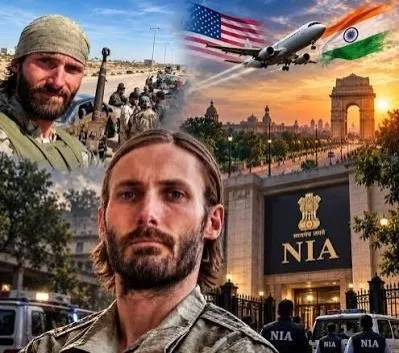
The legal proceedings involving US citizen Matthew Aaron Van Dyke have taken a significant turn following a crucial ruling by a Delhi court. Van Dyke, who was initially detained by the National Investigation Agency (NIA) in connection with an alleged cross-border security and training case linked to Myanmar, was granted default bail. While the decision allows him physical mobility—including permitted travels back to the United States and subsequent appearances before the judiciary—the broader trajectory of his legal accountability continues to spark intense debate and complex procedural questions.
Analytical Overview: The Case, Charges, and Court Rulings
The core of the legal inquiry stems from actions earlier in the year when the NIA arrested multiple foreign nationals, including Van Dyke and six Ukrainian citizens, under initial suspicions pointing toward terror-conspiracy angles and unauthorized military or drone training involving regional armed groups. However, as the statutory investigation window progressed, the investigative agency did not formally invoke stringent Unlawful Activities (Prevention) Act (UAPA) provisions within its initial chargesheet, citing a lack of direct evidence demonstrating that the actions targeted Indian national interests.
Consequently, the legal framework shifted primarily toward violations under the Foreigners Act and passport/immigration regulations rather than direct terrorism charges. Under Indian criminal jurisprudence, the failure to file a chargesheet incorporating heavy felony or anti-terror provisions within the mandated statutory timeframe (typically 60 to 90 days) entitles an accused to statutory or "default" bail. Special Judge Prashant Sharma granted Van Dyke default bail on a personal bond of ₹1 lakh alongside matching sureties.
Subsequent legal developments have seen the courts manage requests regarding his travel, balancing judicial oversight with compliance parameters that require his return for hearings. Even though the immediate threat of indefinite pre-trial incarceration under severe terror statutes has receded due to the omission of UAPA charges in the core filing, legal analysts emphasize that the case is far from closed. The NIA maintains that supplementary investigations remain active, meaning that changing parameters or supplementary evidence collection could introduce further legal dimensions.
Frequently Asked Questions (FAQs)
1. Why was Matthew Van Dyke granted bail by the Delhi court?
Van Dyke was granted statutory default bail because the investigating agency, the NIA, did not file a chargesheet invoking stringent anti-terror provisions (such as the UAPA) within the mandated time frame. Because the charges ultimately centered around immigration and Foreigners Act violations, the court found grounds to grant default bail upon fulfilment of bond conditions.
2. What were the specific conditions tied to his release?
The court permitted default bail upon a personal bond of ₹1 lakh and a surety of the same amount. While he has been permitted temporary travel windows to return to the United States, he remains legally bound to return to India and make mandatory physical appearances before the Delhi court and the NIA as required by judicial schedules.
3. Are the terrorism charges completely dropped against him?
While the initial primary chargesheet filed by the NIA omitted UAPA provisions due to an evidentiary gap regarding direct threats to India, the investigative agency has maintained that its broader probe remains open. Legal experts note that authorities retain the option to file supplementary findings if additional evidence surfaces during ongoing cooperative investigations.
4. Who else was implicated alongside Van Dyke in this case?
Alongside Van Dyke, six Ukrainian nationals were arrested under similar initial allegations regarding activities near the Myanmar border. The courts have noted that these co-accused faced identical legal considerations regarding default bail under the framework of the filed charges.
Related articles
 Default Bail
J&K&L High Court Denies Default Bail to UAPA Accused: Charge-Sheet Filed Within 180 Days Extinguishes Right to Statutory Bail
The Jammu and Kashmir High Court ruled that the right to default bail under the UAPA is extinguished if the charge-sheet is filed within 180 days, highlighting significant legal implications for accused individuals.
8 min read
 Default Bail
Clockwork Liberty: Dissecting the 60-Day and 90-Day Default Bail Timelines Under Section 187 of the BNSS, 2023
Delve into the vital aspects of default bail under Section 187 of the BNSS, 2023, highlighting the distinctions between 60-day and 90-day timelines and their implications for personal liberty.
9 min read