News Snacks
The Supreme Court has granted bail to former Rajasthan minister Mahesh Joshi in the ₹979 crore Jal Jeevan Mission corruption case, highlighting the importance of trial over prolonged pre-trial detention.
- By
- BailNow Research Team
- Published
- Reading time
- 3 min read
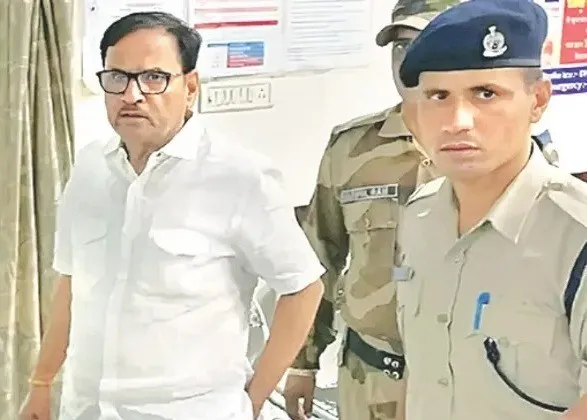
Supreme Court Grants Bail to Ex-Rajasthan Minister Mahesh Joshi in ₹979 Crore Jal Jeevan Mission Case
Court rules gravity of allegations cannot justify indefinite pre-trial detention
Investigation complete; evidence largely documentary, trial yet to begin
By Legal Reporter
New Delhi: October 17, 2026
The Supreme Court has granted bail to former Rajasthan minister Mahesh Chandra Joshi and co-accused Mukesh Pathak in the ₹979 crore Jal Jeevan Mission (JJM) tender corruption case, citing prolonged pre-trial detention and completed investigation. The apex court emphasized that while allegations of large-scale financial impropriety are grave, indefinite incarceration without trial violates fundamental rights under Article 21 of the Constitution.
Case Background
- Accused: Mahesh Chandra Joshi, former Public Health Engineering Department (PHED) minister, and Mukesh Pathak, PHED official.
- Charges: Alleged irregularities in awarding tenders worth ₹979 crore under the Jal Jeevan Mission.
- Modus Operandi: Use of forged work completion certificates and letters of acceptance to secure contracts.
- Agencies Involved: Rajasthan Anti-Corruption Bureau (ACB) and Enforcement Directorate (ED).
- Timeline:
- FIR registered on October 30, 2024.
- Joshi arrested by ACB on May 7, 2026.
- Rajasthan High Court rejected bail in August 2026.
- Supreme Court granted bail on October 16, 2026.
Supreme Court’s Observations
- Bench: Justices Dipankar Datta and Sheel Nagu.
- Key Points:
- Investigation against Joshi and Pathak is complete.
- Prosecution’s case rests on 20,000+ pages of documentary evidence.
- Trial involves 22 accused, 3 chargesheets, 124 witnesses.
- Prolonged custody amounts to punishment without trial, violating Article 21.
- Conditions: Bail granted with safeguards to prevent tampering with evidence or influencing witnesses.
Public Impact
- Jal Jeevan Mission: A flagship scheme to provide tap water to rural households.
- Allegations: Corruption in tenders threatens credibility of welfare projects.
- Broader Implications:
- Highlights systemic issues in public procurement.
- Raises concerns about governance and transparency in infrastructure projects.
- Reinforces judiciary’s role in balancing accountability with personal liberty.
FAQs
Q1: Does bail mean acquittal?
No. Bail only allows temporary release; the trial continues.
Q2: Why did the Supreme Court grant bail?
Because Joshi had already spent months in custody, the investigation was complete, and trial progress was negligible.
Q3: What are the charges?
Corruption, bribery, and irregularities in awarding tenders worth ₹979 crore under the Jal Jeevan Mission.
Q4: What happens next?
The trial will proceed; Joshi and Pathak must comply with bail conditions.
Q5: How does this affect the Jal Jeevan Mission?
The case underscores the need for stricter oversight in tender processes to safeguard public welfare schemes.
Related articles
 Criminal Procedure
Supreme Court Ruling: Can a Procedural Defect in Communicating Grounds of Arrest Entitle an Accused to Bail?
Explore the Supreme Court's landmark judgment clarifying that minor procedural defects in arrest communication do not automatically lead to bail, especially in national security cases involving espionage.
9 min read
 Criminal Procedure
Supreme Court Ruling: Criminal Antecedents Cannot Favor Bail Applications, Prior Acquittals Demand Higher Caution
The Supreme Court establishes that an accused's criminal history cannot act favorably in bail applications. This ruling clarifies standards under the UP Gangsters Act.
6 min read