News Snacks
The Allahabad High Court recently denied post-conviction bail to key figures in a high-profile conversion case while granting it to eight others, highlighting the differentiation of individual roles and charges involved.
- By
- BailNow Research Team
- Published
- Reading time
- 5 min read
On this page
Allahabad High Court Denies Post-Conviction Bail to Kaleem Siddiqui and Umar Gautam, Grants Relief to Eight Others
Judicial Scrutiny and Gravity of Charges Dictate Rejection for Key Figures
Differentiating Culpability: Why Eight Co-Convicts Secured Conditional Post-Conviction Bail
By Legal Reporter
New Delhi: November 08, 2026:
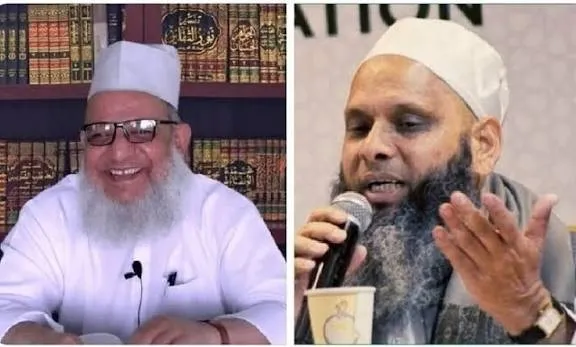
The Allahabad High Court recently pronounced a significant verdict on the post-conviction bail applications arising from the high-profile illegal mass religious conversion racket case investigated by the Uttar Pradesh Anti-Terrorism Squad (ATS). A division bench comprising Justice Rajesh Singh Chauhan and Justice Ram Manohar Narayan Mishra delivered the common order, addressing 16 criminal appeals that challenged the September 2024 judgment of the Special Judge, NIA, Lucknow. While the court firmly denied relief to key masterminds, including Maulana Kaleem Siddiqui and Mohd. Umar Gautam, it extended conditional bail to eight other co-convicts.
Analytical Overview of the Verdict and Judicial Reasoning
The core of the High Court's decision lies in its meticulous differentiation of individual roles, gravity of charges, and duration of incarceration. The legal proceedings stem from a 2021 case registered at the ATS Police Station in Gomti Nagar, Lucknow, under stringent provisions of the Indian Penal Code (IPC), the Uttar Pradesh Prohibition of Unlawful Conversion of Religion Act, 2021, and the Foreign Contribution (Regulation) Act (FCRA), 2010.
In September 2024, the Special NIA Court had convicted multiple individuals, describing Mohd. Umar Gautam as the mastermind operating the Islamic Dawah Centre (IDC) in Delhi, allegedly orchestrating conversions through domestic and foreign funding aimed at altering demographic structures. Maulana Kaleem Siddiqui was similarly implicated for operating through trusts like the Jamiat Imam Waliullah Trust and receiving substantial funds to deploy religious preachers (daees).
Evaluating the post-conviction phase, the High Court observed that while the eight appellants who secured relief had already undergone over four and a half years of imprisonment (both during trial and post-conviction) and faced comparatively lighter, peripheral allegations, the primary accused faced charges of an overwhelmingly grave nature. Furthermore, the court noted that several convicts granted bail—such as Mohd. Saleem, Rahul Bhola, Mannu Yadav, and Kunal Ashok Chaudhari alias Atif—were not convicted under Section 121A of the IPC (conspiracy to wage war against the Government of India).
Strict Conditions and Financial Stipulations
To balance individual liberty with judicial oversight, the High Court imposed stringent conditions on the eight convicts granted post-conviction bail:
- Personal Bonds and Sureties: Release is contingent upon furnishing a personal bond and two reliable sureties of like amount to the satisfaction of the trial court.
- Passport Surrender: Appellants must surrender their passports if not already deposited.
- Conditional Restrictions: They are barred from leaving the country without prior permission, must actively cooperate with the speedy hearing of their appeals without seeking unnecessary adjournments, and are strictly prohibited from engaging in similar activities.
- Fine Deposition: A crucial mandate requires the eight appellants to deposit 50% of the total fine imposed by the trial court within two months of their release, with the remaining 50% stayed. Failure to deposit this percentage will result in immediate cancellation of bail and re-incarceration.
The criminal appeals have now been slated for final hearing in the first week of January 2027, marking the next critical milestone in this complex legal battle.
Frequently Asked Questions (FAQs)
1. Who are the key figures denied post-conviction bail by the Allahabad High Court?
The High Court rejected the bail pleas of key figures including Maulana Kaleem Siddiqui, Mohd. Umar Gautam, Mufti Qazi Jhangeer Qasmi, Sallahuddin Jainuddin Sheikh, Prasad Rameshwar Kawre alias Adam, Irfan Shaikh, Kauser Alam, and Dr. Faraz Babullah Shah.
2. Why were eight other convicts granted bail?
The court granted bail to eight convicts (including Mannu Yadav, Rahul Bhola, and Kunal Ashok Chaudhari) because their roles and overt acts were deemed to be on the lighter side compared to the masterminds, they had served over four and a half years in custody, and some were not convicted under Section 121A of the IPC.
3. What are the primary legal statutes involved in this case?
The prosecution involves sections of the Indian Penal Code (such as those dealing with promoting enmity and criminal conspiracy), the Uttar Pradesh Prohibition of Unlawful Conversion of Religion Act, 2021, and the Foreign Contribution (Regulation) Act (FCRA), 2010.
4. What financial condition has been attached to the bail of the eight convicts?
The convicts granted bail must deposit 50% of the total fine imposed by the trial court within two months of their release from jail; default will lead to immediate cancellation of their bail.
5. When will the main criminal appeals be heard?
The Allahabad High Court has directed that the paper books be prepared and the criminal appeals listed for final hearing in the first week of January 2027.
Related articles
 Case Analysis
MP High Court Denies Bail to Former Judge Giribala Singh in Twisha Sharma Death Case: Key Evidence Awaited
The MP High Court denied bail to former judge Giribala Singh in the Twisha Sharma death case, emphasizing the need for pending forensic reports amid serious allegations.
6 min read
 Case Analysis
News Snacks
The Goa court granted conditional bail to the Luthra brothers in a forgery case involving fire safety clearance, stressing the importance of investigation compliance.
3 min read