Decoding Personal Liberty: The Definitive Legal Analysis of Bailable Versus Non-Bailable Offences in India’s Criminal Justice System
This article breaks down the differences between bailable and non-bailable offences in India's criminal law under the BNSS, emphasizing the rights of individuals and judicial discretion.
- By
- BailNow Research Team
- Published
- Reading time
- 10 min read

On this page
Understanding the Statutory Divide, Judicial Discretion, and the Crucial Shift from Rights to Discretion Under the Bharatiya Nagarik Suraksha Sanhita (BNSS)
A Comprehensive Investigative Breakdown for Litigants, Law Students, and Citizens on How Categorization Shapes Custody, Police Powers, and Constitutional Freedoms
By Legal Editor
New Delhi: October 2026:
At the very heart of democratic jurisprudence lies a delicate balance: the collective right of society to maintain public order versus the inviolable fundamental right of an individual to personal liberty, guaranteed under Article 21 of the Constitution of India. When an allegation of criminal wrongdoing arises, the legal system does not treat all transgressions with a uniform brush. Instead, Indian criminal law meticulously categorizes every punishable act into distinct legal compartments.
Central to this architecture is the distinction between bailable and non-bailable offences. Far from being mere technical legal jargon, this classification dictates whether securing freedom after an arrest is an absolute, non-negotiable statutory right or a matter of judicial discretion that requires rigorous legal argumentation.
With the comprehensive overhaul of India’s criminal laws—transitioning from legacy colonial statutes to the Bharatiya Nagarik Suraksha Sanhita, 2023 (BNSS), the Bharatiya Nyaya Sanhita, 2023 (BNS), and the Bharatiya Sakshya Adhiniyam, 2023 (BSA)—understanding how these categories operate has never been more critical. This in-depth investigative legal report explores the legal anatomy of bailable and non-bailable offences, the statutory mechanisms governing them, the operational powers of police and courts, and the procedural safeguards protecting citizens today.
Part 1: The Statutory Architecture Under the BNSS
To comprehend the difference between bailable and non-bailable offences, one must first understand where these designations originate. Neither the police nor a private citizen decides whether an offense is bailable; the legislature embeds this classification directly into the statutory schedules of criminal procedure.
1. The Legislative Classification
Under the First Schedule of the Bharatiya Nagarik Suraksha Sanhita, 2023 (BNSS)—which replaced the Code of Criminal Procedure, 1973 (CrPC)—every offense under the BNS or any other special penal law is explicitly designated as:
- Cognizable or Non-Cognizable (referring to the police's power to arrest without a warrant).
- Bailable or Non-Bailable (referring to the accused person's legal entitlement to be released from custody).
Crucial Distinction: A common public misconception is that "bailable" means minor offenses and "non-bailable" means major, heinous crimes. While this is broadly true as a matter of legislative policy (offenses carrying severe punishments like life imprisonment or death are invariably non-bailable), the legal definition hinges entirely on whether bail can be claimed as a matter of right.
Part 2: Bailable Offences — Freedom as an Absolute Right
If an individual is accused of an offense classified as bailable under the BNSS, the law treats personal liberty as paramount. In such cases, bail is not a favor granted by the court or the police; it is a statutory right.
1. The Legal Mandate (Section 478 BNSS)
Section 478 of the BNSS (which corresponds to Section 436 of the repealed CrPC) dictates the statutory framework for bailable offences:
- When any person accused of a bailable offense is arrested or detained without a warrant by an officer-in-charge of a police station, and is prepared to give bail at any time while in custody, such person shall be released on bail.
- The police officer or the court has no discretion to refuse bail if the accused is willing to furnish the requisite bond or surety.
2. Key Characteristics of Bailable Offences:
- Police Station Bail: The Station House Officer (SHO) or investigating officer is legally empowered—and mandated—to grant bail right at the police station. The accused does not necessarily have to be produced before a magistrate to secure freedom.
- Surety vs. Personal Bond: The police may release the accused on their own personal bond (a written promise to appear in court) or require one or more sufficient sureties (financial guarantees backed by responsible third parties).
- Minimal Judicial Intervention: Because bail is mandatory, courts routinely censure police officers who unnecessarily delay the release of individuals accused of bailable offenses.
Supreme Court Precedent: In landmark rulings such as Hussainara Khatoon v. State of Bihar, the Supreme Court of India held that keeping indigent persons in custody simply because they cannot afford monetary bail for bailable offenses violates Article 21 of the Constitution. Courts have repeatedly reinforced that personal liberty cannot be subverted by bureaucratic delays in executing bonds.
Part 3: Non-Bailable Offences — When Freedom Rests on Judicial Discretion
When an offense is classified as non-bailable, the legal landscape shifts dramatically. A non-bailable offense does not mean that bail cannot be granted; rather, it means that bail is no longer a matter of right—it is a matter of judicial discretion.
1. The Legal Framework (Sections 480 and 483 BNSS)
Under Section 480 of the BNSS (equivalent to Section 437 CrPC), when a person accused of a non-bailable offense is arrested or detained, they cannot be released on bail by a police officer (with narrow exceptions for women, minors, or the sick/infirm under specific conditions). Instead, power vests in the judicial magistrate or sessions court.
2. Why Are Certain Offences Non-Bailable?
The legislature classifies an offense as non-bailable based on societal impact, gravity, and the potential threat posed by the accused. Examples include murder (Section 103 BNS), culpable homicide, dacoity, rape, kidnapping, and major economic frauds under special statutes.
3. Principles Guiding Judicial Discretion
When a defence counsel moves a regular bail application for a non-bailable offense, the judge does not determine guilt or innocence. Instead, the court evaluates specific judicial parameters:
- Gravity and Nature of the Offense: The severity of the punishment prescribed by law and the specific role attributed to the accused.
- Risk of Fleeing (Flight Risk): Whether the accused has deep roots in society, a fixed place of residence, and family ties, or poses a credible threat of absconding.
- Tampering with Evidence or Witnesses: Whether releasing the accused would jeopardize the ongoing investigation, intimidate witnesses, or destroy crucial evidence.
- Character and Antecedents: Whether the accused has a history of criminal convictions or is a habitual offender.
- Necessity of Custodial Interrogation: Whether keeping the accused locked up is genuinely required for the police to recover stolen property, weapons, or extract vital confessions.
Part 4: Comparative Analysis — Bailable vs. Non-Bailable Offences
To synthesize these complex legal differences, the following structured table contrasts bailable and non-bailable offences across key operational parameters:
Parameter | Bailable Offences | Non-Bailable Offences |
|---|---|---|
Legal Basis | Explicitly designated in the First Schedule of the BNSS. | Explicitly designated in the First Schedule of the BNSS. |
Right to Bail | Absolute Right. The accused can claim bail as a matter of statutory entitlement. | Discretionary Relief. Bail is not a right; the court evaluates merits before granting it. |
Authority to Grant | Can be granted by both the Police Officer-in-Charge (SHO) and Judicial Courts. | Generally cannot be granted by the police; must be decided by a Judicial Magistrate or Sessions/High Court. |
Severity / Punishment | Typically attached to less severe offenses, generally carrying lower terms of imprisonment. | Attached to serious, heinous, or grave offenses carrying severe prison terms, life imprisonment, or death. |
Conditions for Release | Execution of a personal bond, with or without sureties. | Rigorous scrutiny, stringent conditions, substantial sureties, and sometimes travel restrictions or passport surrender. |
Cancellation of Bail | Rare, usually only if the accused violates court conditions or tampers with the legal process. | Courts retain robust powers to cancel bail if misuse, threat to witnesses, or new incriminating facts emerge. |
Part 5: The Middle Ground — Anticipatory Bail and Special Provisions
Navigating non-bailable offences often requires proactive legal remedies before an arrest is even executed.
1. Anticipatory Bail (Section 482 BNSS / Old Sec 438 CrPC)
If an individual apprehends arrest for a non-bailable offense based on false accusations, political vendetta, or police overreach, they can move a Sessions Court or High Court for Anticipatory Bail.
- Pre-Arrest Protection: If granted, this order ensures that if the person is arrested by the police, they must be released on bail immediately.
- Judicial Safeguards: Courts often impose conditions, such as mandatory cooperation with the investigating officer, joining the police investigation when summoned, and not leaving the country without prior permission.
2. Special Relaxations in Non-Bailable Cases
Even in non-bailable categories, Section 480 of the BNSS carves out humanitarian exceptions. A judicial magistrate (though not a police officer) may exercise discretion to grant bail if the accused person is:
- Under the age of sixteen years.
- A woman.
- Sick or infirm.
Part 6: Constitutional Safeguards and Procedural Rights
Regardless of whether an offense is bailable or non-bailable, the Indian criminal justice system mandates strict adherence to procedural safeguards during apprehension:
- Right to Know Grounds of Arrest: Under Article 22(1) of the Constitution and Section 47 of the BNSS, every arrested person must be informed promptly of the exact reasons for their arrest.
- The 24-Hour Rule: Under Article 22(2) and Section 58 of the BNSS, any person arrested must be produced before the nearest judicial magistrate within 24 hours of arrest (excluding travel time). Police cannot indefinitely detain anyone without judicial authorization.
- Right to Legal Representation: An accused person has the constitutional right to consult and be defended by a legal practitioner of their choice from the very moment of detention.
Frequently Asked Questions (FAQs)
1. Can the police deny bail for a bailable offense if they suspect the accused will commit another crime?
No. For bailable offences, bail is an absolute statutory right under Section 478 of the BNSS. Once the accused is willing to furnish the requisite bond or surety, the police officer-in-charge cannot refuse release based on apprehensions, past criminal record, or subjective suspicion.
2. Who has the power to grant bail in a non-bailable offense case?
Police officers do not have the statutory authority to grant bail in non-bailable cases. Bail must be sought through a judicial forum—starting with the Judicial Magistrate or Metropolitan Magistrate, moving up to the Sessions Court, and subsequently to the High Court or Supreme Court if lower courts reject the plea.
3. What is the difference between regular bail and anticipatory bail?
Anticipatory bail is sought before an arrest is made when a person apprehends being arrested for a non-bailable offense (Section 482 BNSS). Regular bail is sought after a person has already been arrested, detained, and produced before a court or lodged in judicial custody.
4. Can bail granted in a non-bailable offense be cancelled later?
Yes. Under Indian criminal jurisprudence, higher courts and trial courts possess the inherent power to cancel bail if the accused abuses their liberty. Grounds for cancellation include tampering with evidence, threatening witnesses, violating travel restrictions, committing a fresh crime while on bail, or failing to cooperate with the ongoing trial.
5. Does paying a surety mean the money is lost forever?
No. A surety is a financial guarantee or pledge of property provided to assure the court that the accused will attend all hearings. Once the trial concludes, the case reaches its final judgment, and the accused consistently complies with all court appearances, the surety bond is discharged, and the deposited security or pledged documents are returned to the surety holder.
Related articles
 Bail Basics
The Guardian’s Pledge: Decoding Surety Bonds and Finding a Trusted Guarantor for Bail in India
This article unpacks the complexities of surety bonds and offers a practical guide for families seeking reliable guarantors in the Indian bail process.
11 min read
 Bail Basics
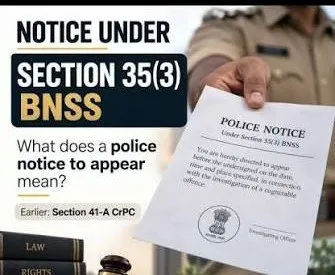
Shielding Personal Liberty: Decoding the Notice to Appear and Arrest Procedures Under Section 35 of the Bharatiya Nagarik Suraksha Sanhita (BNSS), 2023
Dive into the key provisions of Section 35 of the BNSS, 2023, explaining how it protects personal liberty and regulates police arrest procedures. Understand the roles of notices to appear and safeguards for vulnerable citizens.
10 min read