Delhi High Court Rejects MCD Councillor Vijay Kumar’s Anticipatory Bail in Sanitation Worker Suicide Case, Citing Key Audio Evidence
The Delhi High Court has denied anticipatory bail to MCD councillor Vijay Kumar in a sanitation worker's suicide case, emphasizing the importance of key audio evidence and the risks of witness intimidation. The court's decision allows for custodial interrogation as the investigation unfolds.
- By
- BailNow Research Team
- Published
- Reading time
- 5 min read
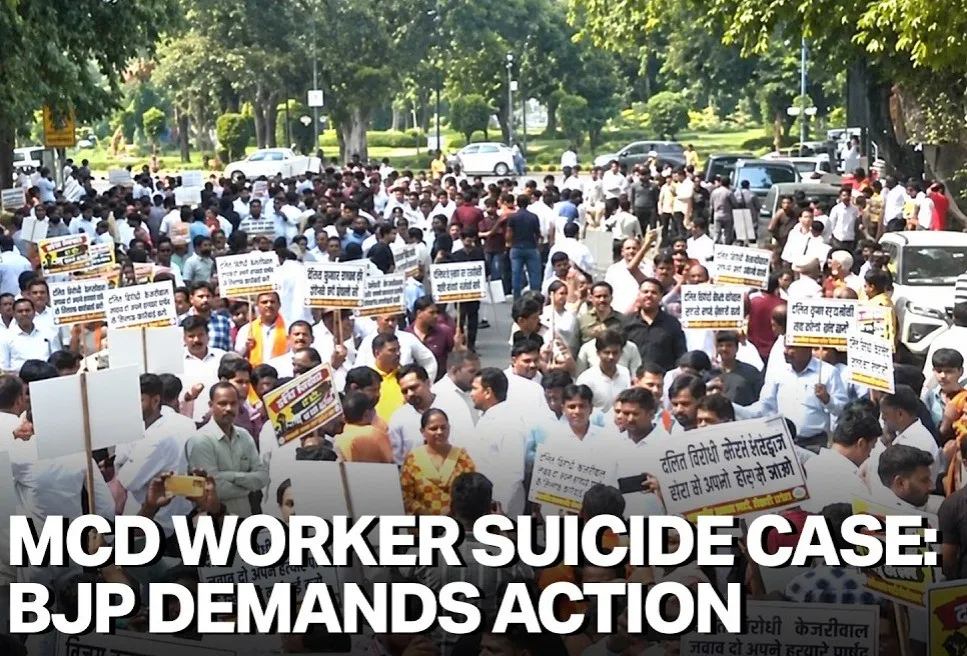
Justice Mini Pushkarna noted that custodial interrogation is warranted given the gravity of the financial exploitation allegations and the nascent stage of the police investigation.
By Legal Reporter
New Delhi: November 17, 2026: The Delhi High Court has refused to grant anticipatory bail to Municipal Corporation of Delhi (MCD) councillor Vijay Kumar in connection with the suicide of a sanitation worker, underscoring the weight of independent electronic evidence and the risk of witness intimidation. Delivering the order, a single-judge bench of Justice Mini Pushkarna noted that custodial interrogation is warranted given the gravity of the financial exploitation allegations and the nascent stage of the police investigation.
The decision follows an earlier setback for the accused on October 17, 2026, when a trial court similarly dismissed his pre-arrest bail application. With both lower and higher courts declining relief, the ruling clears the path for Delhi Police—who registered the First Information Report (FIR) at East Delhi's Kalyan Puri Police Station—to proceed with custodial questioning.
Why Electronic Corroboration Tipped the Legal Scales
In abetment to suicide and financial coercion cases, courts typically scrutinize whether allegations extend beyond mere verbal claims to establish proximate instigation. In this instance, Justice Pushkarna explicitly noted that the prosecution's case does not rest solely on the complainant's statements. Instead, investigators recovered independent electronic corroborative material, including crucial audio recordings from the deceased worker’s mobile phone.
According to the complaint filed by the deceased worker's wife, the financial trap began when her husband sought to purchase a house through Vijay Kumar, his local area councillor. To finance the property, the worker secured a loan of ₹15 lakh through the councillor, who allegedly misappropriated the entire sum. Compounding the crisis, the sanitation worker had reportedly not received his monthly salary for several months prior to his death.
When the worker pressed for his pending wages and the ₹15 lakh loan amount, he was allegedly met with sustained coercion and threats of a punitive job transfer. Furthermore, the complaint alleges that the accused forcibly confiscated the worker's essential financial and personal records, including:
- Original bank passbooks, ATM cards, and cheque books
- Property-related documentation
- Personal identity documents
By retaining these instruments, the accused allegedly stripped the worker of financial autonomy, driving him into severe depression before he died by hanging at his residence.
Power Dynamics and the Risk of Witness Tampering in East Delhi
Beyond the documentary and digital trail, the Delhi High Court placed significant emphasis on the socio-political power imbalance between an elected civic representative and a municipal sanitation worker. Justice Pushkarna observed that the complainant, along with other key witnesses connected to the deceased, resides in the same East Delhi locality and is personally acquainted with the councillor.
Given the councillor's local influence and standing in the ward, the High Court ruled that granting pre-arrest protection carries a substantial risk of witness intimidation as well as the destruction or concealment of remaining documentary and electronic evidence. The case has also drawn sharp political attention in the national capital, with opposition leaders previously staging demonstrations demanding accountability and the councillor's resignation following the registration of the FIR.
Frequently Asked Questions (FAQs)
1. Why did the Delhi High Court deny anticipatory bail to MCD councillor Vijay Kumar? Justice Mini Pushkarna rejected the plea due to the severity of the allegations, the need for custodial interrogation, the risk of the accused influencing local witnesses, and the possibility of tampering with electronic or documentary evidence.
2. What key evidence did the Delhi High Court highlight in its order? The court pointed to independent electronic corroborative material, specifically audio recordings recovered from the deceased sanitation worker’s mobile phone, which supported the complainant's allegations of harassment and exploitation.
3. What are the core financial allegations against the MCD councillor? The deceased worker’s wife alleged that the councillor misappropriated a ₹15 lakh housing loan taken by her husband, withheld his salary for several months, threatened him with transfers, and forcibly kept his original bank passbooks, ATM cards, cheque books, and property papers.
4. Where is the case registered, and what happened in the lower court? The FIR is registered at the Kalyan Puri Police Station in East Delhi. Prior to approaching the Delhi High Court, Vijay Kumar’s anticipatory bail plea was rejected by a trial court on October 17, 2026.
Related articles
 Anticipatory Bail
Delhi High Court Denies Anticipatory Bail in ₹1 Crore Counterfeit Ring: Custodial Interrogation Non-Negotiable in Organized Financial Fraud
The Delhi High Court denied anticipatory bail to Naseem Sheikh in a ₹1 crore counterfeit currency case, stressing the need for custodial interrogation and addressing non-cooperation with the investigation.
4 min read
 Anticipatory Bail
'Internet Wolves Operating in Packs': Delhi High Court Denies Anticipatory Bail to Man Accused of ₹1 Crore Cyber Fraud
The Delhi High Court recently denied anticipatory bail to an accused in a ₹1 crore cyber fraud case, emphasizing the necessity of custodial interrogation to dismantle organized digital crime. This ruling marks a pivotal shift in addressing complex financial scams.
6 min read