Allahabad High Court Grants Interim Bail to Azam Khan, Flags Procedural Lapses and 'Mala Fide' ED Arrest
This article discusses the Allahabad High Court's decision to grant interim bail to Azam Khan, highlighting procedural lapses by the Enforcement Directorate that raised constitutional concerns.
- By
- BailNow Research Team
- Published
- Reading time
- 5 min read
By Legal Reporter
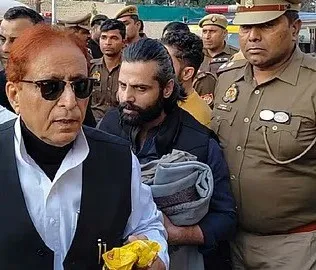
PRAYAGRAJ, Uttar Pradesh, November 18, 2026: — In a significant judicial rebuke to federal investigative procedures, the Allahabad High Court on Tuesday, November 17, 2026, granted interim bail to senior Samajwadi Party (SP) leader and former Uttar Pradesh Cabinet minister Mohd Azam Khan in a money laundering case. A division bench comprising Justice Rajiv Gupta and Justice Devendra Singh observed that the Enforcement Directorate's (ED) action in apprehending Khan outside Rampur District Jail on October 31 appeared prima facie "motivated and mala fide".
The ruling comes in the writ petition Mohd Azam Khan v. Directorate of Enforcement and 4 Others, highlighting heightened judicial scrutiny over compliance with constitutional safeguards and statutory mandates under the Prevention of Money Laundering Act (PMLA), 2002.
Scrutiny Over Section 19 of PMLA and Article 22(1) Safeguards
The core of the High Court's analysis rested on strict adherence to due process at the time of arrest. Khan, a ten-time MLA from Rampur Sadar, was taken into custody around 7:10 PM on October 31, mere moments after stepping out of Rampur District Jail upon securing bail bonds and sureties in an earlier case. The money laundering investigation stems from FIR No. 224 of 2026—registered on October 13 at Azeem Nagar police station—alleging the diversion of public funds and misuse of official influence in favour of the Maulana Mohammad Ali Jauhar Trust and Jauhar University.
Appearing for Khan, Senior Advocate Kapil Sibal, alongside Senior Advocate Imran Ullah, argued that the arrest constituted "persecution rather than prosecution". The defence contended that ED officials failed to supply the written grounds of arrest, arrest memo, and "reasons to believe" at the time of taking him into custody.
While Additional Solicitor General SV Raju and Senior Advocate Zoheb Hossain countered that Khan had refused to accept the documents—prompting officers to prepare a running panchanama and serve the papers the next day during remand—the bench found critical evidentiary gaps:
- Missing Metadata: The court noted from the records that the grounds of arrest lacked the place, date, and time of preparation.
- Incomplete Family Intimation: The grounds of arrest were omitted from the WhatsApp message sent to Khan's family members hours after his detention.
- Lack of Video Proof: Despite claiming the arrest was videographed, the agency failed to produce any visual record showing officers offering the written grounds and Khan declining them.
Consequently, the bench concluded it was prima facie satisfied that the mandatory procedures guaranteed under Article 22(1) of the Constitution of India and Section 19 of the PMLA were not strictly followed.
Legal Implications for PMLA Enforcement and Next Steps
The Allahabad High Court's order reinforces a growing body of Indian jurisprudence—echoing recent Supreme Court rulings—that treats the written communication of grounds of arrest as an inviolable fundamental right rather than a mere technicality. By linking the timing of the arrest outside the prison gates directly to potential malice in law, the bench signalled that central agencies cannot bypass statutory thresholds even in high-profile financial investigations.
The court directed Khan's release on interim bail upon furnishing a personal bond and two sureties to the satisfaction of the Chief Judicial Magistrate, Ghaziabad. Additionally, the bench granted the ED one week to file a detailed counter-affidavit and allowed Khan ten days to submit a rejoinder, listing the matter for further hearing on December 10, 2026.
Frequently Asked Questions (FAQs)
1. Why did the Allahabad High Court grant interim bail to Azam Khan?
The division bench of Justices Rajiv Gupta and Devendra Singh granted interim bail after finding prima facie violations of Article 22(1) of the Constitution and Section 19 of the PMLA. Specifically, the Enforcement Directorate failed to establish that written grounds of arrest were furnished to Khan at the time of his detention on October 31, 2026.
2. What is the underlying case behind the ED's money laundering probe?
The ED's Enforcement Case Information Report (ECIR) is based on FIR No. 224 of 2026, filed on October 13, 2026, at Azeem Nagar police station in Rampur. It involves allegations of misusing official position and diverting government funds toward the Maulana Mohammad Ali Jauhar Trust.
3. What conditions apply to Azam Khan's interim bail, and when is the next hearing?
Khan has been ordered to be released on interim bail upon furnishing a personal bond and two sureties to the satisfaction of the Chief Judicial Magistrate in Ghaziabad. The relief remains active until the next scheduled hearing before the Allahabad High Court on December 10, 2026.
Related articles
 Anticipatory Bail
News Snacks
The Delhi High Court has directed the Enforcement Directorate to verify medical records submitted by Jawad Ahmed Siddiqui, who seeks bail to care for his ailing wife amid serious PMLA charges.
4 min read
 Anticipatory Bail
Court Grants Bail to KPSC Member BV Geetha, Citing Womanhood in Veterinary Recruitment Scam
A Bengaluru court grants bail to KPSC member BV Geetha, highlighting the legal rights of women under PMLA in the context of the veterinary recruitment scam.
4 min read