Allahabad HC Grants Bail in ₹38 Crore Fake ITC Case, Cites CBIC Freeze on GST Arrests
The Allahabad High Court recently granted bail to the accused in a ₹38 crore fake Input Tax Credit case, marking a significant policy shift in GST enforcement following the CBIC's directive to halt arrests. This ruling emphasizes the need for timely justice and outlines constitutional safeguards against prolonged
- By
- BailNow Research Team
- Published
- Reading time
- 5 min read
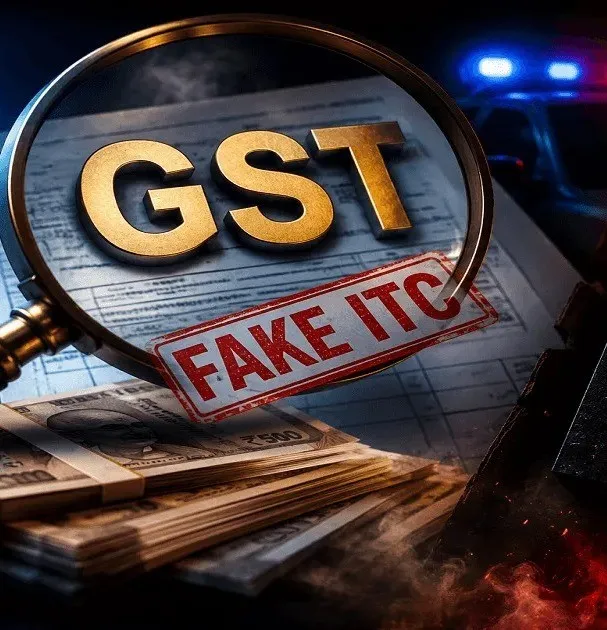
October 30, 2026, CBIC directive stems from the GST Council's recommendation to decriminalise tax offences further by omitting Section 69 of the Central Goods and Services Tax (CGST) Act, 2017- provision empowering tax commissioners to authorise arrests
By Legal Reporter
PRAYAGRAJ, November 17, 2026: In a major relief for taxpayers facing criminal prosecution under India's indirect tax regime, the Allahabad High Court has granted regular bail to an accused in a ₹38 crore fake Input Tax Credit (ITC) case. Delivering the order in Gautam Sharma v. Union of India (Criminal Misc. Bail Application No. 39336 of 2026), Justice Vikram D. Chauhan took judicial note of the Central Board of Indirect Taxes and Customs (CBIC) instruction dated October 30, 2026, which directs Central GST field formations to halt further arrests pending statutory amendments.
Shift in GST Enforcement and Legislative Backdrop
The October 30, 2026 CBIC directive stems from the GST Council's recommendation to decriminalise tax offences further by omitting Section 69 of the Central Goods and Services Tax (CGST) Act, 2017—the provision empowering tax commissioners to authorise arrests. While formal legislative amendments await parliamentary passage, the executive freeze signals a decisive policy pivot away from coercive pre-trial detention in commercial tax disputes.
In the present case, the applicant, a partner in Aarti Industry, was arrested on July 26, 2026, by the Directorate General of GST Intelligence (DGGI), Ghaziabad unit. Investigators alleged that nine suppliers linked to the firm had fraudulently availed bogus ITC worth ₹38 crore. The applicant faced prosecution under Sections 132(1)(b), 132(1)(c), 132(1)(f), and 132(1)(i) of the CGST Act. Although DGGI counsel opposed the plea citing the magnitude of the alleged revenue loss, the department could not dispute the existence or applicability of the October 30 CBIC circular.
Constitutional Safeguards Against Prolonged Pre-Trial Custody
Beyond the administrative directive, Justice Chauhan anchored the ruling in Article 21 jurisprudence, reiterating that pre-conviction custody is meant solely to secure an accused's presence at trial rather than serve as punitive detention. Observing that the denial of timely justice erodes public confidence in the legal system, the Bench noted several mitigating factors:
- Completed Investigation: The DGGI had already concluded its probe and filed the formal complaint before the Special Chief Judicial Magistrate in Meerut.
- Trial Timeline: Charges had not yet been framed, making it improbable that the magistrate-triable case—which carries a maximum sentence of five years—would conclude within the next year.
- Clean Antecedents: The applicant had no prior criminal record, and the prosecution placed no material on record suggesting a risk of witness intimidation or evidence tampering.
To reinforce the principle that "bail is the rule and jail is the exception," the High Court relied on landmark Supreme Court precedents, including Sanjay Chandra v. CBI and Manish Sisodia v. Enforcement Directorate, alongside specific CGST Section 132 bail rulings in Atul Mehra v. Union of India, Vineet Jain v. Union of India, and Ratnambar Kaushik v. Union of India. Notably, this order aligns with a similar ruling by the Punjab and Haryana High Court in the GoMechanic co-founder bail matter.
Frequently Asked Questions (FAQs)
1. Why did the Allahabad High Court grant bail in the ₹38 crore fake ITC case? The Court granted bail after considering the CBIC’s October 30, 2026 instruction halting further GST arrests, the completion of the DGGI investigation, the absence of a prior criminal record, and the unlikelihood of the trial concluding within a reasonable timeframe.
2. What is the CBIC October 30, 2026 instruction regarding GST arrests? Following the GST Council's recommendation to withdraw arrest powers by omitting Section 69 of the CGST Act, 2017, the CBIC issued an administrative instruction directing Central GST field formations not to make further arrests under GST laws until formal legislative amendments are enacted.
3. What is the maximum punishment for fake ITC offences under Section 132 of the CGST Act? Offences involving fraudulent availment or utilisation of Input Tax Credit under Section 132 of the CGST Act, 2017, carry a maximum punishment of up to five years of imprisonment along with a fine, and are triable by a Magistrate.
4. Does the CBIC instruction mean fake ITC cases will no longer be prosecuted? No. While coercive arrest powers have been put on hold pending legislative changes, tax authorities continue to investigate, file prosecution complaints before competent courts, and recover disputed tax demands, interest, and penalties through statutory adjudication.
Related articles
 Regular Bail
Gujarat High Court Grants Bail in Gandhinagar Road Rage Case: Why Secondary Harbouring Charges Differ from Principal Offences
The Gujarat High Court granted bail to Avan Gajjar, highlighting the distinction between harbouring charges and principal offences in a road rage case. This decision underscores the importance of evaluating criminal culpability in pre-trial situations.
5 min read
 Regular Bail
Punjab & Haryana High Court Shields Legal Remedies, Rejects DLF Plea to Cancel Ex-CFO’s Bail
The Punjab & Haryana High Court has upheld the bail granted to Ramesh Sanka, rejecting DLF's plea against his release. The court ruled that exercising legal remedies is not witness intimidation.
5 min read