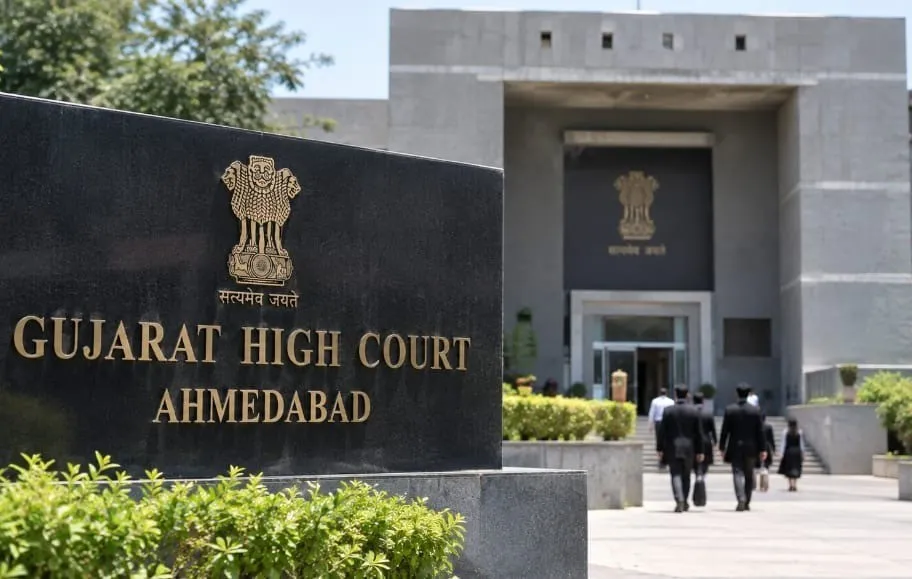
Gujarat High Court Grants Bail in Gandhinagar Road Rage Case: Why Secondary Harbouring Charges Differ from Principal Offences
The Gujarat High Court granted bail to Avan Gajjar, highlighting the distinction between harbouring charges and principal offences in a road rage case. This decision underscores the importance of evaluating criminal culpability in pre-trial situations.
- By
- BailNow Research Team
- Published
- Reading time
- 5 min read
On this page
By Legal Desk | Ahmedabad / Gandhinagar
The Gujarat High Court has granted regular bail to Avan Gajjar, who was arrested for allegedly harbouring Bhavik Gajjar—the prime accused in a violent road-rage assault near Sanavada village in Gandhinagar. Justice Mool Chand Tyagi ordered Avan’s release on a personal bond of ₹10,000 with one surety of an equivalent amount, drawing a clear legal distinction between committing a violent physical assault and allegedly shielding the perpetrator afterward.
While the primary accused, Bopal-based paan shop owner Bhavik Gajjar, remains absconding after a local court rejected his anticipatory bail plea on November 6, the High Court’s ruling highlights how Indian courts evaluate criminal culpability and bail jurisprudence under the Bharatiya Nyaya Sanhita (BNS).
Anatomy of the Gandhinagar Road-Rage Incident and Legal Charges
The case stems from an altercation in the early hours of October 17 near Sanavada village in Gandhinagar, as victim Tanish Patel was returning home with friends after attending a Garba event. According to the First Information Report (FIR) and prosecution records, Patel signalled a black Mercedes car operating without a registration plate to stop near the main gate of the venue. Bhavik Gajjar, who was allegedly travelling in the vehicle, stepped out and engaged in an argument that rapidly escalated into severe physical violence.
Police investigations and medical examinations documented in the High Court order state that Bhavik repeatedly assaulted Patel with a metal knuckle duster and bit off his right earlobe, leaving him with a nasal fracture and multiple other injuries. Following Patel’s complaint, authorities registered an FIR invoking charges of attempt to murder, voluntarily causing hurt, and grievous hurt, alongside Section 135 of the Gujarat Police Act.
Ten days after the incident, on October 27, the investigating officer submitted a report seeking to add Section 249 of the BNS against Avan Gajjar. Unlike the grave bodily harm charges levelled against the main accused, Section 249 specifically addresses the offence of harbouring or concealing an offender to screen them from legal punishment.
Judicial Reasoning: Weighing Harbouring Allegations Against Bail Principles
During the High Court proceedings, Public Prosecutor Niraj Sharma opposed the bail application, contending that Avan Gajjar played an active post-offence role by sheltering the absconding prime accused and allegedly exchanging mobile phones with Bhavik to mislead investigators. Counsel for the complainant, Advocate Naman Kinkhabwala, further urged the court to bar Avan from entering the territorial limits of Ahmedabad and Gandhinagar to prevent potential interference with the ongoing probe.
However, the defence argued that Avan had zero involvement in the October 17 assault itself and that Section 249 of the BNS carries a maximum statutory punishment of three years. Justice Tyagi accepted this distinction, explicitly noting that the applicant was not the principal offender and that rejecting bail or imposing sweeping territorial bans did not merit acceptance given his limited alleged role.
To balance individual liberty with investigative integrity, the court imposed standard supervisory conditions: Avan must surrender his passport within a week, obtain prior judicial permission before leaving Gujarat, mark monthly attendance at the concerned police station for six months until the chargesheet is filed, and refrain from tampering with evidence.
Ultimately, the verdict reinforces established Supreme Court precedents: pre-trial detention cannot be used as a punitive measure against secondary accused individuals when the primary violent act was committed solely by an absconding suspect.
Frequently Asked Questions (FAQs)
1. Why did the Gujarat High Court grant bail to Avan Gajjar in the Gandhinagar road-rage case?
The Gujarat High Court granted regular bail because Avan Gajjar was not involved in the actual physical attack on victim Tanish Patel. His alleged role was strictly limited to harbouring the prime accused, Bhavik Gajjar, after the incident.
2. What is Section 249 of the Bharatiya Nyaya Sanhita (BNS) applied in this case?
Section 249 of the BNS deals with the offence of harbouring or concealing a person known or believed to be an offender, with the intention of screening them from legal punishment. In this case, it carries a maximum punishment of up to three years of imprisonment.
3. What happened to the main accused, Bhavik Gajjar?
Bhavik Gajjar, a paan shop owner from Bopal accused of assaulting Tanish Patel with a knuckle duster and biting off his earlobe, fled after the October 17 incident. A local court rejected his anticipatory bail application on November 6, and police are still actively searching for him.
4. What bail conditions were imposed on Avan Gajjar by the High Court?
Justice Mool Chand Tyagi ordered his release on a ₹10,000 personal bond and matching surety, directing him to surrender his passport, seek court permission before leaving Gujarat, report to the police station once a month for six months, and not obstruct the investigation.
Related articles
 Regular Bail
News Snacks
This article examines the significant Supreme Court ruling that cancelled bail in the Mandangi murder case, highlighting judicial scrutiny and the pursuit of justice over 16 years.
4 min read
 Regular Bail
Unlocking Liberty: The Definitive Guide to Essential Documents, Legal Frameworks, and Procedures for Regular Bail Applications in the Sessions Court
This guide outlines essential documents and procedures required for regular bail applications in the Sessions Court, emphasizing compliance and judicial practices under the BNSS.
12 min read