Understanding Liberty and Suspension: The Definitive Guide to the Difference Between Parole and Bail in India
This article elucidates the distinctions between bail and parole in India, focusing on their legal implications, frameworks, and the rights involved. Understand how these legal tools affect personal liberty and justice.
- By
- BailNow Research Team
- Published
- Reading time
- 8 min read
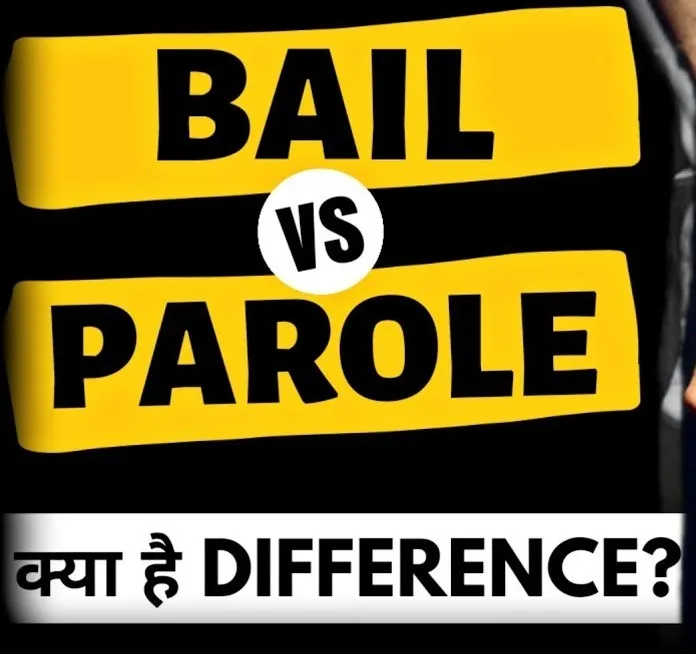
Navigating the Legal Divide — Why Temporary Freedom Differs Fundamentally From Pre-Trial Release
Decoding Objectives, Statutory Frameworks, Duration, and Conditions Under the BNSS, CrPC, and Prison Acts
By Legal Editor
New Delhi: October 18, 2026:
In the landscape of Indian criminal jurisprudence, personal liberty is a constitutional cornerstone enshrined under Article 21. However, the criminal justice system frequently encounters circumstances where an individual’s freedom must be temporarily restored—either while an investigation or trial is pending, or after a conviction has been handed down by a competent court.
Two of the most frequently misunderstood and conflated terms in this domain are Bail and Parole. While both mechanisms allow an accused or a convict to walk out of confinement, they operate on entirely different legal premises, serve distinct socio-legal objectives, and are governed by separate statutes.
Confusing bail with parole is common among laypersons, but for legal practitioners, investigators, and scholars, drawing a sharp line between the two is vital. This comprehensive article breaks down the mechanics, legal provisions, eligibility criteria, and operational differences between bail and parole in India.
Part 1: Defining Bail — The Shield of Pre-Trial Presumption of Innocence
The Core Concept
Bail is the conditional release of an accused person from custody while criminal proceedings—either an active investigation or an ongoing trial—are pending. The foundational philosophy underpinning bail is the golden rule of criminal law: "Innocence until proven guilty."
When a person is arrested on suspicion of committing a crime, keeping them behind bars indefinitely before a court establishes their guilt is treated as a severe restriction on liberty. Bail acts as a mechanism to ensure that the accused remains available to face trial without enduring pre-trial punishment, while also providing security to the state that the accused will not abscond, tamper with evidence, or intimidate witnesses.
Statutory Framework
With the evolution of criminal law in India, the statutory provisions governing bail are primarily anchored in the Bharatiya Nagarik Suraksha Sanhita, 2023 (BNSS), which has replaced the older Code of Criminal Procedure, 1973 (CrPC):
- Regular Bail (Section 480 / 483 BNSS; formerly Section 437 / 439 CrPC): Granted to a person who is already under arrest or in judicial custody.
- Anticipatory Bail (Section 482 BNSS; formerly Section 438 CrPC): A pre-arrest legal shield granted by a Court of Session or High Court when a person apprehends arrest for a non-bailable offense.
- Default / Statutory Bail (Section 187 BNSS; formerly Section 167(2) CrPC): An absolute right that accrues to an accused if the investigative agency fails to file a chargesheet within the mandated statutory window of 60 or 90 days.
+---------------------------------------------------------------------------------+
| BAIL AT A GLANCE |
+-----------------------+---------------------------------------------------------+
| Status of Recipient | Accused / Under-trial (Guilt not yet proven) |
| Primary Objective | Prevent pre-trial detention as punishment |
| Governing Law | Bharatiya Nagarik Suraksha Sanhita (BNSS) |
| Competent Authority | Judicial Magistrates, Sessions Courts, High Courts, SC |
| Duration | Lasts until the conclusion of the trial or appeal |
+-----------------------+---------------------------------------------------------+
Part 2: Defining Parole — The Bridge of Reformation and Compassion
The Core Concept
Unlike bail, parole is not granted to an unconvicted person. Parole comes into play after an individual has been tried, convicted, and sentenced to a term of imprisonment by a court of law. It is the temporary release of a convict from prison before the completion of their full sentence.
The jurisprudence behind parole shifts away from the presumption of innocence toward rehabilitation, social reintegration, and humanitarian considerations. Prisons are intended not merely for retribution, but for reform. Allowing a convicted inmate to step outside prison walls for a limited period helps them maintain family ties, attend urgent domestic emergencies (such as a death or marriage in the family), or seek specialized medical treatment, thereby easing their eventual transition back into society.
Statutory Framework and Administration
Parole is largely governed by state-specific Prison Manuals, jail rules, and executive administrative guidelines rather than the criminal procedure code, though constitutional courts exercise writ jurisdiction (under Article 226) to review parole rejections.
- Two Formats of Temporary Release:
- Custody Parole / Emergency Parole: Granted for short durations (ranging from a few hours to a couple of weeks) to attend critical family events like funerals or weddings.
- Regular Parole: Granted for longer periods (typically 30 to 45 days) for convicts who have served a specific minimum portion of their sentence (e.g., one year) with satisfactory prison conduct.
+---------------------------------------------------------------------------------+
| PAROLE AT A GLANCE |
+-----------------------+---------------------------------------------------------+
| Status of Recipient | Convicted Prisoner (Guilt has been established) |
| Primary Objective | Reformation, family bonding, and humanitarian relief |
| Governing Law | State Prison Manuals and Jail Rules |
| Competent Authority | Executive Government / Prison Authorities / Home Dept |
| Duration | Fixed, limited duration (extensible upon strict review) |
+-----------------------+---------------------------------------------------------+
Part 3: Head-to-Head Comparison Table
To clearly distinguish between the two concepts, the key operational differences are structured in the comparison matrix below:
Parameter | Bail | Parole |
|---|---|---|
Legal Stage | Applied during the investigation or trial phase (pre-conviction). | Applied after conviction and sentencing (post-conviction). |
Who is Eligible? | An accused person or under-trial prisoner. | A convicted prisoner serving a fixed sentence. |
Governing Authority | Judiciary (Magistrates, Sessions Judges, High Courts, Supreme Court). | Executive Branch (State Government, Prison Department, Home Ministry). |
Primary Purpose | To protect personal liberty and ensure trial attendance without punitive pre-trial detention. | To encourage prisoner reformation, maintain family ties, and address humanitarian needs. |
Duration | Indefinite duration; lasts throughout the pendency of the trial or appeal unless cancelled. | Fixed duration; must be surrendered back to prison upon expiry. |
Frequency / Limits | Can be sought multiple times if circumstances change or fresh grounds arise. | Subject to strict caps on frequency and requires serving a minimum sentence first. |
Part 4: Key Legal Nuances and Judicial Precedents
The Supreme Court of India has time and again clarified the boundaries of both legal instruments. Understanding these judicial pronouncements prevents executive overreach and judicial confusion.
1. Parole is Not a Matter of Absolute Right
While bail is closely tied to fundamental rights under Article 21, the Supreme Court has repeatedly held that parole is a concession, not an absolute right. Convicts do not possess an enforceable legal entitlement to demand parole; rather, it is granted based on prison records, behavioural assessment reports, and security clearances. If a prisoner poses a threat to public safety or has a history of jailbreak, the executive is fully justified in denying parole.
2. Distinction from Furlough
It is also worth noting how furlough differs from parole. While both apply to convicts, furlough is treated as a conditional right granted to long-term prisoners simply for good behaviour, without requiring any specific reason or emergency. Parole, conversely, requires a valid, verified ground (such as illness, family crisis, or agricultural requirements).
Frequently Asked Questions (FAQs)
Q1: Can an under-trial prisoner apply for parole?
A: No. Parole is exclusively reserved for convicts who are serving a sentence following a court conviction. An under-trial prisoner whose trial is still underway can only seek bail, not parole.
Q2: Who has the power to grant bail versus parole?
A: Bail is exclusively granted by the judiciary (courts ranging from Judicial Magistrates to the Supreme Court). Parole, on the other hand, is granted by the executive government (state home departments or prison authorities) based on administrative rules and prison manuals.
Q3: What happens if a person violates bail conditions compared to parole conditions?
A:
- If a person violates bail conditions (such as tampering with evidence or threatening witnesses), the prosecution moves the court for bail cancellation, leading to an arrest and re-incarceration.
- If a person fails to surrender after parole expires, they are treated as an escapee, facing immediate re-arrest, forfeiture of remission days, and fresh criminal charges under prison laws for running away from lawful custody.
Q4: Can a death row convict or terrorist apply for parole?
A: State prison manuals maintain stringent exclusion criteria. Convicts involved in acts of terrorism, national security threats, heinous crimes against children, or those deemed a high escape risk are frequently barred by statutory rules from receiving regular parole.
Related articles
 Bail Basics
Navigating the Judicial Labyrinth: A Comprehensive Guide on How to Secure a Surety for Bail
This comprehensive guide explains the process of securing a surety for bail, detailing eligibility, required documentation, and court verification to help families navigate the complexities of the legal system.
9 min read
 Bail Basics
The Evolution of Liberty: A Comprehensive Historical Analysis of Bail Law in India
This article explores the comprehensive evolution of bail law in India, detailing its historical roots, statutory reforms, and modern legislative changes under the Bharatiya Nagarik Suraksha Sanhita (BNSS).
8 min read