News Snacks
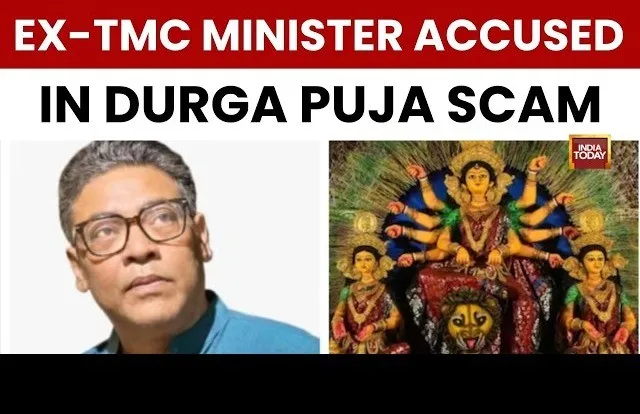
This article analyzes the Calcutta High Court's denial of anticipatory bail for Indranil Sen in the Durga Puja ticket scam, highlighting cultural exploitation and legal ramifications.
- By
- BailNow Research Team
- Published
- Reading time
- 5 min read
On this page
Shadow Over the Celebration: Analyzing the Legal and Systemic Fallout of the Durga Puja Ticket Scam Case
Commercialization of Cultural Heritage: How an Alleged Scheme Exploited UNESCO-Branded Goodwill
Judicial Scrutiny and Political Accountability: Inside the Calcutta High Court’s Denial of Anticipatory Bail
By Legal Reporter
New Delhi: October 19, 2026:
The intersection of public faith, cultural heritage, and political patronage has once again drawn intense judicial scrutiny in West Bengal. In the case of Indranil Sen v. The State of West Bengal, the Calcutta High Court firmly rejected the anticipatory bail plea of former Minister of State for Information and Cultural Affairs, Indranil Sen. Presided over by Justice Tirthankar Ghosh, the ruling marks a significant milestone in an ongoing investigation into alleged financial irregularities tied to the sale of exclusive Durga Puja preview show tickets between 2022 and 2024.
This analytical article examines the core allegations, the legal arguments presented, and the broader socio-legal implications of transforming a revered public festival into a canvas for white-collar corruption.
Unravelling the Allegations: The Nexus of Power and Profit
At the heart of the prosecution's case is the Mahanirban Road Mass Art Society (commonly known as MassArt), an organization allegedly linked to the former minister. Investigators claim that between 2022 and 2024, the society capitalized on the global prestige associated with UNESCO’s Intangible Cultural Heritage inscription for Durga Puja.
Rather than preserving the community-driven, inclusive ethos of the festival, the syndicate allegedly commercialized it. High-priced preview tickets were sold to elite patrons seeking expedited or exclusive access to popular Kolkata pandals. More damagingly, the State argued before the High Court that public funds were systematically diverted through manipulated tender processes. Prosecutors contended that these mechanisms acted as shell operations, ultimately enriching the petitioner and his family members under the guise of cultural promotion.
The Legal Battle: Arguments at the Bar
Representing the petitioner, Senior Advocate Jishnu Saha argued that the accusations were politically motivated and legally vague, designed to malign a public figure. The defence maintained that the petitioner's direct association with the alleged financial wrongdoings was speculative and lacked concrete evidentiary backing.
Conversely, the State—represented by Additional Advocate General Rajdeep Mazumdar—fiercely opposed the pre-arrest bail. The prosecution emphasized that as the minister overseeing the Department of Information and Cultural Affairs, Sen was at the "helm of affairs" and uniquely positioned to abuse his official authority.
In its decisive ruling, the Calcutta High Court noted explicit "trappings of corruption". The bench stressed that government resources were improperly funnelled through official channels to favor private entities, leaving little room for judicial leniency at this preliminary stage of the criminal probe. The Enforcement Directorate (ED) has also ramped up parallel inquiries, having conducted coordinated raids to map out the financial trail.
Broader Implications: Protecting Culture from Commercial Exploitation
The legal fallout from this case extends far beyond individual political accountability. Durga Puja is deeply woven into the social fabric of West Bengal, historically celebrated as an egalitarian festival rooted in community participation. The monetization of pandal entry through VIP passes and curated commercial tours has long been a subject of ethical debate.
By framing these ticketing malpractices as a matter of criminal cheating and diversion of public funds, the judiciary has signalled that cultural heritage cannot be weaponized for private financial enrichment. As the ED and state agencies dig deeper into the financial archives of MassArt and associated entities, the case serves as a stern reminder that abuse of administrative power during high-profile state-sponsored events will face rigorous legal reckoning.
Frequently Asked Questions (FAQs)
1. What is the core allegation against former minister Indranil Sen?
Indranil Sen is accused of orchestrating financial irregularities and cheating the public between 2022 and 2024. The allegations involve selling high-priced tickets for Durga Puja preview shows through an organization named MassArt, falsely leveraging UNESCO's cultural heritage status for commercial gain, and illegally diverting government funds through manipulated tenders.
2. Why did the Calcutta High Court deny anticipatory bail?
The High Court denied the pre-arrest bail petition after observing clear "trappings of corruption". The court noted that as the former Minister of Information and Cultural Affairs, Sen was at the helm of affairs, abused his official position, and enabled the diversion of public funds that benefited private individuals.
3. Which organization is central to the scam investigation?
An organization named Mahanirban Road Mass Art Society (MassArt) is at the center of the probe. Investigators allege it functioned as a shell entity to route and park illicit proceeds generated from commercialized festival ticketing.
4. Are other investigative agencies involved besides the State Police?
Yes. Alongside the state's criminal investigation, federal agencies like the Enforcement Directorate (ED) have active probes into the money laundering aspects of the case, having previously conducted extensive raids on locations linked to the former minister.
Related articles
 Case Analysis
News Snacks
The Calcutta High Court has denied bail to former Minister Sujit Bose for the third time, highlighting the seriousness of allegations in the North Dum Dum recruitment scam under the ED's investigation.
3 min read
 Case Analysis
News Snacks
This article analyzes the Kanpur hit-and-run case, examining how murder charges were dropped in favor of culpable homicide and the implications for bail procedures in such incidents.
4 min read