News Snacks
The Karnataka High Court has denied anticipatory bail to Dr. Shantha Hosamani, a KPSC member, in a bribery case, emphasizing the need for integrity in public recruitment.
- By
- BailNow Research Team
- Published
- Reading time
- 5 min read
On this page
Karnataka High Court Denies Anticipatory Bail to KPSC Member in Alleged KAS Interview Bribery Case
Judicial Scrutiny Intensifies as the Court Warns That Merit-Based Public Employment Systems Must Be Shielded from Corruption
Systematic Integrity Under Threat: High Court Stresses That High Office Offers No Immunity From Equal Application of the Law
By Legal Reporter
New Delhi: October 21, 2026:
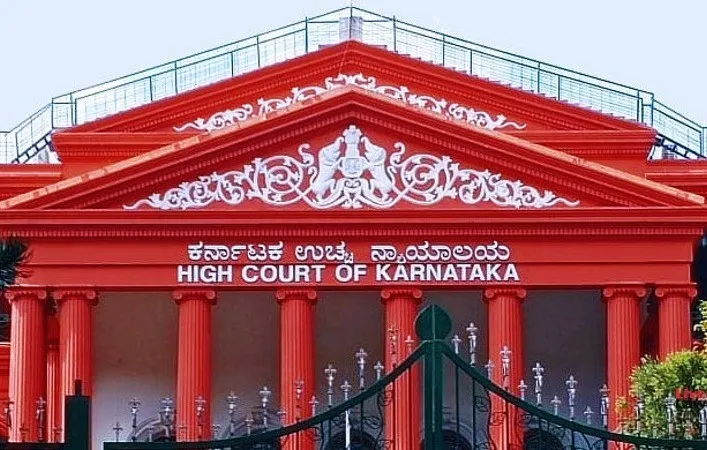
The Karnataka High Court has delivered a stern judicial message regarding transparency and integrity in public governance by denying anticipatory bail to Dr. Shantha Hosamani, a serving member of the Karnataka Public Service Commission (KPSC). Dr. Hosamani is the prime accused in a high-profile corruption probe concerning allegations of accepting illegal gratification to manipulate scores and favor a specific candidate during the Karnataka Administrative Service (KAS) recruitment interviews.
The ruling, handed down by a single-judge bench of Justice S. Vishwajith Shetty, underscores the judiciary's growing intolerance toward administrative malfeasance within premier recruitment bodies. As the Crime Investigation Department (CID) continues its extensive probe, this case highlights critical structural vulnerabilities in public service selections and reaffirms the absolute necessity of rigorous investigative measures.
Anatomy of the Allegations and Legal Framework
The controversy erupted following a formal complaint filed by Kanthakumar R., President of the All-Karnataka State Students Association, leading to the registration of a First Information Report (FIR) at the Vidhana Soudha Police Station. According to prosecution records, Dr. Hosamani served as an active member of the interview panel that evaluated candidates on May 8, 2026. Investigators allege that she abused her statutory position to confer undue advantages upon a candidate—listed as the second accused—in exchange for illegal gratification.
Consequently, the case attracted severe penal provisions under Section 10 of the Karnataka Public Examination (Measures for Prevention of Corruption and Unfair Means in Recruitment) Act, 2023. This stringent legislative instrument penalizes unfair practices and corruption in public examinations, carrying a maximum imprisonment term of up to twelve years.
Following the rejection of her pre-arrest bail plea by the Sessions Court on September 10, 2026, Dr. Hosamani moved the High Court, arguing that she was a qualified medical professional with no prior criminal antecedents and had cooperated with the inquiry. However, the State strongly countered these claims, pointing to uncooperative behaviour, contradictory statements regarding acquaintanceship between the accused, and the vital necessity of uncovering a broader network of conspirators.
Analytical Perspectives: Balancing Individual Liberty and Institutional Trust
Justice S. Vishwajith Shetty’s ruling provides an analytical blueprint for evaluating white-collar and institutional corruption cases. The court addressed the core tension between an individual's right to personal liberty and the collective societal interest in eradicating institutional corruption.
- Erosion of Public Trust: The court forcefully noted that corrupt practices in elite civil service recruitment inflict deep psychological and professional wounds on thousands of young aspirants. When institutional gatekeepers accept bribes, it dismantles the foundational meritocracy of democratic governance.
- Equality Before the Law: Addressing the defence’s reliance on the high status of the accused, the bench clarified that holding a prestigious constitutional or statutory office does not grant immunity. The law must apply with "iron hands" uniformly across all strata.
- Custodial Interrogation vs. Gravity of Offense: Referencing established jurisprudence, including the Supreme Court's guidelines, the High Court emphasized that the mere absence of an immediate necessity for custodial detention is not a standalone ground to grant anticipatory bail. Courts must holistically weigh the gravity of the allegations, potential tampering with evidence, and the societal impact of the crime.
Ultimately, the judgment paves the way for a deeper, unhindered inquiry by the CID to trace potential accomplices both inside and outside the KPSC framework, inspect sealed-cover marks charts, and map the complete modus operandi.
Frequently Asked Questions (FAQs)
1. Who is Dr. Shantha Hosamani, and what are the charges against her?
Dr. Shantha Hosamani is a member of the Karnataka Public Service Commission (KPSC). She is facing criminal charges for allegedly accepting illegal gratification to favor a specific candidate during the KAS recruitment interviews conducted on May 8, 2026.
2. Why did the Karnataka High Court deny her anticipatory bail?
The High Court denied the pre-arrest bail, observing that initial prosecution records prima facie indicated a serious misuse of official power for personal and unlawful gains. The court underscored that such corruption damages public faith, harms meritorious candidates, and necessitates thorough custodial or investigative flexibility to unearth a wider criminal nexus.
3. Which legal provisions have been invoked in this case?
The case involves Section 10 of the Karnataka Public Examination (Measures for Prevention of Corruption and Unfair Means in Recruitment) Act, 2023, which addresses corruption and unfair practices in public examinations and carries penalties of up to twelve years of imprisonment.
4. Which investigative agency is handling the probe?
The investigation is currently being spearheaded by the Crime Investigation Department (CID), following the initial registration of the FIR at the Vidhana Soudha Police Station in Bengaluru.
Related articles
 Anticipatory Bail
News Snacks
The Supreme Court of India has overruled an anticipatory bail granted to an IPS officer in a Lokayukta corruption case, underscoring the need for thorough inquiry and accountability.
4 min read
 Anticipatory Bail
Supreme Court Slams Misuse of Criminal Law: Civil Commercial Disputes Cannot Be Weaponized to Force Debt Recovery
The Supreme Court of India rules against the misuse of criminal law for civil disputes, reinforcing the sanctity of personal liberty and proper use of anticipatory bail.
7 min read