News Snacks
The Supreme Court of India has overruled an anticipatory bail granted to an IPS officer in a Lokayukta corruption case, underscoring the need for thorough inquiry and accountability.
- By
- BailNow Research Team
- Published
- Reading time
- 4 min read
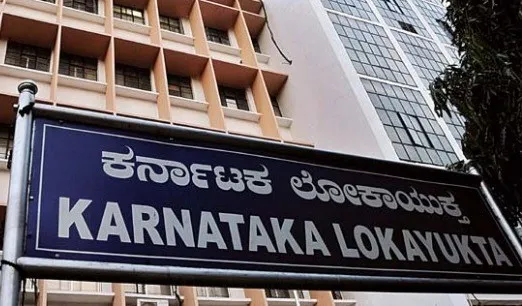
Supreme Court Sets Aside Anticipatory Bail to IPS Officer in Lokayukta Corruption Case: A Judicial Turning Point
High Court’s Lenient View Foreclosed Custodial Interrogation, Remarks Apex Court
Uniformed Officials Facing Graft Charges Under the Lokayukta Cannot Claim Parity with Laymen
By Legal Reporter
New Delhi: November 05, 2026:
The Supreme Court of India delivered a significant ruling by setting aside the anticipatory bail granted by the Karnataka High Court to Indian Police Service (IPS) officer Srinath Joshi M in connection with an in-house corruption probe. A division bench comprising Justice Sanjay Kumar and Justice Sanjeev Sachdeva allowed the appeal filed by the Karnataka Lokayukta Police, underlining that grave allegations of abuse of power within an anti-corruption institution warrant rigorous judicial scrutiny rather than premature leniency.
The case traces back to a corruption case registered under the Prevention of Corruption Act by the Karnataka Lokayukta police. Investigators alleged deep-seated irregularities and systemic misconduct linked to the officer during his tenure as Superintendent of Police for the Lokayukta Bengaluru division.
Analytical Overview of the Supreme Court Verdict
1. Rejection of the "Appearance Equals Immunity" Doctrine
The Karnataka High Court had previously favoured granting pre-arrest bail primarily on the premise that the respondent officer had already responded to investigation notices and cooperated by appearing before the Investigating Officer (IO).
However, the Supreme Court sharply criticized this reasoning. The apex bench underscored that mere compliance with initial appearance notices does not negate the necessity of custodial interrogation, especially when the prosecution's evidentiary material demands deeper, unhindered examination. By granting protection prematurely, the High Court had effectively foreclosed crucial investigative avenues.
2. Digital Evidence and Accusations of Tampering
A pivotal element driving the Supreme Court’s decision was the handling of physical evidence. During the investigation, two mobile phone handsets belonging to the officer were seized. Forensic examination reports indicated that these devices had been extensively damaged and deliberately tampered with.
The presence of tampered electronic evidence fundamentally altered the risk profile of the investigation, strengthening the Lokayukta police's argument that custodial interrogation was essential to unearth the full nexus of corruption.
3. Equality Before Law and Public Accountability
Addressing the status of the accused, the Supreme Court explicitly noted that a senior police officer and public servant facing allegations of graft cannot claim parity with an ordinary layman seeking protection from arrest. The apex court reasoned that because the Lokayukta was established specifically to root out systemic public corruption, internal allegations of venality within the institution strike at the core of public trust and require an uncompromising judicial approach.
Directives and Next Steps
The Supreme Court directed IPS officer Srinath Joshi to surrender before the Lokayukta police within three weeks of the order. At the same time, the bench clarified that its order does not prejudice his statutory rights, granting him the liberty to approach the appropriate forum to seek regular bail in accordance with the law.
Frequently Asked Questions (FAQs)
Q1: Why did the Supreme Court cancel the anticipatory bail granted to the IPS officer?
A: The Supreme Court cancelled the anticipatory bail because it found that the Karnataka High Court adopted an unduly lenient approach. The apex court emphasized that grave allegations of corruption within the Lokayukta, coupled with evidence of tampered and damaged mobile phones, necessitated custodial interrogation rather than pre-arrest protection.
Q2: Can a public servant claim parity with ordinary citizens in anticipatory bail matters?
A: No. The Supreme Court categorically observed that a senior uniformed officer cannot claim parity with a layman when facing serious accusations of abusing official office within an anti-corruption watchdog.
Q3: What are the immediate legal consequences for the accused officer following the Supreme Court order?
A: The officer has been directed to surrender before the Karnataka Lokayukta police within the stipulated three-week window. However, the Supreme Court has clarified that he remains legally free to file an application seeking regular bail before the competent court.
Related articles
 Anticipatory Bail
News Snacks
The Supreme Court of India has cancelled the anticipatory bail of IPS officer Srinath M. Joshi in a major corruption case, emphasizing accountability within law enforcement.
4 min read
 Anticipatory Bail
News Snacks
The Karnataka High Court has denied anticipatory bail to Dr. Shantha Hosamani, a KPSC member, in a bribery case, emphasizing the need for integrity in public recruitment.
5 min read