News Snacks
The family of the crash victim challenges the Kerala High Court's bail decision for the minor driver, raising concerns about evidence tampering and justice.
- By
- BailNow Research Team
- Published
- Reading time
- 4 min read
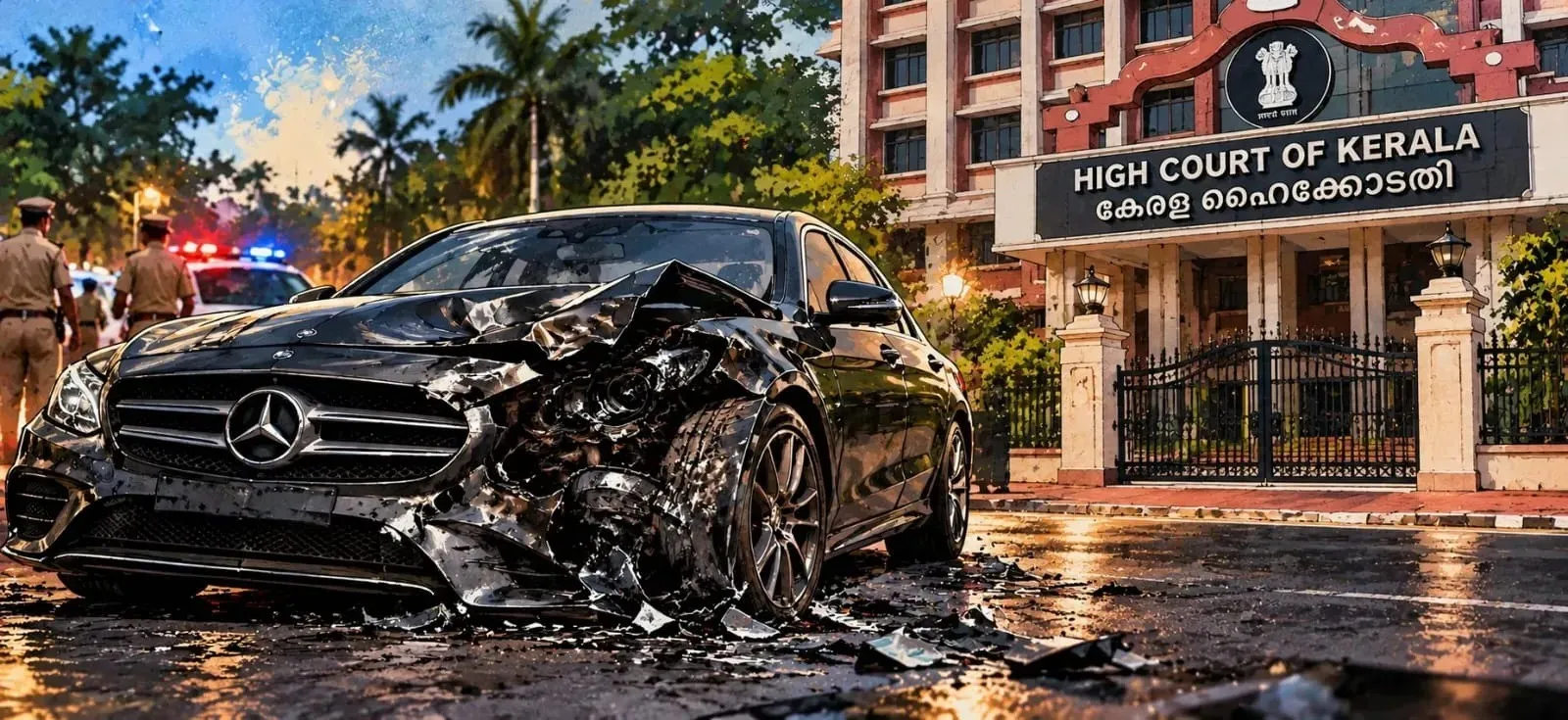
Kerala Mercedes Crash: Victim’s Family Moves High Court Challenging Bail Granted to Minor Accused
Legal battle escalates as petitioners argue juvenile's release risks evidence tampering, challenging earlier rulings by the JJB and Ernakulam Children’s Court.
The fatal October crash in Cheranalloor involving a speeding luxury vehicle has triggered intense scrutiny over police procedures and juvenile justice application.
By Legal Reporter
New Delhi: November 12, 2026:
The legal battle surrounding the high-profile Cheranalloor Mercedes-Benz crash has intensified, with the family of the deceased victim, 55-year-old Jayabalakrishnan, officially moving the Kerala High Court. The petition challenges the concurrent orders of the Juvenile Justice Board (JJB) and the Ernakulam Children’s Court, which previously declined to cancel the bail granted to the 17-year-old minor accused.
The tragic incident occurred in the early hours of October 25, when a speeding luxury vehicle allegedly driven by the minor rammed into the victim's scooter, resulting in his instantaneous death. As the case proceeds through higher judicial scrutiny, it brings to light critical questions regarding the intersection of juvenile law, police compliance, and public accountability.
Escalation to the High Court and Core Contentions
Following the tragic mishap, the Cheranalloor police initially filed a case under Section 106 of the Bharatiya Nyaya Sanhita (BNS) concerning death by negligence, before subsequently altering it to Section 105 (culpable homicide not amounting to murder). Despite the grave escalation in charges, the minor—classified as a Child in Conflict with Law (CCL)—was swiftly granted custody bail by the JJB.
Both the State prosecution and the victim’s grieving family subsequently approached the Ernakulam Additional Sessions Court (acting as the Children’s Court) seeking the revocation of the bail. However, the lower court upheld the bail, reasoning that under the Juvenile Justice (Care and Protection of Children) Act, 2015, bail remains the rule and detention the exception. The lower court also flagged procedural missteps by law enforcement, noting that the offense did not meet the strict threshold of a "heinous crime" carrying a minimum mandatory imprisonment of 10 years, and criticized the direct registration of an FIR against the minor contrary to Rule 8 of the JJ Model Rules.
Dissatisfied with these findings, the victim's family moved the Kerala High Court. The petitioners contend that because the minor hails from an influential background—being the son of a district judge who was also recently granted anticipatory bail—there is a credible apprehension of witness intimidation and evidence tampering. Furthermore, the appeal stresses that Section 12 of the JJ Act explicitly mandates the denial of bail if release exposes the child to moral or physical danger or defeats the ends of justice.
Broader Implications and Judicial Focus
The case has captured widespread public and legal attention in Kerala, not only due to the severity of the crash—which reportedly involved reckless driving captured on a mobile video showing high speeds in rainy conditions—but also due to institutional complexities. With the Kerala High Court now issuing notices and reviewing the petitions, all eyes are on the judiciary to balance statutory child-protection frameworks with accountability in high-stakes criminal negligence matters.
Frequently Asked Questions (FAQs)
Q1: What is the core grievance of the victim’s family in the Kerala High Court petition?
A1: The family of Jayabalakrishnan is challenging the lower court and JJB orders that upheld the bail granted to the minor driver. They argue that the accused’s influential background creates a high risk of evidence tampering and witness intimidation, and that release violates statutory provisions meant to serve the ends of justice.
Q2: Why did the Children’s Court initially decline to cancel the minor's bail?
A2: The Children’s Court relied on the fundamental principle of the Juvenile Justice Act that bail is the norm and detention the exception. It also noted procedural irregularities by the police in filing a formal FIR rather than adopting child-sensitive inquiry methods for non-heinous classifications under the Act.
Q3: What legal sections are invoked against the accused in this case?
A3: The police invoked Section 105 of the Bharatiya Nyaya Sanhita (BNS) for culpable homicide not amounting to murder, alongside provisions of the Motor Vehicles Act concerning excessive speed, driving without a valid license, and offenses by juveniles.
Related articles
 Case Analysis
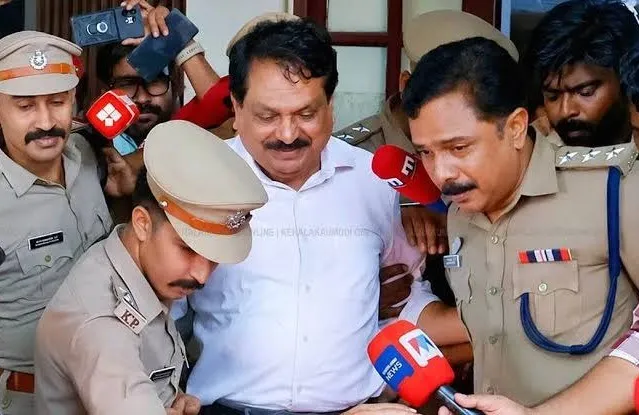
'You Were Never in Jail': Kerala High Court's Scathing Probe Order Into Ex-Top Cop Tomin Thachankary's Hospital Stay
Kerala High Court scrutinizes former DGP Tomin Thachankary's hospitalisation during custody, questioning elite privileges and bail conditions in a landmark case.
4 min read
 Case Analysis
News Snacks
The Juvenile Justice Board has granted bail to an eight-year-old accused in a serious school assault case, while taking critical steps to enhance safety protocols in educational institutions.
3 min read