Rajasthan High Court Refuses Bail to Five Accused in Kanhaiya Lal Murder Case, Says UAPA Bar Remains Applicable
The Rajasthan High Court has denied bail to five accused in the Kanhaiya Lal murder case, emphasizing ongoing trial progress and UAPA restrictions.
- By
- BailNow Research Team
- Published
- Reading time
- 12 min read

On this page
Court Rules That Four Years of Custody Alone Cannot Override UAPA Restrictions When Trial Is Progressing Swiftly
Judgment Highlights National Security Concerns, Alleged Conspiracy, and Limits of Bail Jurisdiction in Terror Cases
By Legal Editor
Jaipur: October 22, 2026:
In a major ruling in one of India's most widely discussed terrorism-related criminal cases, the Rajasthan High Court has refused to grant bail to five accused in the 2022 murder of Udaipur tailor Kanhaiya Lal, holding that prolonged incarceration alone is not sufficient to secure release when the statutory restrictions under the Unlawful Activities (Prevention) Act (UAPA) continue to apply and the trial is progressing at a substantial pace.
The decision was delivered by a Division Bench comprising Chief Justice Sanjay K. Agrawal and Justice Sameer Jain. The Court dismissed a batch of appeals challenging earlier orders of the Special NIA Court that had denied bail to the accused.
At the heart of the ruling was an important legal question that has increasingly appeared before courts handling terrorism cases: Can an accused obtain bail under UAPA primarily because of prolonged custody when the trial is already underway?
The High Court answered that question in the negative on the facts of this case.
The Court held that the prosecution materials placed before it disclosed a prima facie case under Section 43D (5) of the UAPA, thereby triggering the statutory bar on bail. It further observed that since the trial was moving actively and on a day-to-day basis, the constitutional argument based on delay and prolonged detention could not presently override the restrictions imposed by anti-terror legislation.
The ruling provides significant insight into how Indian courts continue to balance personal liberty with national security concerns in serious terrorism-related prosecutions.
Background: The Murder That Shocked the Nation
The case arises from the murder of Kanhaiya Lal, a tailor from Udaipur, Rajasthan, who was killed inside his shop on June 28, 2022.
According to court records summarized by SCC Times, the incident occurred amid nationwide controversy and social tensions surrounding remarks made by former political spokesperson Nupur Sharma during a televised debate. The controversy triggered protests and heated reactions across several parts of India.
The prosecution case states that Kanhaiya Lal subsequently became the target of hostility after social media activity connected to the controversy. According to records referred to by the High Court, he had reportedly faced threats and concerns regarding his safety, leading him to install CCTV cameras outside his tailoring shop, known as "Suprim Tailors."
On June 28, 2022, two-armed assailants allegedly entered his shop and attacked him with sharp-edged weapons. Two shop assistants were also injured during the incident.
The murder generated national outrage, not only because of its brutality but also because videos linked to the incident were allegedly recorded and circulated online. Investigators later alleged that the dissemination of these videos was intended to create fear, spread communal tension, and advance a broader terror-related objective.
How the Case Reached the NIA
Following the murder, the victim's son filed a complaint that led to registration of criminal proceedings.
The FIR included serious offences under the Indian Penal Code, including murder, promoting enmity, and offences relating to religious sentiments. Investigators also invoked provisions of the UAPA, including Sections 16, 18, and 20 dealing with terrorist acts, conspiracy, and unlawful activities.
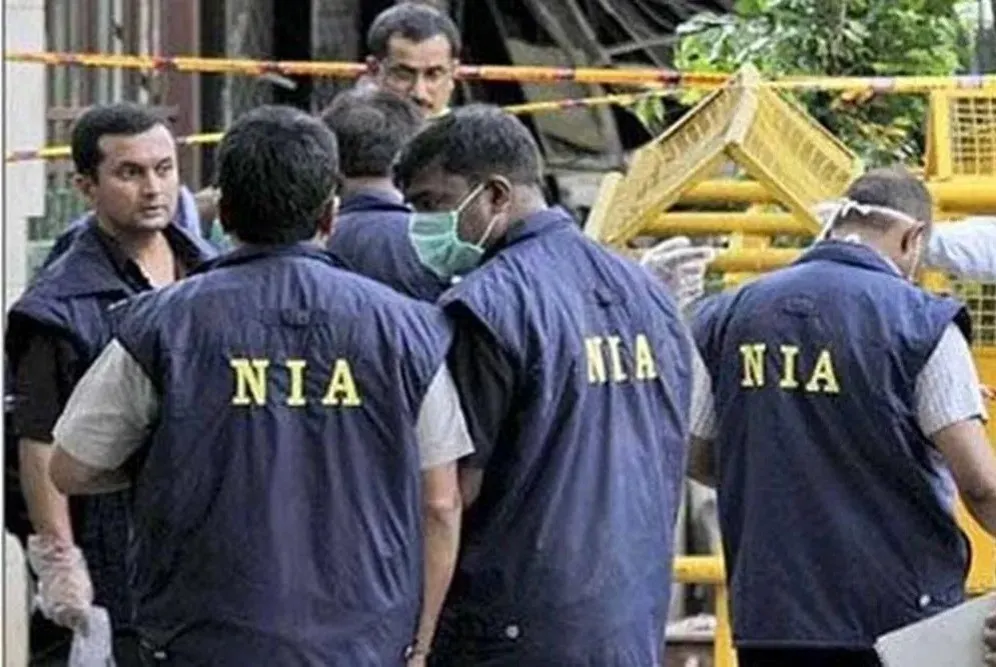
Given the gravity of the allegations and their alleged implications for national security, the investigation was transferred to the National Investigation Agency (NIA), India's premier counter-terrorism investigative body.
The NIA ultimately filed a charge sheet alleging that the killing was not an isolated individual crime but part of a larger conspiracy involving multiple accused.
Charges were framed in January and February 2024, and trial proceedings commenced thereafter.
Who Filed the Bail Appeals?
The appeals before the High Court were filed by five accused persons whose bail applications had earlier been rejected by the Special NIA Court.
According to reports of the judgment, the appellants were accused of participating in the alleged conspiracy behind the murder. They were arrested between July and August 2022 and have remained in judicial custody since their arrests.
They challenged the rejection of bail before the High Court, arguing that there was inadequate evidence linking them to the actual execution of the crime.
The case therefore required the Court to determine whether the available material justified continuing detention under UAPA standards.
Arguments Raised by the Accused
The accused advanced multiple arguments in support of their request for bail.
They contended that there was no direct evidence showing their presence near the shop of Kanhaiya Lal before the incident. They argued that they had not been seen in the vicinity during the relevant period and that the prosecution was relying excessively on circumstantial material.
The appellants also argued that:
- Their names were not mentioned in the original FIR.
- There was no evidence of WhatsApp messages, texts, or voice notes showing communal provocation by them.
- The prosecution's reliance on disclosure statements and call detail records was insufficient.
- Certain disclosure statements were allegedly recorded in English, a language some accused claimed not to understand.
- Co-accused persons had already received bail in certain proceedings, and parity should therefore be considered.
Most importantly, the accused relied upon constitutional protections under Article 21, arguing that prolonged detention of more than four years justified relief.
Their lawyers referred to Supreme Court precedents such as K.A. Najeeb, where constitutional courts recognized that excessive delay can sometimes justify bail even in UAPA cases.
What the NIA Argued
The National Investigation Agency vehemently opposed the bail requests.
According to the agency, the material gathered during investigation revealed the existence of a pre-planned conspiracy in which each accused allegedly performed a specific role
The prosecution pointed to:
- Call detail records.
- Video evidence.
- Recoveries.
- Communication links among accused persons.
- Alleged surveillance and reconnaissance activities.
- Material suggesting coordination with the principal accused.
The NIA maintained that the murder was part of a larger terror-related conspiracy designed to create widespread fear and communal disharmony.
In the agency's view, the accused were therefore not entitled to bail under the strict standards prescribed by UAPA.
Understanding Section 43D (5) of UAPA
A central issue in the proceedings concerned Section 43D (5) of the UAPA.
This provision imposes one of the strictest bail standards in Indian criminal law.
Under the section, bail cannot ordinarily be granted if the court finds reasonable grounds for believing that the accusations appear prima facie true.
Unlike ordinary criminal bail hearings, courts at this stage do not conduct a detailed examination of the evidence or decide whether the prosecution will ultimately win at trial.
Instead, the court performs a limited review to determine whether the prosecution's case appears credible at first glance.
If that threshold is crossed, the statutory restriction on bail comes into operation.
The Rajasthan High Court concluded that the material submitted by the NIA satisfied this threshold.
Why the High Court Rejected Bail
After considering the rival submissions, the Court found that a prima facie case existed against the accused.
The Bench specifically observed that bail courts cannot engage in a detailed examination of evidence or determine admissibility questions at the bail stage. Issues concerning disclosure statements, evidentiary value, or the ultimate reliability of individual pieces of evidence must be decided during trial.
The Court stated that it was required to assess whether the prosecution's case, taken at face value, disclosed allegations that appeared prima facie true.
After examining the record, the Court concluded that it did.
As a result, the statutory bar under Section 43D (5) remained operational.
Why the Custody Argument Failed
One of the most significant elements of the judgment concerns the issue of prolonged custody.
The accused had spent over four years in jail and argued that continued detention violated their constitutional rights.
However, the High Court distinguished earlier Supreme Court judgments where lengthy incarceration had justified bail.
The Bench pointed out that those decisions typically involved situations in which trials were unlikely to conclude within a reasonable time.
In contrast, the Court found that the present trial was progressing actively and rapidly.
The judgment notes:
- Proceedings were being conducted on a day-to-day basis.
- The witness list had reportedly been reduced from about 180 witnesses to 89.
- Around 30 material witnesses had already been examined.
- The trial demonstrated substantial progress.
Because the trial was advancing, the Court held that delay could not be relied upon as an independent ground for bail.
Court's Observations on Terrorism
The judgment contains strong observations regarding the nature of terrorism and its societal impact.
The Court emphasized that allegations involving terrorist acts must be viewed differently from ordinary criminal offences.
According to reports of the judgment, the Bench observed that terrorism is not merely an attack on an individual victim but can represent an assault on public confidence, societal stability, and the rule of law itself.
The Court held that allegations surrounding the killing had to be examined through the lens of national security rather than solely as an ordinary murder case.
These observations played a significant role in the Court's decision to maintain a cautious approach toward bail.
Distinction Between Bail and Trial
A key aspect of the ruling is the Court's repeated clarification that its observations do not determine guilt.
The Bench stressed that it was examining only a bail issue, not deciding whether the accused were guilty of the offences alleged.
The Court's role was limited to evaluating whether sufficient material existed to trigger the statutory restrictions imposed by UAPA.
The final question of innocence or guilt will be decided only after completion of the trial and evaluation of all evidence.
This distinction is important because rejection of bail is not a conviction.
Broader Impact on UAPA Jurisprudence
The decision contributes to the evolving body of Indian jurisprudence governing UAPA cases.
Courts have increasingly faced the challenge of balancing:
- Individual liberty.
- Speedy trial rights.
- National security concerns.
- Legislative restrictions under anti-terror laws.
The Supreme Court has previously recognized that extraordinary delays can justify bail even under UAPA.
However, the Rajasthan High Court's ruling demonstrates that such constitutional considerations may carry less force where the prosecution can show that the trial is proceeding efficiently and substantial progress has been made.
The judgment therefore reinforces an important principle: prolonged custody alone may not be sufficient if the prosecution satisfies the statutory threshold and the trial is moving forward at a meaningful pace.
What Happens Next?
The criminal trial will continue before the designated court.
The prosecution will continue presenting evidence, including witness testimony and other material relied upon by investigators.
The accused continue to enjoy the presumption of innocence and retain all legal rights available under Indian law.
They may also pursue remedies before higher judicial forums if advised to do so.
The final determination of criminal liability will depend entirely upon evidence tested during trial.
Conclusion
The Rajasthan High Court's refusal to grant bail in the Kanhaiya Lal murder case marks a significant ruling on the relationship between constitutional liberty and statutory restrictions under UAPA. The Court held that the accused could not rely solely on the fact that they had spent more than four years in custody because the NIA's case disclosed a prima facie basis for the allegations and the trial was progressing at a substantial pace.
By emphasizing the gravity of terrorism-related offences, the significance of Section 43D(5), and the importance of ongoing trial progress, the judgment adds an important chapter to India's evolving anti-terror bail jurisprudence. While the accused remain presumed innocent until proven guilty, the High Court found that the circumstances at this stage do not justify their release on bail.
FAQs
1. What did the Rajasthan High Court decide?
The Court rejected bail appeals filed by five accused in the Udaipur Kanhaiya Lal murder case.
2. Why was bail denied?
The Court held that the prosecution's case was prima facie true under Section 43D(5) UAPA and that the trial was progressing actively.
3. Who is investigating the case?
The investigation was taken over by the National Investigation Agency (NIA).
4. What happened to Kanhaiya Lal?
He was murdered inside his tailoring shop in Udaipur on June 28, 2022.
5. What is Section 43D(5) of UAPA?
It restricts bail where the court finds reasonable grounds to believe that accusations are prima facie true.
6. Did the Court decide the accused are guilty?
No. The Court only decided the bail issue and specifically did not determine guilt.
7. Why did the Article 21 argument not succeed?
The Court found that the trial was advancing quickly, reducing the force of arguments based on delay and prolonged incarceration.
8. How many witnesses have been examined?
The Court noted that approximately 30 material witnesses had already been examined.
9. What offences were invoked in the case?
The case includes IPC offences and UAPA provisions relating to terrorist acts, conspiracy, and unlawful activities.
10. What is the significance of this ruling?
The judgment clarifies that prolonged custody alone may not justify bail under UAPA where a prima facie case exists and the trial is progressing without undue delay.
Related articles
 UAPA Bail
BailNow.in News Snacks
A special NIA court in Mohali has denied Gagandeep Singh's second bail plea in a narco-terror case, ruling no new circumstances justified release. The court cited strong evidence under UAPA.
3 min read
 UAPA Bail
BailNow.in News Snack
The Rajasthan High Court's ruling denies bail to five accused in the Kanhaiya Lal murder case, emphasizing terrorism's threat to peace and the stringent provisions of UAPA.
3 min read