News Snacks
The Supreme Court has permitted Ashish Mishra to visit Lakhimpur Kheri for Diwali under existing bail conditions, emphasizing a balanced trial pace.
- By
- BailNow Research Team
- Published
- Reading time
- 4 min read
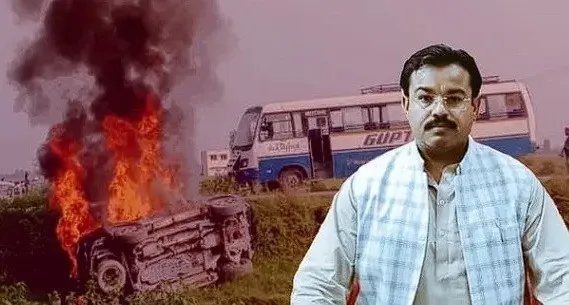
Supreme Court Permits Ashish Mishra to Visit Lakhimpur Kheri for Diwali, Stresses Timely Conclusion of Trial
Apex Court bench led by Chief Justice Surya Kant relaxes bail conditions temporarily while reviewing witness testimonies and administrative transfer of the trial judge.
Prosecution reports that 90 out of 131 witnesses have been examined, with the Supreme Court calling for a balanced pace ensuring neither delay nor undue haste.
By Legal Reporter
New Delhi: October 26, 2026:
The Supreme Court of India on Monday permitted Ashish Mishra—the prime accused in the 2021 Lakhimpur Kheri violence case and son of former Union Minister Ajay Mishra Teni—to visit his hometown to celebrate Diwali with his family and close relatives. A three-judge bench comprising Chief Justice of India Surya Kant, Justice Joymalya Bagchi, and Justice V. Mohana passed the directive in the matter titled Ashish Mishra Alias Monu v. State of U.P.
Under the terms of the order, Mishra is permitted to visit Lakhimpur Kheri under the conditions previously imposed during his interim bail, with a strict mandate to return by November 16.
Judicial Scrutiny and Trial Progress
During the proceedings, the bench closely evaluated the ongoing trial status. Advocate Ruchira Goel, appearing as the Standing Counsel for the State of Uttar Pradesh, informed the apex court that out of a total of 131 witnesses, 90 have already been examined, leaving 41 witnesses remaining.
Addressing concerns regarding the timeline of the proceedings, Chief Justice Surya Kant underscored the necessity of judicial equilibrium:
“Let the trial be timely concluded. There should not be a tearing hurry, but there also should not be prolonged delay. Balance has to be maintained by the prosecution.”
The case stems from the tragic events of October 3, 2021, where five individuals—including four farmers protesting against the now-repealed farm laws and a journalist—lost their lives after vehicles in a convoy allegedly ran over them. While the Supreme Court had previously granted bail to Mishra subject to restrictions (such as barring entry into Lakhimpur Kheri except for trial appearances), it has kept the matter pending continuously to monitor the trial's fairness and expedition.
Administrative Measures and Counsel Submissions
Advocate Prashant Bhushan, representing the victims' interests, expressed satisfaction over recent administrative developments, noting the transfer of the previous trial judge following transparency concerns raised by the victims. Senior Advocate Siddharth Dave, appearing for Ashish Mishra, maintained that the judicial transfer was a routine administrative exercise devoid of any adverse legal findings.
Clarifying the stance of the bench, CJI Surya Kant remarked that the court was casting no aspersions, noting that appropriate administrative steps taken by the High Court were sufficient to maintain the integrity of the judicial process.
Frequently Asked Questions (FAQs)
1. Why did the Supreme Court allow Ashish Mishra to visit Lakhimpur Kheri?
The Supreme Court granted Ashish Mishra permission to visit his hometown specifically to celebrate the Diwali festival with his family and close relatives, noting that similar festival relaxations had been extended to him previously.
2. What are the strict timelines associated with this permission?
Mishra is allowed to stay in his hometown under his existing bail conditions but must return and report back by November 16.
3. What is the current status of the Lakhimpur Kheri trial?
According to state counsel updates presented to the Supreme Court, out of 131 total witnesses, 90 have been examined so far, leaving 41 witnesses left to depose. The apex court has directed that the trial proceed at a balanced pace without unnecessary delays.
Related articles
 Bail Basics
Courts Must Be Wary of Granting Bail in Serious Offences During Trial: Supreme Court Sets a Strong Precedent
The Supreme Court of India stresses extreme caution in bail decisions during serious offence trials, especially when material witnesses remain unexamined.
7 min read
 Bail Basics
"Bail vs. Jail": Untangling the Supreme Court’s Evolving Stance on Personal Liberty and the Crisis of Pre-Trial Detention
This article examines the Supreme Court's evolving approach to bail, addressing the themes of personal liberty and pre-trial detention under Article 21 of the Constitution of India.
7 min read