"Bail vs. Jail": Untangling the Supreme Court’s Evolving Stance on Personal Liberty and the Crisis of Pre-Trial Detention
This article examines the Supreme Court's evolving approach to bail, addressing the themes of personal liberty and pre-trial detention under Article 21 of the Constitution of India.
- By
- BailNow Research Team
- Published
- Reading time
- 7 min read
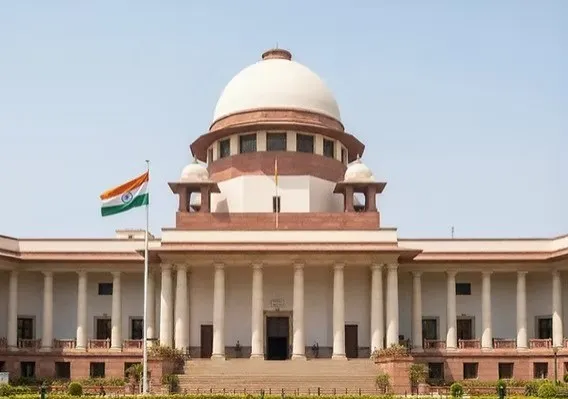
Examining the Constitutional Shield of Article 21 Against Prolonged Incarceration Without Trial
How Modern Judicial Rulings Push Back Against Retributive Pre-Trial Custody and Systemic Delays
By Legal Editor
New Delhi: October 29, 2026:
At the very heart of any civilized democratic legal system lies a simple, time-tested maxim: an individual is presumed innocent until proven guilty. Flowing naturally from this presumption of innocence is a fundamental rule of criminal procedure—"bail is the rule, jail is the exception."
First firmly anchored in modern Indian legal lexicon through landmark rulings such as State of Rajasthan v. Balchand, this doctrine recognizes that the primary objective of keeping an accused person in custody prior to a trial is not to inflict pre-emptive punishment, but merely to ensure their presence during court proceedings and safeguard the integrity of the investigation.
However, a yawning gap exists between constitutional ideals and ground realities. Across sub-continental courtrooms and overcrowded correctional facilities, undertrial prisoners constitute a staggering majority of the total prison population. When the judicial process itself becomes an extended punishment due to crippling system backlogs, the foundational guarantee of personal liberty faces a severe existential threat. This comprehensive analysis explores how the Supreme Court of India and various High Courts are continuously reshaping bail jurisprudence to protect human dignity against arbitrary or indefinite state custody.
The Constitutional Baseline: Article 21 and the Presumption of Innocence
To understand why bail is treated as a default norm, one must look closely at Article 21 of the Constitution of India, which guarantees that no person shall be deprived of their life or personal liberty except according to procedure established by law. The Supreme Court has repeatedly affirmed that any procedure depriving a citizen of liberty must be "fair, just, and reasonable".
When a person is locked away behind bars for months or years while a criminal trial crawls forward without a final judgment, that prolonged incarceration violates the essence of fairness. If an individual is ultimately acquitted after a five-year trial, the years spent languishing in prison can never be returned. Therefore, modern jurisprudence stresses that physical detention before a court establishes guilt should only be authorized when absolutely necessary—such as when there is a concrete, demonstrable risk of the accused fleeing justice, intimidating witnesses, or tampering with vital evidence.
The Ground Reality: Why "Jail as the Exception" Often Feels Like "Jail as the Rule"
Despite clear rulings from the apex court, lower judiciary systems and investigative agencies frequently treat incarceration as a primary tool of enforcement. Several structural bottlenecks contribute to this trend:
1. The Burden of Special Legislation (PMLA, UAPA, NDPS)
Over the years, the legislative landscape has witnessed the enactment of stringent special statutes designed to counter organized crime, economic offenses, and terrorism. Statutes like the Prevention of Money Laundering Act (PMLA), the Unlawful Activities Prevention Act (UAPA), and the Narcotic Drugs and Psychotropic Substances (NDPS) Act incorporate rigid statutory barriers—such as "twin conditions" for bail—where the court must prima facie be satisfied that the accused is not guilty before granting relief.
Prosecuting agencies routinely weaponize these thresholds to argue that normal bail principles do not apply. Consequently, individuals spend massive stretches in custody before trial arguments even commence.
2. Economic Disparities and the Monetary Bail System
The traditional framework of bail heavily relies on the furnishing of financial bonds and local sureties. For marginalized, economically weaker, or migrant defendants, arranging lump-sum monetary guarantees or finding solvent sureties is near-impossible. Thousands of poor citizens remain locked up simply because they cannot afford the financial price of their freedom, transforming the bail system into a tool of economic discrimination.
Landmark Judicial Interventions: Reclaiming the Rule of Liberty
Recognizing the deep crisis of undertrial congestion, the Supreme Court has actively intervened through expansive, progressive rulings.
- The Mandate Against Prolonged Detention: In benchmark cases like Union of India v. K.A. Najeeb, the apex court explicitly ruled that statutory restrictions in special laws cannot override the fundamental right to a speedy trial under Article 21. When trial delays become egregiously long, constitutional courts possess the authority to grant bail regardless of statutory bars.
- Reaffirming Norms Under Strict Statutes: In landmark judgments concerning special statutes (such as interpretations surrounding the PMLA), the Supreme Court has clarified that restrictive provisions do not completely rewrite the core philosophy that bail is the rule and jail is the exception. The prosecution must still satisfy the court that continued custodial detention serves an indispensable purpose, rather than relying on abstract apprehension.
- Comprehensive Guidelines for Arrest and Detention: Through rulings like Satender Kumar Antil v. CBI, the Supreme Court categorized offenses and issued explicit directions to police and trial courts to avoid mechanical arrests and unnecessary custodial remands, urging magistrates to utilize non-monetary release options and personal bonds wherever feasible.
The Way Forward: Reforming Pre-Trial Justice
Bridging the gap between constitutional promises and criminal administration requires systemic structural changes:
- Promoting Non-Monetary Bail: Courts and legislatures must increasingly pivot toward personal bonds, surety-free releases, and community-based supervision to ensure that poverty is never a barrier to freedom.
- Streamlining Trial Timelines: Because the primary driver of pre-trial suffering is judicial delay, expanding infrastructure, appointing additional judges, and setting strict sunset clauses for trial completions are paramount.
- Accountability for Unnecessary Arrests: Police authorities must strictly adhere to statutory notice requirements before enacting arbitrary arrests, ensuring that detention is reserved solely for individuals who pose an active, proven threat to society.
Frequently Asked Questions (FAQs)
Q1: What does the legal phrase "bail is the rule, jail is the exception" actually mean?
A: This principle stems from the fundamental presumption of innocence in criminal law. It means that an accused person should generally remain free prior to their trial unless there are strong, specific reasons—such as a proven flight risk, likelihood of tampering with evidence, or threat to witnesses—that make keeping them in custody absolutely necessary.
Q2: Why are so many people stuck as undertrials in Indian prisons if bail is supposed to be the rule?
A: The backlog is caused by a combination of systemic trial delays, investigative backlogs, the stringent conditions attached to special criminal statutes (like the PMLA, UAPA, and NDPS), and economic hurdles where poor defendants cannot afford financial bonds or local sureties.
Q3: Can someone accused of a serious economic offense or financial fraud still get bail?
A: Yes. While economic offenses involve complex financial trails and large sums of money, the Supreme Court has repeatedly ruled that the gravity of an economic offense alone does not create a universal rule that bail must be refused. Courts must evaluate individual factors such as the role of the accused, whether evidence has already been secured, and the risk of fleeing.
Q4: How does Article 21 of the Constitution protect individuals from arbitrary pre-trial detention?
A: Article 21 guarantees the right to life and personal liberty. The Supreme Court has interpreted this to mean that any deprivation of liberty must follow a procedure that is fair, just, and reasonable. When pre-trial detention becomes excessively prolonged without a speedy trial, it violates Article 21, allowing constitutional courts to intervene and grant bail.
Related articles
 Bail Basics
News Snacks
The Supreme Court has permitted Ashish Mishra to visit Lakhimpur Kheri for Diwali under existing bail conditions, emphasizing a balanced trial pace.
4 min read
 Bail Basics
BailNow.in News Snacks
The Supreme Court ruled that judges must not impose personal morality in bail decisions. This judgment emphasizes legal parameters and strengthens judicial neutrality.
3 min read