News Snacks
This article analyzes the Gujarat High Court's striking ruling equating major drug trafficking to a 'death-blow' to society, particularly emphasizing its serious implications under the NDPS Act.
- By
- BailNow Research Team
- Published
- Reading time
- 3 min read
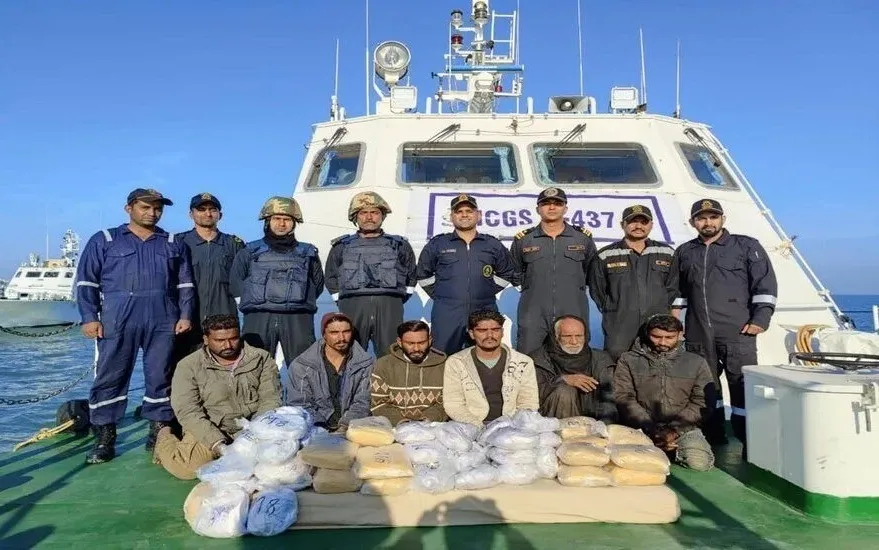
The Silent Epidemic: Why the Gujarat High Court Equates Major Drug Trafficking to a 'Death-Blow' for Society
Analyzing the Judiciary’s Stance on Commercial-Scale Illicit Manufacturing Under the NDPS Act
The Public Health and Legal Implications of Subversive Narcotics Production Disguised as Consumer Goods
By Legal Reporter
New Delhi: October 29, 2026:
The legal parameters surrounding bail under the Narcotic Drugs and Psychotropic Substances (NDPS) Act have always been notoriously stringent. However, a recent ruling by the Gujarat High Court has elevated the judicial discourse, drawing a direct parallel between large-scale drug trafficking and heinous crimes like murder. Presiding over a high-stakes bail plea involving the clandestine manufacture of 47.7 kg of Alprazolam inside a facility masked as a legitimate nail polish production unit, Justice Hasmukh D Suthar forcefully articulated that drug peddlers and illicit manufacturers deliver a fatal "death-blow" to the physical and mental well-being of the younger generation.
This analytical article dissects the judicial reasoning, the evolving tactical fronts of narcotics manufacturing, and the broader societal fallout highlighted by the court.
Analytical Overview: The Legal and Social Calculus
1. The Strict Threshold of the NDPS Act and Judicial Discretion
Under the framework of the NDPS Act, especially involving commercial quantities, statutory restrictions heavily tilt against the granting of bail unless the court is satisfied that there are reasonable grounds to believe the accused is not guilty. In this case, the accused was caught red-handed operating an underground production line for Alprazolam—a potent prescription benzodiazepine primarily used for anxiety and depression but widely abused in illicit markets to spike other synthetic narcotics or amplify depressive highs.
By likening the gravity of illicit drug operations to murder, the Gujarat High Court emphasized that while a murderer takes a single life, a large-scale drug manufacturer systematically poisons hundreds, if not thousands, of impressionable youths. This macro-societal harm diminishes the weight of standard mitigating factors during bail considerations.
2. Evolving Modus Operandi: Camouflage Industries
Modern drug syndicates increasingly rely on industrial subterfuge. Operating a chemical synthesis unit under the guise of mundane consumer products—such as nail polish, cosmetics, or legal pharmaceuticals—allows traffickers to bypass localized suspicion, evade routine excise checks, and launder illicit precursors. The Gujarat case exposes vulnerabilities in small-scale industrial monitoring and underscores the necessity for cross-departmental intelligence between state drug controllers, tax authorities, and anti-narcotics cells.
Frequently Asked Questions (FAQs)
Q1: What triggered the Gujarat High Court’s recent observations on drug trafficking?
A: The observations were made while Justice Hasmukh D Suthar was hearing a regular bail application filed by an accused individual involved in the illegal production of 47.7 kg of Alprazolam at a covert manufacturing unit disguised as a nail polish factory.
Q2: Why is Alprazolam strictly regulated under the NDPS framework?
A: Alprazolam is a prescription medication meant for managing clinical anxiety and panic disorders. However, due to its high potential for chemical dependency and abuse, its unauthorized bulk manufacture, diversion, and distribution fall heavily under the penal provisions of the NDPS Act.
Q3: Did the High Court grant relief to the accused?
A: No. The High Court firmly denied the bail plea, citing the severe menace that drug addiction poses to adolescents and students, and underscored that narcotics offenses demand stringent judicial handling comparable to capital crimes.
Related articles
 NDPS Bail
News Snacks
The High Court has dismissed Yaniv Benaim's bail application in a high-profile NDPS case, citing a commitment from the prosecution to conclude the trial within four months, while allowing him to reapply if delays occur.
3 min read
 NDPS Bail
Legal Snacks
The Bombay High Court granted bail to a foreign national in a pivotal NDPS case, emphasizing the importance of personal liberty and the right to a speedy trial amid procedural lapses.
4 min read