Legal Snacks
The Bombay High Court granted bail to a foreign national in a pivotal NDPS case, emphasizing the importance of personal liberty and the right to a speedy trial amid procedural lapses.
- By
- BailNow Research Team
- Published
- Reading time
- 4 min read
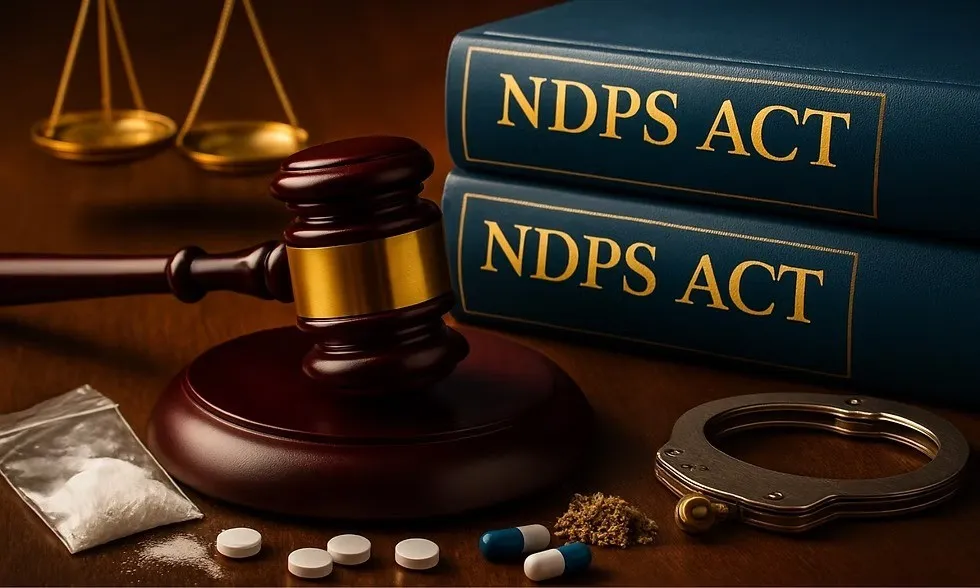
Beyond Punitive Custody: Bombay High Court’s Landmark Bail Ruling in Long-Pending NDPS Cases
Balancing Stringent Statutory Thresholds Against Article 21
Evidentiary Lapses and Procedural Compliance under Scrutiny
By Legal Reporter
New Delhi: October 31, 2026:
The legal intersection between draconian anti-narcotics legislation and fundamental human rights faced rigorous judicial examination as the Bombay High Court granted bail to a foreign national after four years of continuous pre-trial detention. Presided over by Justice Shyam C. Chandak, the ruling deepens the jurisprudential discourse on how prolonged incarceration, independent of the gravity of allegations or statutory bars under the Narcotic Drugs and Psychotropic Substances (NDPS) Act, systematically subverts the constitutional presumption of innocence.
Analytical Overview: The Conflict Between Section 37 and Personal Liberty
The core legal challenge in high-stakes narcotics prosecutions revolves around Section 37 of the NDPS Act, which imposes stringent twin conditions for granting bail, requiring the court to be prima facie satisfied that the accused is not guilty and unlikely to commit any offense while on bail. In cases involving commercial quantities—such as the recovery of over 1 kilogram of narcotics concealed via ingested capsules intercepted at the Chhatrapati Shivaji Maharaj International Airport—these statutory barriers are notoriously difficult to clear.
However, the Bombay High Court's analytical framework shifted from a purely substantive review of the contraband to a procedural audit of the judicial timeline. The bench explicitly remarked that when a trial fails to advance over a multi-year span, continued detention ceases to be a legal mechanism for securing trial attendance and transforms into a form of punitive imprisonment executed prior to conviction. This judicial stance mirrors a broader doctrinal shift across Indian appellate courts, which increasingly invoke the right to a speedy trial as a transcendent right capable of bypassing statutory bars under special acts.
Procedural Vulnerabilities: Sampling and Investigation Lapses
Beyond the time-bound argument for liberty, the case brought critical attention to procedural compliance during narcotics seizures. Defence counsels raised substantial questions regarding the integrity of the investigation, notably pointing out that the contents of multiple ingested capsules were pooled together into a single sample rather than drawing individual representative samples from each unit.
Furthermore, procedural delays—such as a significant lapse in dispatching seized substances for mandatory inventory proceedings—introduced legal vulnerabilities into the prosecution’s case. While the high court noted that such technical lapses and conflicting chemical analysis reports (shifting from initial field tests of methaqualone to laboratory detections involving cocaine, heroin, and morphine) are matters best tested during a full trial, these anomalies weaken the state's immediate pre-trial leverage, reinforcing the argument for conditional liberty.
Frequently Asked Questions (FAQs)
Q1: Why did the Bombay High Court grant bail despite the strict provisions of the NDPS Act?
A: The court ruled that an undertrial's prolonged detention exceeding four years without significant trial progress violates the right to life and personal liberty enshrined under Article 21 of the Constitution. It held that extended pre-trial incarceration renders the presumption of innocence meaningless, making detention inherently punitive.
Q2: What were the specific circumstances of the arrest?
A: The applicant, a Ugandan national named Isma Opaka Wandera, was intercepted by the Air Intelligence Unit at Mumbai's international airport in July 2022 after authorities received intelligence that he had ingested drug-filled capsules. He subsequently expelled 91 capsules containing powdery substances over a three-day period at a hospital.
Q3: How do procedural lapses influence bail decisions in drug cases?
A: Procedural deviations—such as mixing capsule contents without drawing independent individual samples or delays in sending items for statutory inventory-related proceedings—raise legitimate questions regarding adherence to investigation guidelines. While these are evaluated conclusively during trial, they weaken the prosecution's strict opposition to interim relief.
Q4: Does this ruling mean the charges against the accused have been dismissed?
A: No. Granting bail only releases the accused from custody pending trial under specific conditions (such as executing personal bonds, surrendering passports, and reporting regularly to investigative agencies). The criminal trial will continue, and the accused must face the charges on their merits.
Related articles
 NDPS Bail
When Erroneous Police Records Threaten Personal Liberty: Analyzing the Punjab & Haryana High Court’s Landmark Intervention in NDPS Jurisprudence
This article examines a landmark ruling by the Punjab & Haryana High Court that addresses the impact of erroneous police records on personal liberty within NDPS jurisprudence.
4 min read
 NDPS Bail
News Snacks
This article analyzes the Gujarat High Court's striking ruling equating major drug trafficking to a 'death-blow' to society, particularly emphasizing its serious implications under the NDPS Act.
3 min read