News Snacks
The Supreme Court has denied anticipatory bail to Rajiv Ranjan Kumar in a serious assault case where he allegedly bit off his neighbor's ear, highlighting the judiciary's firm stance on grievous bodily harm.
- By
- BailNow Research Team
- Published
- Reading time
- 3 min read
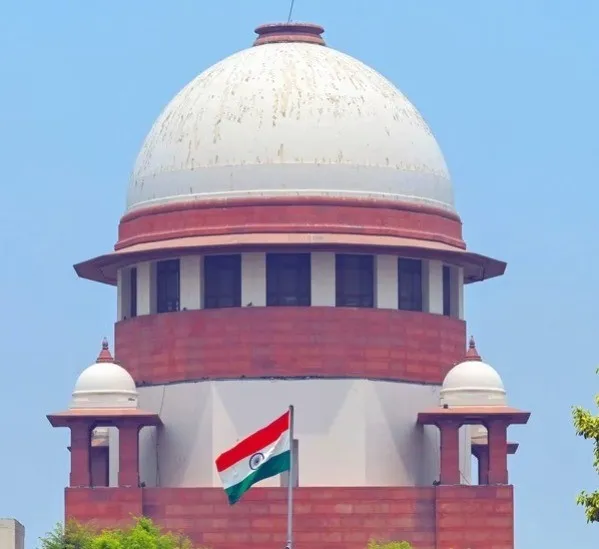
Supreme Court Rejects Bail Plea in Ranchi Assault Case: “You Ate His Ear Off, How Do We Replace It?”
Bench questions accused over grievous injury; anticipatory bail denied after Jharkhand HC rejection
Violent Janmashtami clash led to FIRs; accused claims victimhood but court unmoved
By Legal Reporter
New Delhi: October 15, 2026
The Supreme Court of India has rejected the anticipatory bail plea of Rajiv Ranjan Kumar, accused of biting off his neighbour’s ear during a violent clash in Ranchi. The Bench of Justices JB Pardiwala and K Vinod Chandran delivered sharp remarks, asking: “You ate his ear off, how do we replace it?” This ruling underscores the seriousness of bodily harm in criminal disputes and the judiciary’s unwillingness to grant pre-arrest protection in such grave cases.
Case Background
- Incident: Violent clash between neighbours in Ranchi during Janmashtami celebrations (2024).
- Accusation: Rajiv Ranjan Kumar allegedly bit off his neighbour’s ear after first brandishing a firearm.
- Legal Proceedings:
- FIR registered at Argora police station under multiple sections of the Bharatiya Nyaya Sanhita (BNS), including Section 118 (voluntarily causing hurt or grievous hurt by dangerous weapons or means).
- Jharkhand High Court denied anticipatory bail in February 2026.
- Supreme Court upheld the denial in October 2026, citing the irreparable nature of the injury.
Courtroom Exchange
- Judicial Remarks:
- “You first took out the gun, then grabbed his ear and bit off the entire ear, and you want anticipatory bail?”
- “Okay, let the pistol be. What do we do about the ear? How do we replace it?”
- Defence Argument:
- Claimed it was a long-standing neighbourhood feud.
- Alleged cross-FIRs were filed and that Kumar himself was beaten, pinned down, and bitten on the chest.
- Court’s Response:
- Acknowledged the brawl but emphasized the grievous injury to the victim.
- Rejected anticipatory bail, stressing accountability for irreversible harm.
Legal and Social Implications
- Anticipatory Bail Denial: Reinforces that courts weigh the seriousness of injury over claims of mutual combat.
- Judicial Wit: The remarks highlight how courts use sharp language to underline the gravity of bodily harm.
- Community Impact: The case reflects how neighbourhood disputes can escalate into violent crimes, requiring strict judicial intervention.
FAQs
Q1: What is anticipatory bail?
It is a legal provision allowing a person to seek protection from arrest before being formally charged with a non-bailable offense.
Q2: Why was bail denied here?
Because the injury—biting off an ear—is irreversible and grievous, making custodial interrogation necessary.
Q3: What sections of law apply?
Section 118 of the BNS, dealing with voluntarily causing grievous hurt by dangerous means, among others.
Q4: Can the accused apply for regular bail later?
Yes, but only after arrest, and the court will weigh the seriousness of the charges.
Q5: What precedent does this set?
It emphasizes that serious bodily harm cannot be trivialized as a neighbourhood quarrel, and anticipatory bail will not be granted in such cases.
Conclusion
The Supreme Court’s rejection of Rajiv Ranjan Kumar’s anticipatory bail plea sends a strong message: grievous bodily harm, especially irreversible injuries, will be treated with utmost seriousness by the judiciary. The case highlights the dangers of escalating neighbourhood disputes and underscores the principle that justice must prioritize the victim’s irreparable loss over the accused’s plea for protection.
Related articles
 Anticipatory Bail
Supreme Court Slams Misuse of Criminal Law: Civil Commercial Disputes Cannot Be Weaponized to Force Debt Recovery
The Supreme Court of India rules against the misuse of criminal law for civil disputes, reinforcing the sanctity of personal liberty and proper use of anticipatory bail.
7 min read
 Anticipatory Bail
Navigating Anticipatory Bail: Balancing Law Enforcement Needs with Protection from Harassment and Arbitrary Arrest
This article delves into anticipatory bail in India, analyzing its legal framework, evolution, and the balance it strikes between protecting personal liberty and law enforcement needs.
7 min read