News Snacks
This article explores the Kerala High Court's scrutiny of Tomin J Thachankary's bail plea, highlighting contradictions in his health claims while incarcerated. It discusses the implications for judicial integrity in cases involving white-collar crime and medical privileges.
- By
- BailNow Research Team
- Published
- Reading time
- 6 min read

'Sick in Jail, Fit to Work Abroad?': The Legal and Ethical Paradox in Tomin J Thachankary’s Plea
Examining the Judicial Scrutiny Over Former DGP’s Disproportionate Assets Case and Overseas Employment Request
Analyzing the Contrast Between Prison Medical Confinement and International Career Aspirations
By Legal Reporter
New Delhi: November 03, 2026:
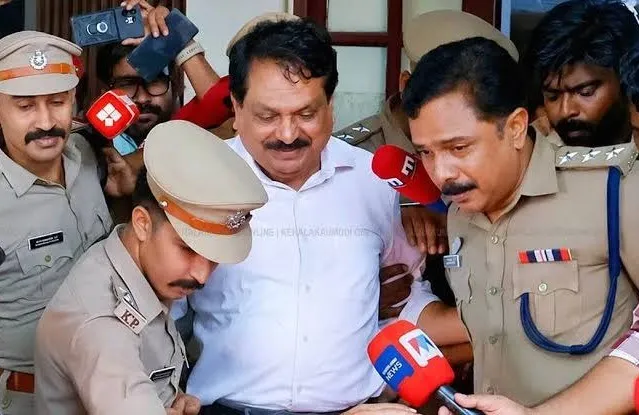
The intersection of white-collar crime, medical dispensations during incarceration, and post-conviction relief has once again sparked intense legal debate in India. The Kerala High Court recently raised sharp questions regarding a plea filed by former Kerala Director General of Police (DGP) Tomin J Thachankary.
The legal and public discourse surrounding high-profile white-collar crime in India often intersects with questions of medical privilege, judicial leniency, and systemic accountability. A striking example of this dynamic recently unfolded before the Kerala High Court, centering on former state Director General of Police (DGP) Tomin J Thachankary. The court's sharp oral observations regarding his concurrent claims of severe illness while incarcerated and sudden fitness to work abroad have reignited debates over how the judicial system balances humanitarian considerations with the integrity of law enforcement.
The Background: Conviction and the Prison-Hospital Dynamic
The controversy stems from a disproportionate assets case prosecuted by the Kottayam Vigilance Court, which found Tomin J Thachankary guilty of possessing assets disproportionate to his known sources of income. On September 17, the court sentenced him to four years of rigorous imprisonment and levied a fine of Rs 30.84 lakh.
However, the period following his sentencing followed a pattern frequently observed in high-profile detentions. Shortly after being transferred to prison, Thachankary reported health complications and spent the majority of his roughly four weeks in custody admitted to the jail hospital. Citing medical grounds and other factors, the Kerala High Court subsequently suspended his four-year sentence on October 15, granting him bail under conditions that included depositing 75 percent of the fine and executing a Rs 5 lakh bond with two solvent sureties, alongside a restriction barring him from leaving India without prior court approval.
The Conflict: Medical Vulnerability Versus Global Mobility
The core of the recent High Court hearing arose when Thachankary filed an application seeking relaxation of his bail conditions to travel to the United Arab Emirates. He argued that he needed to resume his professional obligations as an operations manager with a jewellery group in Sharjah and attend to his role as a partner in a Dubai-based IT consultancy, warning that a failure to return could cost him his livelihood.
Presiding over the matter, Justice A Badharudeen did not hide his skepticism regarding the sharp pivot in Thachankary's physical status. The court questioned the glaring paradox of an individual who reportedly suffers from severe medical ailments necessitating prolonged hospital stay while behind bars, yet instantaneously regains the robust health required to travel internationally and manage demanding corporate roles abroad.
"When he goes to jail, he has serious illnesses. Once released, he has no difficulty travelling to Saudi Arabia or America. How can this be? While in jail, he says he has so many illnesses. Now he is asking for permission to go abroad to do a job. Why such contradictions?" the court observed.
Emphasizing that such discrepancies risk undermining public confidence in the fairness and perceptiveness of the legal system, the bench remarked that ordinary citizens might reasonably question whether the judiciary is equipped to see through selective medical claims. Consequently, the court ordered the Jail Superintendent to submit a detailed report covering Thachankary's exact hospitalisation records, specifying the duration of his stay, the specific medical diagnoses treated, and the days spent outside the medical facility during his time in custody.
Analytical Perspectives on White-Collar Bail Jurisprudence
This case serves as a microcosm for broader analytical discussions surrounding criminal justice administration in India:
- The Medical Bail Dilemma: Courts frequently balance the fundamental right to health and life under Article 21 of the Constitution against the risk of flight or evasion of justice. When high-profile convicts leverage health grounds to secure early relief, subsequent applications for international travel create analytical friction.
- Perception of Equity: Public trust in the judiciary relies heavily on the uniform application of rules. Discrepancies between custodial treatment and post-bail lifestyle aspirations risk fuelling cynicism regarding systemic bias toward affluent or formerly influential offenders.
- Evidentiary Scrutiny: By demanding granular hospital records rather than taking post-conviction medical claims at face value, the Kerala High Court has underscored a stricter standard of verification for individuals seeking modifications to restrictive bail terms.
Frequently Asked Questions (FAQs)
1. Who is Tomin J Thachankary, and why was he convicted? Tomin J Thachankary is a former Director General of Police (DGP) in Kerala. He was convicted by the Kottayam Vigilance Court for possessing assets disproportionate to his known sources of income and was sentenced to four years of rigorous imprisonment.
2. Why did the Kerala High Court question his travel request? The High Court questioned the apparent contradiction between Thachankary's medical reports—which kept him hospitalized for most of his four weeks in prison—and his subsequent plea that he was completely fit to travel to the UAE for high-level employment as an operations manager.
3. What specific information did the High Court demand from prison authorities? The court ordered the Jail Superintendent to produce a comprehensive report detailing the exact number of days Thachankary spent in the jail hospital, the medical conditions he was treated for, and the precise timeline of his stay inside versus outside the prison medical facility.
4. Has the Kerala High Court granted permission for him to travel abroad? As of the latest hearings, the High Court has not yet made a final decision on his application to travel abroad, awaiting the submission and review of the jail hospital records.
Related articles
 Case Analysis
'You Were Never in Jail': Kerala High Court's Scathing Probe Order Into Ex-Top Cop Tomin Thachankary's Hospital Stay
Kerala High Court scrutinizes former DGP Tomin Thachankary's hospitalisation during custody, questioning elite privileges and bail conditions in a landmark case.
4 min read
 Case Analysis
News Snacks
This article discusses the Gujarat High Court's recent strictures against a senior advocate, highlighting the importance of courtroom decorum and ethical obligations in legal practice.
5 min read