News Snacks
Abhijeet Dipke, founder of CJP, has been granted conditional bail after his second detention in a week. The ruling raises significant civil rights concerns.
- By
- BailNow Research Team
- Published
- Reading time
- 3 min read
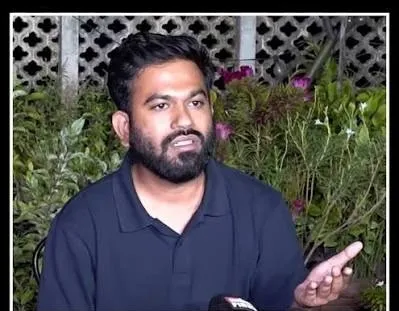
CJP Founder Abhijeet Dipke Granted Conditional Bail After Second Detention in a Week
Court underscores liberty concerns but imposes strict bail conditions to safeguard investigation integrity.
Dipke’s repeated detentions spark debate on civil rights and judicial oversight in politically sensitive cases.
Legal Reporter
New Delhi: October 18, 2026:
The Special Executive Magistrate has granted conditional bail to Abhijeet Dipke, founder of Citizens for Justice and Peace (CJP), after his second detention within a week. The Delhi court emphasized that bail was necessary to protect individual liberty but imposed strict conditions to ensure Dipke’s cooperation with the ongoing investigation.
Case Background
- Accused: Abhijeet Dipke, founder of Coackroach Janta Party (CJP).
- Detentions: Twice within one week, raising concerns about repeated custodial action.
- Charges: Alleged involvement in violating prohibitory law and order.
- Court proceedings: Bail granted after defence argued that repeated detentions violated constitutional protections under Article 21 (Right to Life and Liberty).
Court’s Observations
- Liberty principle: The court stressed that bail is the rule and jail the exception, especially when detentions appear excessive.
- Conditional bail:
- Dipke must cooperate with investigators.
- Travel restrictions imposed.
- Regular attendance before investigating officers mandated.
- Judicial oversight: The court noted that repeated detentions without fresh evidence could amount to harassment.
Broader Legal Context
- Civil rights concerns: The case has triggered debate on whether investigative agencies are overstepping constitutional safeguards.
- Judicial precedent: Courts have repeatedly emphasized that bail should not be denied merely due to gravity of allegations unless custodial interrogation is essential.
- Public discourse: Civil society groups argue that Dipke’s detentions reflect a pattern of targeting activists, while authorities maintain that financial irregularities must be probed thoroughly.
FAQs
Q1: Why was bail granted despite repeated detentions?
Because the court found that prolonged custody without fresh evidence violated constitutional protections of liberty.
Q2: What conditions were imposed on Dipke?
Travel restrictions, mandatory cooperation with investigators, and regular attendance before authorities.
Q3: What are the allegations against him?
Financial irregularities and misuse of organizational funds.
Q4: Why is this case significant?
It highlights the tension between investigative powers and civil rights protections in politically sensitive cases.
Q5: What happens next?
Dipke remains under conditional liberty, with investigations continuing under judicial oversight.
This ruling underscores the judiciary’s balancing act between protecting individual liberty and ensuring accountability in financial irregularity cases, especially when repeated detentions raise concerns of harassment.
Related articles
 Bail Basics
News Snacks
KSU leaders, Raymond Kharjana and Reuben Najiar, have been granted bail after months in detention, signaling a pivotal moment for student activism and civil liberties in Meghalaya.
4 min read
 Bail Basics
Supreme Court Directs Uttar Pradesh to Identify Undertrials Stuck in Jail Despite Bail Due to Financial Constraints
The Supreme Court has directed Uttar Pradesh to identify undertrial prisoners stuck in jail due to inability to meet bail conditions, addressing critical issues in the criminal justice system.
4 min read