Legal Boundaries and Personal Autonomy: Analyzing the Jurisprudential Shift in Anticipatory Bail for Alleged Consensual Relationships
The article delves into the recent Madhya Pradesh High Court ruling on anticipatory bail, examining the complex interplay of consent and personal relationships in Indian law.
- By
- BailNow Research Team
- Published
- Reading time
- 5 min read

On this page
Navigating the Thin Line Between Breach of Promise and Statutory Rape Allegations in Indian Courts
By Legal Reporter
New Delhi: November 04, 2026:
The intersection of personal relationships and criminal jurisprudence in India has once again come under intense judicial scrutiny. Recently, the Madhya Pradesh High Court delivered a significant ruling by granting anticipatory bail to a 50-year-old senior lawyer from the Chhatarpur district. The accused was facing severe charges under the Bharatiya Nyaya Sanhita (BNS), including allegations of rape under the pretext of marriage, criminal intimidation, alongside provisions of the Scheduled Castes and the Scheduled Tribes (Prevention of Atrocities) Act and the Freedom of Religion Act due to alleged pressure for religious conversion.
However, the single-judge bench of Justice Dev Narayan Mishra focused heavily on the timeline of events and the nature of the association between the parties. This case highlights a recurring legal dilemma in contemporary India: distinguishing between cases of malicious sexual exploitation through false promises of marriage and long-term consensual relationships that face legal termination after discord.
Judicial Scrutiny of Timelines and the Principle of Consent
During the bail hearings, the defence and prosecution laid out contrasting narratives regarding the nature of the 32-year-old woman advocate’s professional and personal association with the accused. The prosecution contended that the victim, who began working under the senior counsel's guidance in 2024, was subjected to physical relations under the assurance of marriage, which was eventually unfulfilled, alongside allegations of forced conversion attempts.
Conversely, the High Court’s analytical approach hinged significantly on the chronological gap between the inception of the relationship and the eventual filing of the First Information Report (FIR). Justice Mishra pointed out that the parties had been in a relationship since 2024, yet the complainant did not register an FIR until August 3, 2026. The court observed that up until the registration of the formal complaint, there appeared to be an absence of immediate dispute, leading the bench to remark that the scenario bore the hallmarks of a consensual partnership rather than immediate, calculated sexual exploitation.
This judicial perspective mirrors a broader evolving line of reasoning across various High Courts and the Supreme Court of India, which increasingly emphasizes examining whether consent was given under a misconception of fact right from the beginning, or if a consensual relationship soured at a later stage due to personal or professional differences.
Analytical Implications for Criminal Jurisprudence
The ruling underscores the delicate balancing act required by the judiciary when handling sensitive matrimonial and sexual offense allegations involving professionals. Key analytical takeaways from this case include:
- Distinction Between Breach and Deception: Courts are placing heightened emphasis on proving whether a promise to marry was false ab initio (from the very beginning) or if circumstances simply changed over time, terminating a mutual relationship.
- Significance of Delay: Unexplained or prolonged delays in reporting offenses in ongoing relationships often serve as a crucial factor for judges evaluating anticipatory bail applications under the BNS and CrPC/BNSS frameworks.
- Nuanced Application of Special Statutes: The inclusion of stringent laws such as the SC/ST Act and anti-conversion statutes alongside primary sexual offense charges necessitates thorough judicial vetting at the preliminary stages to prevent misuse of process.
Frequently Asked Questions (FAQs)
1. What is anticipatory bail, and why was it granted in this case?
Anticipatory bail is a legal direction issued under criminal procedure codes allowing a person to seek release on bail in the event of an arrest for a non-bailable offense. In this case, the Madhya Pradesh High Court granted it after determining from the FIR timeline and facts that the relationship appeared consensual rather than exploitative.
2. How do Indian courts differentiate between rape and consensual relationships involving marriage promises?
Judiciary precedents dictate that a distinction must be made between a false promise to marry given with mala fide intent from the outset (which vitiates consent) and a breach of promise arising from subsequent developments or disagreements where consent was initially voluntary.
3. What laws were invoked against the accused lawyer?
The accused faced charges under relevant sections of the Bharatiya Nyaya Sanhita (BNS) pertaining to rape on the pretext of marriage and criminal intimidation, alongside specific provisions under the SC/ST (Prevention of Atrocities) Act and the Freedom of Religion Act.
4. Does granting anticipatory bail mean the accused is acquitted?
No. Anticipatory bail only protects the accused from immediate custodial arrest during the investigation phase. The trial proceeds independently, and the merits of the case will be evaluated during standard court proceedings.
Related articles
 Anticipatory Bail
Supreme Court Slams Misuse of Criminal Law: Civil Commercial Disputes Cannot Be Weaponized to Force Debt Recovery
The Supreme Court of India rules against the misuse of criminal law for civil disputes, reinforcing the sanctity of personal liberty and proper use of anticipatory bail.
7 min read
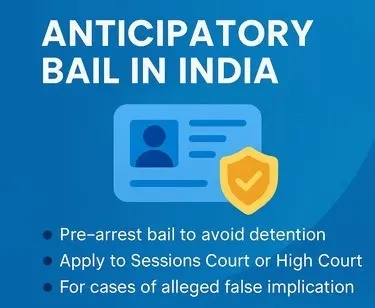 Anticipatory Bail
Navigating Anticipatory Bail: Balancing Law Enforcement Needs with Protection from Harassment and Arbitrary Arrest
This article delves into anticipatory bail in India, analyzing its legal framework, evolution, and the balance it strikes between protecting personal liberty and law enforcement needs.
7 min read