Karnataka High Court Grants Bail in POCSO Case After Families Agree to Future Marriage: Legal Context, Judicial Precedents, and Key Takeaways
The Karnataka High Court has granted bail to an accused in a POCSO case, factoring in a family understanding for future marriage and the completed police investigation. This ruling navigates complex issues of children's rights and legal processes in India.
- By
- BailNow Research Team
- Published
- Reading time
- 14 min read
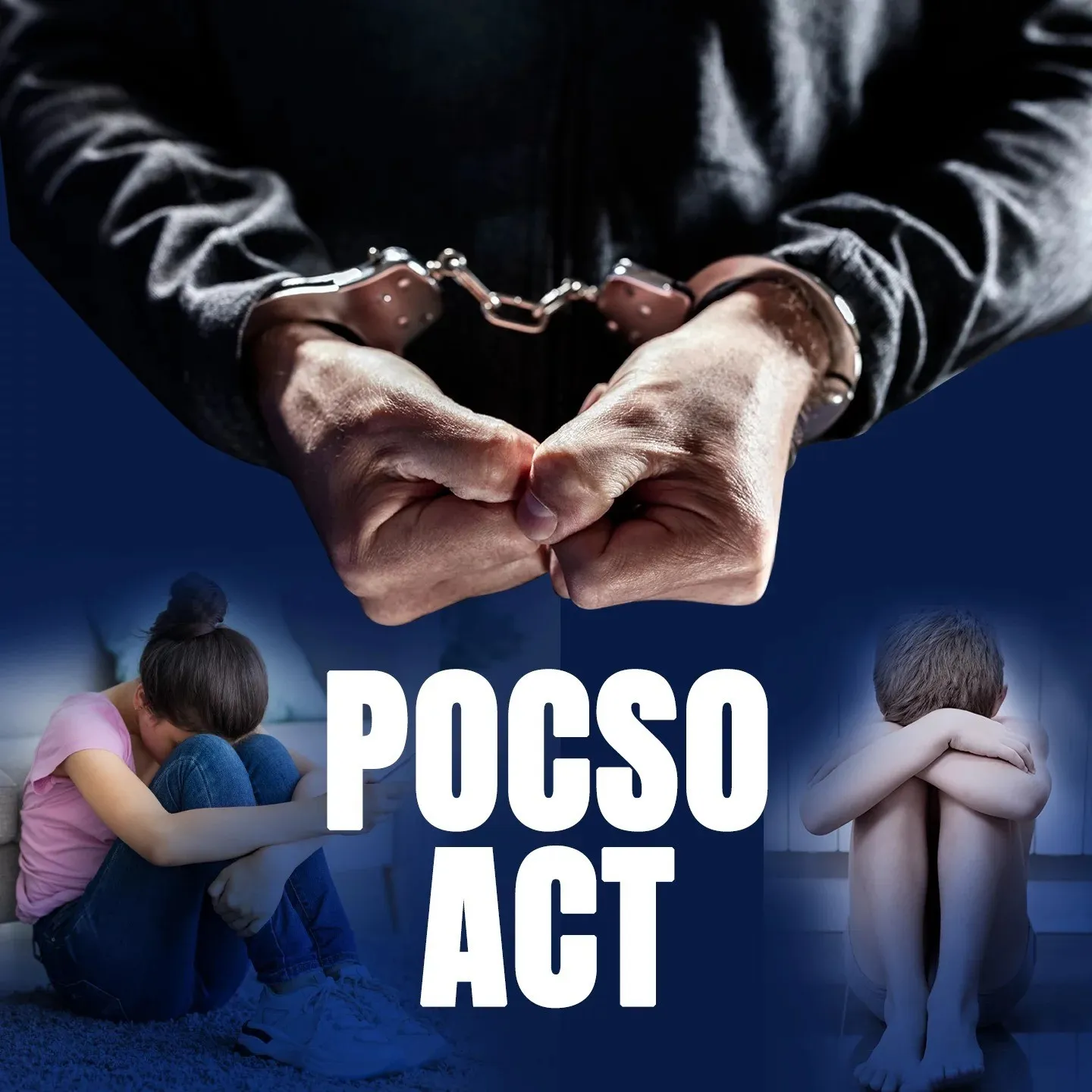
Karnataka High Court Weighs Family Understanding on Marriage at Majority Alongside Completed Police Investigation in POCSO Bail Ruling
High Court Clarifies That While Marriage Understandings Cannot Nullify Statutory Offences, They Remain a Relevant Circumstance for Bail
By Legal Editor
New Delhi: November 15, 2026:
The Karnataka High Court has granted regular bail to a man accused of penetrative sexual assault under the Protection of Children from Sexual Offences (POCSO) Act, 2012, taking into account the completion of the police investigation and a documented understanding between the accused and the minor survivor’s family to consider marriage once she attains the legal age of majority.
In an order passed on November 5, 2026, and reported by legal news portal Bar and Bench on November 14, 2026, a single-judge bench of Justice Venkatesh Naik T allowed the bail petition after noting that the chargesheet had already been filed and the survivor’s mother had expressed no objection to the accused’s release. While granting relief, the Court explicitly clarified that any private understanding regarding future marriage does not determine the merits of the criminal prosecution or dilute the mandatory provisions of the POCSO Act, though it may be weighed as one of several relevant circumstances at the bail stage.
The ruling places renewed focus on a recurring and deeply contested question in Indian criminal jurisprudence: how constitutional courts should balance the strict statutory framework of child protection laws, personal liberty under Article 21 of the Constitution, and real-world socio-familial settlements in cases involving minors.
Case Background and Timeline of Proceedings
According to court records cited in the report, the criminal prosecution originated from a police complaint registered on May 22, 2026. Based on the complaint, law enforcement authorities booked the petitioner for grave offences involving penetrative sexual assault and aggravated penetrative sexual assault under the POCSO Act, alongside provisions relating to rape, voluntarily causing hurt, and criminal intimidation.
Police arrested the accused on May 23, 2026—a day after the complaint was lodged—and he remained in judicial custody throughout the investigative phase. Following the completion of the investigation, the police submitted a formal chargesheet before the jurisdictional special court.
The timeline of key legal milestones in the matter unfolded as follows:
Date / Stage | Legal Development |
|---|---|
May 22, 2026 | First Information Report (FIR) and complaint registered alleging penetrative sexual assault, aggravated penetrative sexual assault, rape, hurt, and criminal intimidation. |
May 23, 2026 | Accused arrested by the police and remanded to judicial custody. |
Investigation Phase | Police conclude inquiry and file a final chargesheet before the trial court. |
September 26, 2026 | Jurisdictional trial court rejects the accused’s application for regular bail. |
November 5, 2026 | Karnataka High Court (Justice Venkatesh Naik T) allows the bail petition subject to protective conditions. |
November 14, 2026 | Order details published in legal media; identity of parties withheld in compliance with statutory anonymity mandates. |
During the hearing before the Karnataka High Court, Advocate Sadik Kanvi represented the petitioner-accused, High Court Government Pleader Dayanand Sangreshi appeared on behalf of the State of Karnataka, and Advocate Ameena HS represented the complainant. In accordance with Section 33(7) of the POCSO Act and Supreme Court directives protecting the identity of child survivors, the names and identifying particulars of the minor and her family were withheld from the public record.
What the Karnataka High Court Observed
When the matter came up before Justice Venkatesh Naik T, the Court examined both the procedural posture of the criminal case and the affidavits placed on record by the contesting parties. Specifically, the survivor’s mother filed a no-objection to the grant of bail, accompanied by an understanding reached between the two families that the possibility of marriage between the accused and the survivor would be considered once the girl reaches the legally prescribed age of majority (18 years).
In allowing the bail plea, the High Court anchored its reasoning in three primary factors:
- Completion of Investigation: The police had concluded their custodial inquiry and filed the chargesheet, reducing the necessity for further pre-trial incarceration for investigative purposes.
- Stand of the Complainant’s Family: The survivor’s mother expressed no objection to the petitioner’s release, and both sides placed affidavits on record reflecting their mutual understanding.
- Imposition of Protective Safeguards: The Court concluded that continued detention was unnecessary provided strict bail conditions were imposed to safeguard the minor’s interests and guarantee the accused’s attendance during the upcoming trial.
"Having regard to the completion of the investigation, the affidavits filed by the parties, the no-objection expressed by the victim’s mother and the understanding arrived at between the families, I am of the opinion that the continued detention of the petitioner may not be necessary, provided adequate conditions are imposed to safeguard the interests of the victim and ensure the petitioner’s presence during trial," Justice Venkatesh Naik T observed in the order.
At the same time, the High Court drew a clear doctrinal boundary between the considerations governing pre-trial bail and the adjudication of guilt at trial. Justice Venkatesh Naik T emphasized that an out-of-court understanding regarding marriage cannot override statutory criminal liability under the POCSO Act.
"Though the said understanding cannot, by itself, determine the merits of the prosecution or nullify the statutory provisions, the same can be taken into consideration as one of the relevant circumstances while considering the prayer for bail," the Court stated.
Understanding the Statutory Architecture of the POCSO Act
To understand why bail orders referencing marriage understandings attract close legal scrutiny across India, it is essential to examine the legislative design of the Protection of Children from Sexual Offences Act, 2012.
Enacted to give effect to the United Nations Convention on the Rights of the Child (UNCRC) and Article 15(3) of the Constitution of India, the POCSO Act establishes a gender-neutral, child-centric legal regime covering every person below the age of 18 years. Several core features define how the statute operates in bail and trial proceedings:
- Irrelevance of Minor’s Consent: Under Indian criminal law, a person under 18 years of age is legally incapable of giving valid consent to sexual acts. Consequently, even where a relationship is described as romantic or consensual by the parties or their families, penetrative sexual acts involving a minor strictly attract Sections 3 and 4 (penetrative sexual assault) or Sections 5 and 6 (aggravated penetrative sexual assault) of the Act.
- Stringent Minimum Sentences: Penetrative sexual assault under Section 4 carries a mandatory minimum sentence of 10 years’ imprisonment (which increases to 20 years if the child is under 16), while aggravated penetrative sexual assault under Section 6 carries a mandatory minimum sentence of 20 years’ imprisonment, extendable to life imprisonment for the remainder of a person's natural life or the death penalty.
- Statutory Presumption of Guilt: Section 29 of the POCSO Act creates a reverse-onus presumption. Once a person is prosecuted for committing, abetting, or attempting offences under Sections 3, 5, 7, or 9, the Special Court presumes that the accused committed the offence unless the contrary is proved.
- Non-Compoundable Nature: Offences under the POCSO Act are cognizable and non-bailable, and they are non-compoundable under criminal procedure rules. Because sexual offences against children are treated as crimes against society and the State rather than private disputes between two families, a complainant or parent cannot unilaterally withdraw a prosecution merely by entering into a settlement.
- Prohibition on Child Marriage: Under the Prohibition of Child Marriage Act, 2006 (PCMA), the minimum legal age of marriage in India is 18 years for women and 21 years for men. Any marriage solemnized while a girl is still a minor is voidable and constitutes a punishable offence, which is why courts scrutinizing family settlements specify that marriage can only be contemplated after the survivor attains the legally prescribed age.
Supreme Court Jurisprudence on Compromise and Marriage in Sexual Offence Cases
Across the past decade, the Supreme Court of India has repeatedly examined the role of marriage proposals, family compromises, and survivor affidavits in both bail applications and petitions seeking the quashing of criminal proceedings. The resulting jurisprudence reflects a careful distinction between prohibiting court-mandated compromises and exercising judicial discretion in exceptional factual circumstances.
1. Prohibition on Court-Mandated Marriage or Compromise
In landmark decisions, the Supreme Court has categorically held that courts must never suggest, encourage, or impose marriage or compromise as a condition for bail in sexual assault cases:
- State of Madhya Pradesh v. Madanlal (2015): A two-judge bench of the Supreme Court ruled that in cases of rape or attempted rape, "the conception of compromise under no circumstances can really be thought of." Describing sexual violence as a crime against a woman's dignity and bodily integrity, the Court held that mediation or settlement in such offences lacks legal permissibility.
- Aparna Bhat & Others v. State of Madhya Pradesh (2021): Hearing a challenge to a High Court bail order that had required a sexual assault accused to visit the survivor's home to tie a rakhi, the Supreme Court laid down binding nationwide guidelines for criminal courts handling gender-based violence. The Apex Court directed that bail conditions must strictly avoid any mandate or suggestion of compromise, mediation, or marriage, and must not permit contact that could expose the survivor to intimidation or secondary trauma.
2. High Court Discretion in Bail vs. Quashing Proceedings
While courts cannot force a survivor into a marriage or treat a family settlement as an automatic ground for acquittal, High Courts regularly evaluate the totality of circumstances when deciding regular bail applications under Section 439 of the Code of Criminal Procedure, 1973 (now Section 483 of the Bharatiya Nagarik Suraksha Sanhita, 2023):
- Standard Bail Parameters: As reaffirmed in Supreme Court rulings such as State of U.P. v. Amarmani Tripathi, courts deciding bail weigh the prima facie nature of the accusation, the severity of the punishment, the stage of the investigation, the risk of witness tampering, and the likelihood of the accused fleeing justice. Because the POCSO Act does not contain a separate, statutory bar restricting bail akin to the Narcotic Drugs and Psychotropic Substances (NDPS) Act or the Unlawful Activities (Prevention) Act (UAPA), constitutional courts balance statutory gravity against the presumption of innocence and Article 21 liberty rights.
- Adolescent Relationships vs. Coercive Assault: Various High Courts—including the Karnataka, Delhi, Madras, and Kerala High Courts—have drawn practical distinctions between cases involving predatory violence against young children and cases arising out of consensual adolescent relationships where families subsequently formalize their approval. In rare cases where the accused and the survivor eventually marry upon attaining adulthood and have children together, the Supreme Court and High Courts have occasionally exercised extraordinary constitutional powers (under Article 142 or Section 482 CrPC / Section 528 BNSS) to quash proceedings solely to prevent destitution and protect the welfare of the family and child. However, courts consistently stress that such orders are fact-specific exceptions rather than binding precedents that dilute the POCSO Act.
Key Legal Debate: Victim Protection Versus Socio-Legal Realities
Orders granting bail in POCSO cases after families file marriage-related affidavits continue to generate vigorous debate among child rights advocates, legal scholars, and criminal practitioners.
Perspective | Core Legal and Policy Arguments |
|---|---|
Child Rights & Survivor-Centric Critique | • Risk of Family Coercion: Minors in India rarely exercise independent agency in legal proceedings; affidavits filed by parents or guardians may reflect social stigma, financial pressure, or fear of community ostracization rather than the child's free will. • Witness Intimidation: Releasing an accused on bail based on a prospective marriage creates intense pressure on the minor survivor to turn hostile during trial so that the future marriage is not jeopardized. • Erosion of Statutory Deterrence: Treating marriage assurances as a mitigating factor in bail risks normalizing sexual offences against minors as matters resolvable through matrimonial alliances. |
Defence & Judicial Pragmatism Perspective | • Presumption of Innocence & Article 21: Pre-trial detention is not meant to be punitive. Once the police complete their investigation and file a chargesheet, prolonged incarceration before trial violates the constitutional right to personal liberty if witness safety can be ensured through strict conditions. • Distinguishing Adolescent Cases: A substantial share of POCSO prosecutions involves teenagers in close-in-age relationships reported by disapproving parents; keeping young accused persons in jail indefinitely after families reconcile can cause disproportionate harm. • Trial Remains Intact: Granting bail does not end the criminal case. As the Karnataka High Court explicitly noted, the trial still proceeds on merits under the strict evidentiary standards of the POCSO Act. |
What Happens Next in the Trial?
Granting regular bail neither acquits the accused nor terminates the criminal prosecution. Following the Karnataka High Court’s November 5, 2026 order, the case will proceed through the established criminal trial process before the designated Special POCSO Court:
- Compliance with Bail Conditions: The accused remains out of custody strictly subject to the conditions imposed by the High Court—typically requiring personal bonds, sureties, regular appearances before the trial court, and non-interference with prosecution witnesses. Any violation of these terms empowers the prosecution or the complainant to seek cancellation of bail.
- Framing of Charges and Trial: The Special Court will frame formal charges based on the police chargesheet and record the testimony of prosecution witnesses, including the minor survivor, her family members, medical officers, and investigating police officials.
- Adjudication on Merits: Even if witnesses modify their statements during trial, the Special Court evaluates medical records, forensic evidence, school age-proof certificates (under Section 94 of the Juvenile Justice Act), and prior statements recorded before a Magistrate before delivering its final verdict.
Frequently Asked Questions (FAQs)
1. Did the Karnataka High Court cancel or quash the POCSO case because the families agreed to marriage? No. The Karnataka High Court only granted regular bail to the accused, releasing him from pre-trial judicial custody subject to protective conditions. Justice Venkatesh Naik T explicitly clarified that the understanding between the families cannot determine the merits of the prosecution or nullify the statutory provisions of the POCSO Act. The criminal trial will continue before the trial court.
2. Why was the accused arrested if the survivor’s family later filed a no-objection? Offences under the POCSO Act—such as penetrative sexual assault and aggravated penetrative sexual assault—are cognizable and non-compoundable crimes against the State. Once a complaint disclosing a POCSO offence is registered, the police are legally required to investigate and arrest where warranted, regardless of whether the family later wishes to settle the matter privately.
3. Is marriage with a minor legally permitted if the parents agree? No. Under the Prohibition of Child Marriage Act, 2006, the minimum legal age for marriage in India is 18 years for girls and 21 years for boys. Even with parental consent, a minor cannot legally marry. In this case, the High Court specifically recorded that the families’ understanding was only to consider the possibility of marriage once the victim attains the legally prescribed age.
4. What are the Supreme Court’s rules on marriage or compromise in sexual offence bail orders? In Aparna Bhat v. State of Madhya Pradesh (2021) and State of M.P. v. Madanlal (2015), the Supreme Court held that courts must never suggest, mandate, or impose marriage or compromise as a condition for granting bail in rape or sexual assault cases. Courts must ensure that bail orders protect the dignity of the survivor and prevent harassment or witness intimidation.
5. Why are the names of the accused and the victim not mentioned in the news report? Under Section 33(7) of the POCSO Act and binding Supreme Court rulings (such as Nipun Saxena v. Union of India), media outlets and courts are strictly prohibited from disclosing the name, address, school, family details, or any other information that could directly or indirectly reveal the identity of a child survivor of sexual offences.
6. What factors did the Karnataka High Court consider before granting bail? The High Court considered a combination of legal and factual circumstances: (a) the police had completed their investigation and filed the chargesheet, (b) the accused had been in judicial custody since May 23, 2026, (c) the survivor’s mother expressed no objection to bail, (d) both sides filed affidavits regarding a future marriage understanding upon majority, and (e) protective conditions could be imposed to safeguard the survivor and ensure the accused’s presence at trial.
Related articles
 POCSO Bail
News Snacks
The Delhi High Court's ruling on a POCSO case unveils critical issues of accountability in the criminal justice system, especially concerning hostile witnesses and perjury, marking a significant turning point.
4 min read
 POCSO Bail
News Snacks
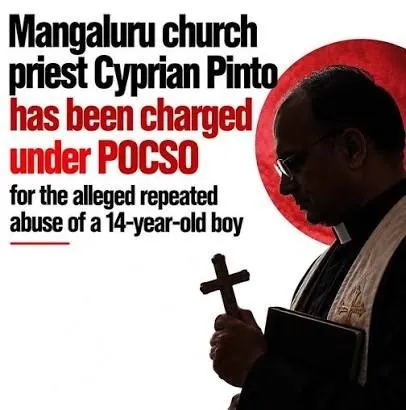
This article delves into the Mangaluru Court's bail grant to priest Cyprian Pinto, emphasizing the legal and institutional implications of the case involving child sexual abuse claims.
4 min read