Bombay High Court: Gravity of Offence Cannot Override Welfare and Rehabilitation of Child in Conflict with Law While Granting Bail
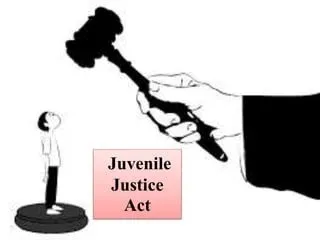
The Bombay High Court ruled that the gravity of an alleged crime cannot be the sole reason to deny bail to a minor. The court emphasized the importance of rehabilitation and welfare in juvenile justice.
- By
- BailNow Research Team
- Published
- Reading time
- 10 min read
On this page
The judiciary emphasizes that under Section 12 of the Juvenile Justice Act, pre-trial detention cannot be used as a punitive measure, prioritizing the future prospects of minors over public outrage.
Analyzing the legal safeguards, prolonged incarceration impacts, and statutory exceptions governing juvenile justice in high-profile criminal cases.
By Legal Editor
New Delhi: November 02, 2026:
In a landmark decision delivered by the Bombay High Court’s Kolhapur Bench, Justice Sharmila U. Deshmukh granted bail to a youth who had spent more than three years in an observation home following a 2023 murder case.
The intersection of juvenile justice and heinous criminal allegations has long remained one of the most contentious and delicate areas of Indian jurisprudence. A recent ruling by the Bombay High Court’s Kolhapur bench has once again brought this critical debate to the forefront. Justice Sharmila U. Deshmukh granted bail to a young individual who had spent more than three years in an observation home following a 2023 murder case tied to an ancestral property dispute.
The core takeaway of the judgment is both legally profound and socially resonant: the sheer gravity or seriousness of an alleged crime cannot, by itself, serve as a legal ground to deny bail to a child in conflict with law under the Juvenile Justice (Care and Protection of Children) Act (JJ Act). Instead, the statutory architecture mandates that the primary considerations must center on the welfare, social reintegration, and ultimate rehabilitation of the adolescent.
This comprehensive article explores the nuances of the Bombay High Court's ruling, delves into the underlying factual matrix of the case, analyzes the legal framework governing juveniles accused of heinous crimes, and explores the broader sociological implications of prolonged pre-trial incarceration on young minds.
Factual Matrix: The Roots and Realities of the Case
The Dispute and the Tragic Incident
The legal battle stems from a violent escalation on October 10, 2023, within a village in the Kolhapur district of Maharashtra. What began as a long-standing domestic disagreement over ancestral property spiralled out of control into a brutal clash. During the confrontation, a 51-year-old man was fatally attacked with sharp weapons, specifically an axe and knives.
In the immediate aftermath, local law enforcement registered a criminal case and booked five individuals belonging to the same familial network, including the victim's relatives. Among the accused was a young male who was precisely 17 years and 11 months old at the time of the incident—placing him firmly within the legal definition of a "child in conflict with law" under the JJ Act, as he was just a month shy of turning eighteen. At the time of his detention, he was a regular Class XII student attempting to navigate his formative educational years.
Three Years Behind Bars: The Legal Marathon
Following his detention in October 2023, the youth was lodged in an observation home, where he spent more than three years in continuous custody. During this extended period, his legal representation mounted multiple challenges to secure his release.
Before approaching the High Court, the youth’s family—specifically through his maternal uncle—moved the local sessions court for bail on four separate occasions. Each time, the application was met with stiff resistance from the prosecution and outright rejection by the trial court, with the most recent plea being dismissed as recently as October 2025.
The primary argument advanced by the prosecution, which found favor with the lower judiciary, hinged on community safety and potential hostility. Prosecutors argued that the relatives of the deceased—some of whom claimed to be direct eyewitnesses to the fatal attack—harboured deep resentment. They contended that releasing the youth could place his life in physical danger due to retaliatory community anger or potentially expose him to adverse moral and psychological environments.
Judicial Reasoning: Dissecting Justice Deshmukh’s Order
When the matter finally reached the Bombay High Court, Justice Sharmila U. Deshmukh undertook a meticulous review of the statutory limitations and procedural safeguards embedded within the Juvenile Justice Act. On October 29, 2026, the court delivered an order that dismantled the prosecution's reliance on the severity of the crime.
1. The Myth of "Gravity-Based" Bail Rejection
Under standard criminal law governing adults, the gravity of a murder charge usually erects a formidable barrier against bail. However, the JJ Act operates on an entirely different jurisprudential philosophy centered on reformative justice rather than retributive punishment.
The High Court explicitly reiterated that bail applications under the Juvenile Justice Act cannot be rejected solely because the underlying offence is heinous or grave. The court noted:
"It is a well-settled principle that the application for bail under the Juvenile Justice Act cannot be rejected on the ground of the seriousness of the offence and the primary consideration is the welfare and rehabilitation of the child in conflict with law."
2. Strict Interpretation of Statutory Exceptions
While the JJ Act favours the release of a juvenile, it does carve out specific, narrow exceptions where bail can be denied. Section 12 of the Act outlines that a juvenile must be released unless there are reasonable grounds to believe that release will:
- Bring the child into association with known criminals.
- Expose the child to moral, physical, or psychological danger.
- Defeat the ends of justice.
The prosecution argued that community hostility and the risk of vengeance met these threshold exceptions. However, Justice Deshmukh observed a critical evidentiary gap in the state's submissions: the prosecution failed to produce any cogent, tangible material or evidence to substantiate these fears beyond generalized apprehensions.
3. The Toll of Prolonged Incarceration
A vital dimension of the High Court's reasoning focused on the psychological and developmental toll of long-term detention on an adolescent. Having spent over three years—spanning critical high school and late-teen developmental milestones—behind the walls of an observation home, the court recognized that continued detention threatened to permanently derail the youth's future.
Justice Deshmukh remarked that the ongoing trauma of incarceration actively hindered the applicant’s future prospects, tilting the balance decisively in favor of supervised rehabilitation outside institutional walls.
Conditions of Release and Rehabilitative Oversight
Granting relief does not equate to absolute freedom without safety nets. To balance the legal right to liberty with the statutory mandate of supervision, the High Court imposed specific, structured conditions on the youth:
- Execution of Bond: The youth was ordered to be released upon furnishing a personal bond of Rs 20,000.
- Probationary Supervision: Rather than walking away unsupervised, the applicant is mandated to remain under the direct supervision of a designated probation officer.
- Reporting Compliance: The youth must report to the probation officer once every three months, ensuring that state institutions maintain a guiding hand on his transition back into society.
Broader Jurisprudential Context: Juvenile Justice in India
To fully appreciate the weight of the Kolhapur bench ruling, it is essential to examine the evolution of juvenile justice legislation in India, particularly following landmark legislative amendments and Supreme Court interpretations.
The Shift from Punishment to Reform
Historically, criminal law treated young offenders much like adults if the crime crossed a certain threshold of brutality. However, the enactment of the Juvenile Justice (Care and Protection of Children) Act, 2015 (along with subsequent amendments), reinforced India's commitment to international frameworks such as the United Nations Convention on the Rights of the Child (UNCRC).
The foundational premise of Indian juvenile law is that children and adolescents lack the fully developed cognitive maturity, emotional regulation, and foresight of adults. Consequently, the justice system prioritizes rehabilitation, counselling, skill development, and reintegration over retributive incarceration. Even when a juvenile aged 16 to 18 is transferred to an adult court following a preliminary assessment by a Juvenile Justice Board (JJB) for heinous offences, the overarching ethos of reform remains tightly woven into trial and sentencing mandates.
Pre-Trial Detention as an Exception, Not the Rule
Section 12 of the JJ Act establishes a mandatory rule: a juvenile apprehended or detained must be released on bail with or without surety, or placed under the supervision of a probation officer. Detention in an observation home is intended strictly as an exception of last resort, invoked only when the specific statutory exceptions (risk of moral/physical danger or association with hardened criminals) are clearly proven with concrete evidence.
Judicial pronouncements across various High Courts and the Supreme Court have consistently cautioned lower courts against treating observation homes as default warehouses for young accused individuals simply because public outrage or prosecutorial resistance is high.
Sociological and Psychological Impacts of Adolescent Incarceration
The Bombay High Court’s observation regarding the "trauma of incarceration" touching upon a student's future prospects highlights a critical sociological reality that criminologists and child psychologists have long warned against.
1. Institutionalization and Secondary Deviance
When adolescents are placed in prolonged confinement alongside other youths accused of serious offences—often without adequate individualized psychological counselling or educational infrastructure—the risk of institutionalization rises dramatically. Instead of being rehabilitated, young minds can experience social alienation, heightened aggression, and adoption of deviant subcultures, a phenomenon known in sociology as secondary deviance.
2. Educational Disruption
For an accused individual who was a Class XII student at the time of detention, spending three formative years in an observation home represents an irreplaceable loss of academic momentum. Depriving a young person of mainstream education during crucial developmental years often guarantees vocational and economic disenfranchisement upon release, inadvertently pushing them toward structural vulnerability and recidivism.
Frequently Asked Questions (FAQs)
1. What was the core legal issue in the Bombay High Court’s Kolhapur bench ruling?
The core legal issue centered on whether a juvenile accused of a heinous crime (murder) can be denied bail solely based on the gravity and seriousness of the offence. The High Court ruled that gravity alone cannot override the statutory mandate, and that the primary considerations must be the welfare and rehabilitation of the child.
2. Can a juvenile ever be denied bail under the Juvenile Justice Act?
Yes. Section 12 of the JJ Act permits the denial of bail if there are reasonable grounds to believe that release will bring the juvenile into association with known criminals, expose them to moral, physical, or psychological danger, or defeat the ends of justice. However, these exceptions must be proven with cogent, concrete evidence rather than mere apprehensions.
3. How long was the accused youth in custody before being granted bail?
The youth had been lodged in an observation home for more than three years (specifically three years and one week) following his detention in October 2023.
4. What conditions did the High Court impose upon releasing the youth?
The court ordered his release on a bond of Rs 20,000 and mandated that he remain under the active supervision of a probation officer, requiring him to report to the officer once every three months.
5. Why does the law treat juveniles differently from adult criminal defendants?
Indian jurisprudence recognizes that adolescents and children possess lower cognitive maturity, impulse control, and long-term foresight compared to adults. The legislative framework prioritizes reform, psychological counselling, education, and social reintegration over retributive punishment.
Conclusion
The Bombay High Court’s ruling in this Kolhapur murder case serves as a vital reminder of the protective spirit embedded within India's juvenile justice system. By cutting through generalized arguments of community anger and reaffirming that reform must supersede retributive impulses, the judiciary has reinforced the principle that the law's ultimate goal with young offenders is reclamation, not permanent marginalization. As legal systems grapple with balancing public safety and adolescent reform, judgments like this one anchor the discourse firmly in statutory intent, constitutional fairness, and human empathy.
Related articles
 Bail Basics
Supreme Court Directs Uttar Pradesh to Identify Undertrials Stuck in Jail Despite Bail Due to Financial Constraints
The Supreme Court has directed Uttar Pradesh to identify undertrial prisoners stuck in jail due to inability to meet bail conditions, addressing critical issues in the criminal justice system.
4 min read
 Bail Basics
News Snacks
The recent crackdown by Berhampur Police unveils a sophisticated professional bailor racket exploiting land records for fraudulent sureties, highlighting urgent legal reform needs.
4 min read