News Snacks
The Delhi High Court has upheld the bail of Mateen Ahmed Bhat in a UAPA case, emphasizing the necessity of trials and the protection of personal liberty against grave accusations.
- By
- BailNow Research Team
- Published
- Reading time
- 5 min read

Delhi High Court Upholds Bail for Mateen Ahmed Bhat in NIA UAPA Case, Emphasizing Trial Proving and Statutory Scrutiny
Balancing National Security with Personal Liberty: The Judicial Yardstick Under Section 43D (5)
Analysing the Appellate Threshold: Why Post-Bail Charge Framing Did Not Warrant Interference
By Legal Reporter
New Delhi: November 02, 2026:
The legal discourse surrounding the stringent provisions of the Unlawful Activities (Prevention) Act (UAPA) received a significant perspective check as the Delhi High Court dismissed the National Investigation Agency’s (NIA) appeal challenging the bail granted to Kashmiri youth Mateen Ahmed Bhat. Delivered by a bench comprising Justices Navin Chawla and Arun Bhardwaj, the ruling reinforces critical jurisprudence regarding personal liberty, the limitations of appellate interference in bail orders, and the constitutional necessity of expediting trials in terror-conspiracy cases.
The Background and Statutory Context
The case traces back to allegations brought forward by the NIA, accusing Bhat of active involvement in a deep-rooted conspiracy designed to propagate terror activities in Jammu and Kashmir. Arrested under the anti-terror legislation, Bhat subsequently moved trial courts for relief. On May 3, 2023, a special NIA court granted him bail, ruling that the material presented did not categorically bar his release under the statutory threshold.
Aggrieved by this decision, the NIA approached the Delhi High Court, arguing that the nature of the allegations was profoundly grave and that the trial court had erred in its appreciation of the evidence. The central probing agency contended that the statutory restrictions on bail under Section 43D (5) of the UAPA—which creates a strong presumption against granting bail if the accusations are prima facie true—ought to have barred Bhat’s release.
High Court’s Analytical Framework: Legality Versus Cancellation
In evaluating the rival contentions, the Delhi High Court meticulously distinguished between the initial legality of a bail order and a subsequent plea for its cancellation. The bench observed that the primary duty of an appellate court when reviewing a bail grant is to examine whether the lower court applied its mind correctly to the legal standards governing the UAPA at that specific time.
The High Court underlined that while the allegations levelled against Bhat are undeniably grave, gravity alone cannot override the fundamental principles of criminal jurisprudence. The bench held that unproven allegations must necessarily be tested during a full-fledged trial. Furthermore, the court noted that the trial was unlikely to reach its conclusion anytime soon, making prolonged pre-trial incarceration an infringement upon personal liberty, especially when the lower court had reasonably satisfied itself regarding the prima facie parameters.
Addressing the NIA's reliance on subsequent developments—such as the formal framing of charges after the bail was initially granted—the High Court clarified that a legally sound bail order does not automatically become illegal simply because charges are framed subsequently. The appellate scrutiny must remain anchored in whether the original discretion exercised by the trial court suffered from perversity or legal infirmity.
Broader Legal Implications
This judgment serves as an important precedent within India's anti-terror jurisprudence. It reiterates that while prosecuting agencies possess wide-ranging powers under special legislations like the UAPA, the judiciary continues to act as a crucial check to ensure that statutory bars do not translate into indefinite pre-trial detentions. By emphasizing that grave accusations must withstand the rigor of judicial trial rather than pre-trial detention, the Delhi High Court has underscored the delicate balance between safeguarding national security and protecting fundamental rights.
Frequently Asked Questions (FAQs)
Q1: What was the core issue in the Delhi High Court case involving Mateen Ahmed Bhat?A: The core issue was an appeal filed by the National Investigation Agency (NIA) challenging the bail order granted to Mateen Ahmed Bhat by a special trial court in a UAPA terror-conspiracy case.
Q2: What did the Delhi High Court rule regarding the NIA's appeal? A: The Delhi High Court dismissed the NIA's appeal, upholding the bail granted to Bhat and ruling that the trial court had appropriately applied the legal tests under the UAPA.
Q3: Why did the court emphasize the role of a trial? A: The bench noted that while the allegations against Bhat are serious, unproven accusations must be rigorously tested during a trial. Because the trial was not expected to conclude rapidly, maintaining pre-trial detention was deemed unjustified.
Q4: Did the subsequent framing of charges affect the bail status? A: No. The High Court held that the later framing of charges did not make the previously granted bail illegal, as appellate review evaluates the legality of the bail order based on conditions at the time it was issued.
Related articles
 UAPA Bail
News Snacks
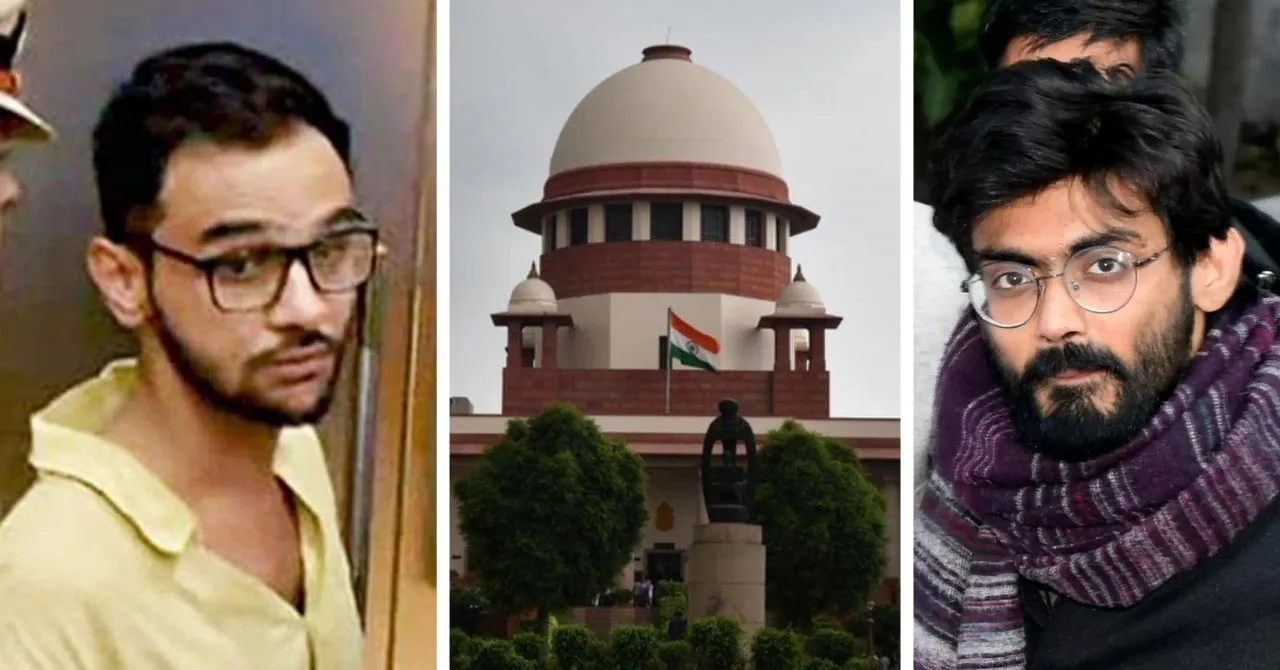
Umar Khalid and Sharjeel Imam have approached the Supreme Court challenging the Delhi High Court's refusal of their bail pleas in the northeastern Delhi riots case. Their prolonged imprisonment brings significant legal questions into focus, particularly concerning their rights as undertrials under UAPA.
4 min read
 UAPA Bail
Supreme Court Pulls Up Bihar Police and Gaya Court Over 14-Month Detention Without Production of UAPA Accused
The Supreme Court intervened in a case involving a UAPA accused detained for 14 months without production in court, demanding accountability from Bihar Police. The court granted interim bail pending further hearings.
6 min read