Supreme Court Pulls Up Bihar Police and Gaya Court Over 14-Month Detention Without Production of UAPA Accused
The Supreme Court intervened in a case involving a UAPA accused detained for 14 months without production in court, demanding accountability from Bihar Police. The court granted interim bail pending further hearings.
- By
- BailNow Research Team
- Published
- Reading time
- 6 min read
On this page
'An Undesirable Development': Apex Court Seeks Formal Explanations as Liberty of Detainee is Severely Compromised
Top Court Directs Investigating Officer and Patna High Court Registrar General to Submit Comprehensive Reports by Mid-November 2026
By Legal Editor
New Delhi: November 02, 2026:
In a striking judicial intervention that underscores the paramount importance of personal liberty and procedural safeguards under special criminal legislation, the Supreme Court of India has expressed deep shock and displeasure. The apex court took serious note of a case where an accused person, incarcerated under the stringent Unlawful Activities (Prevention) Act, 1967 (UAPA), was not produced before the trial court for nearly 14 months.
The alarming administrative lapse meant that formal charges could not be framed against the accused, keeping him in legal limbo despite the state's own counter-affidavit acknowledging that his non-production from jail was the sole cause of the delay. A bench comprising Justice Dipankar Datta and Justice Sheel Nagu pulled up the State of Bihar, the Bihar Police, and the Gaya trial court, demanding comprehensive reports.
In a stern observation highlighting systemic delays in the criminal justice system, the Supreme Court has sought explicit explanations from the Bihar Police and the Gaya trial court. The case centers on an undertrial prisoner accused under stringent anti-terror and security laws who was left unproduced before the trial court for nearly 14 months, preventing the formal framing of charges.
The bench, comprising Justice Dipankar Datta and Justice Sheel Nagu, branded the development "undesirable" and expressed deep surprise that even the trial court failed to demand the physical or virtual production of the accused during this prolonged period.
Background of the Case: Dev Kumar Paswan v. State of Bihar
The matter came to light during the Supreme Court's adjudication of a bail plea filed by the petitioner, Dev Kumar Paswan, challenging the Patna High Court's refusal to grant him relief.
Charges and Allegations
The petitioner faces severe legal scrutiny under multiple statutory provisions:
- Unlawful Activities (Prevention) Act (UAPA): Highlighting allegations of terror-related or unlawful association activities.
- Indian Penal Code (IPC): Covering associated penal infractions.
- Explosives Act and Arms Act: Stemming from police raids where law enforcement authorities allegedly recovered several incriminating articles.
According to the prosecution, the petitioner is allegedly an active member of a Naxalite group.
The 14-Month Timeline and Administrative Lapse
The petitioner surrendered before authorities on May 10, 2025. Subsequently, a supplementary chargesheet was filed on July 29, 2025. However, due to administrative failures, the accused was continuously kept away from the trial court, making it impossible for judicial authorities to move forward with the framing of charges.
Remarkably, the State's own counter-affidavit transparently acknowledged that the delay in framing charges was directly attributable to the non-production of the accused from jail. When pressed by the bench, counsel for the State of Bihar, Mr. Akshay Amritanshu, was unable to provide a justifiable rationale for why the petitioner remained unproduced for well over a year.
Judicial Directives and Accountability
Expressing grave dissatisfaction with the mechanical handling of a sensitive undertrial case, the Supreme Court issued strict directions to ensure institutional accountability:
- Investigating Officer Report: The IO of the case has been ordered to submit a formal report before the Apex Court detailing the exact, ground-level reasons that led to the continuous failure in producing the petitioner.
- High Court Intervention: The Registrar General of the Patna High Court has been tasked with obtaining a dedicated administrative report directly from the relevant trial court in Gaya.
- Sealed Cover Deadline: Both reports must be formally submitted to the Supreme Court Registry in a sealed cover no later than November 15, 2026.
- Interim Relief Granted: Noting that a co-accused (the main accused in the matter) had already secured bail, and finding the petitioner's legal footing to be superior or comparable, the bench granted interim bail to the petitioner.
The matter is slated for its next detailed hearing on November 17, 2026.
Broader Implications for Undertrial Rights in India
This judicial intervention underscores chronic infrastructural and logistical bottlenecks plaguing the criminal justice administration in various districts across India:
- Right to Speedy Trial: Under Indian constitutional jurisprudence (stemming from Article 21), a speedy trial is recognized as an integral part of the right to life and personal liberty. Lengthy incarceration without the commencement of a trial due to police or administrative inaction violates core human rights.
- Statutory Safeguards under UAPA: While special legislations like the UAPA impose stringent barriers to regular bail, courts have consistently maintained that prolonged institutional delays cannot be used to indefinitely punish an unconvicted undertrial.
- Judicial Oversight: The Supreme Court's proactive stance serves as a reminder to trial courts that judicial oversight must be active; magistrates and judges share the responsibility of ensuring that prisoners under their jurisdiction are produced regularly so that proceedings are not held hostage by logistical failures.
Frequently Asked Questions (FAQs)
1. What is the core issue highlighted by the Supreme Court in this case?
The Supreme Court expressed shock that an undertrial accused under the UAPA was not produced before the Gaya trial court for nearly 14 months following his surrender, which completely stalled the judicial process and prevented the framing of charges.
2. Which laws is the accused charged under?
The petitioner, Dev Kumar Paswan, is facing prosecution under the Unlawful Activities (Prevention) Act (UAPA), the Indian Penal Code (IPC), the Explosives Act, and the Arms Act over alleged links to a Naxalite group.
3. What orders has the Supreme Court issued to the authorities?
The Court directed the investigating officer and the Registrar General of the Patna High Court (via a report from the Gaya trial court) to submit explanations regarding the delay in sealed covers by November 15, 2026. Additionally, the Court granted the petitioner interim bail.
4. When is the case scheduled to be heard next?
The matter has been listed for further proceedings on November 17, 2026.
Related articles
 UAPA Bail
THE ULTIMATE LEGAL TEST: Navigating UAPA Section 43D (5) Bail Conditions and the Evolving Jurisprudence of Personal Liberty
This article delves into UAPA Section 43D(5) and its impact on bail conditions in India, examining landmark Supreme Court rulings that highlight the balance between national security and personal liberty.
10 min read
 UAPA Bail
News Snacks
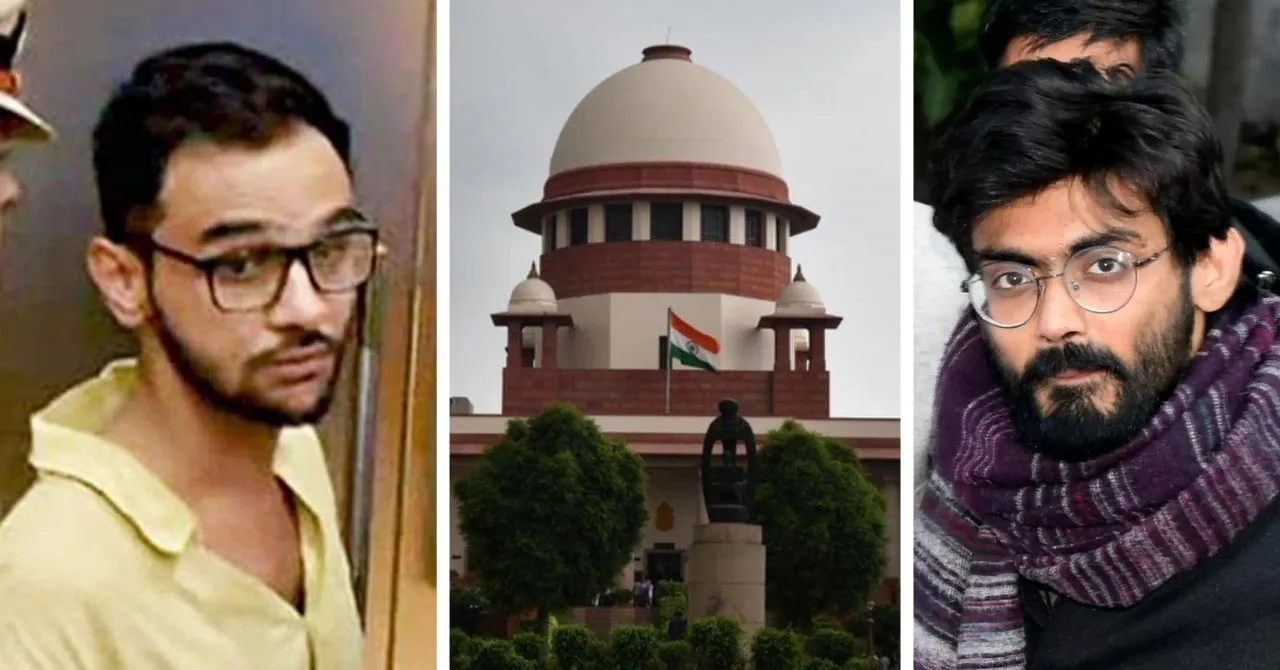
Umar Khalid and Sharjeel Imam have approached the Supreme Court challenging the Delhi High Court's refusal of their bail pleas in the northeastern Delhi riots case. Their prolonged imprisonment brings significant legal questions into focus, particularly concerning their rights as undertrials under UAPA.
4 min read