THE ULTIMATE LEGAL TEST: Navigating UAPA Section 43D (5) Bail Conditions and the Evolving Jurisprudence of Personal Liberty
This article delves into UAPA Section 43D(5) and its impact on bail conditions in India, examining landmark Supreme Court rulings that highlight the balance between national security and personal liberty.
- By
- BailNow Research Team
- Published
- Reading time
- 10 min read
On this page
How India’s Supreme Court Balances National Security Imperatives Against Constitutional Rights Amid Stringent Anti-Terror Laws
A Definitive Chronicle of Statutory Bars, Prima Facie Thresholds, Prolonged Incarceration Exceptions, and Landmark Judicial Pronouncements
By Legal Editor
New Delhi: October 10, 2026:
The Unlawful Activities (Prevention) Act, 1967 (UAPA) stands as India's primary legislative instrument dedicated to countering terrorism and unlawful associations threatening the sovereignty and integrity of the nation. Over the decades, through successive legislative amendments—most notably the sweeping changes introduced in 2008, 2012, and 2019—the statute has evolved into an exceptionally formidable legal architecture.
At the epicentre of criminal litigation under this anti-terror framework is Section 43D (5). This specific statutory provision creates one of the most stringent and difficult bars to securing bail in the Indian legal system. While standard criminal jurisprudence operates on the foundational golden thread of "bail is the rule, jail is the exception," the UAPA deliberately inverts this presumption.
This comprehensive investigative and legal report examines the mechanics of Section 43D (5), traces how the judiciary has interpreted its boundaries, reviews pivotal Supreme Court judgments that have either fortified or softened its blow, and explores the emerging contours of counter-terrorism jurisprudence.
Part I: The Legislative Architecture of Section 43D (5)
To comprehend why securing bail under the UAPA is an uphill battle for any accused person, one must first dissect the statutory language and intent embedded within Section 43D(5).
The Statutory Text and Embargo
Section 43D (5) of the UAPA stipulates that an accused person cognizably accused of offenses under Chapters IV and VI of the Act shall not be released on bail or on their own bond if the court, after perusing the case diary or the report made under Section 173 of the Code of Criminal Procedure (or the corresponding Bharatiya Nagarik Suraksha Sanhita), is of the opinion that there are reasonable grounds for believing that the accusation against such person is prima facie true.
The Two-Pronged Mandate Imposed on Courts
When a Special Court or a constitutional court hears a bail application under the UAPA, the statute mandates a strict procedural evaluation:
- The Prosecutor's Notice: Before granting bail, the Public Prosecutor must be given an opportunity of being heard on the application. (If the prosecutor opposes bail, the second prong kicks in heavily).
- The Prima Facie Satisfaction: The court must evaluate whether the material collected by the investigative agency (such as the National Investigation Agency or state police) establishes a prima facie case connecting the accused to the crime. If the court finds reasonable grounds to believe the accusation is true, the statutory embargo is absolute, and bail must be denied.
This framework effectively shifts the burden of proof at the threshold stage. Unlike ordinary penal statutes where the prosecution must justify continued detention based on flight risk or tampering, under the UAPA, the court must be affirmatively convinced that the prosecution's case lacks a prima facie foundation before liberty can be granted.
Part II: Fortifying the Bar—The Landmark Ruling in NIA v. Watali (2019)
For years, legal practitioners debated how deeply a court could examine evidence during a bail hearing under Section 43D (5). This question received an authoritative, restrictive answer from the Supreme Court of India in the landmark case of National Investigation Agency v. Zahoor Ahmad Shah Watali (2019).
The Core Holdings of Watali
In the Watali judgment, a two-judge bench of the Supreme Court set strict parameters that drastically narrowed the scope of judicial review during UAPA bail hearings:
- Prohibition of a Mini-Trial: The court ruled that while evaluating whether an accusation is prima facie true, the judge must not undertake a micro-analysis or evaluation of the evidence, nor should they test the probative value or credibility of witness statements at the stage of bail. That is an exercise strictly reserved for the trial itself.
- Acceptance of Prosecution Material at Face Value: The court held that the totality of the material gathered by the investigating agency must be accepted as it stands, unless it is inherently implausible or legally prohibited.
- Broad Probabilities: The satisfaction of the court regarding the prima facie truth of the allegations must be judged on the basis of "broad probabilities," rather than a standard of proof beyond reasonable doubt, which is required only at the final conviction stage.
The Watali judgment served as a massive shield for investigating agencies, making it extraordinarily difficult for UAPA undertrials to secure bail simply by picking holes in the prosecution's initial dossier.
Part III: The Constitutional Safety Valve—Union of India v. K.A. Najeeb (2021)
While Watali reinforced the statutory wall of Section 43D(5), the Supreme Court soon confronted a grim reality: what happens when an accused person spends years behind bars as an undertrial without the trial even commencing? Does the statutory bar completely extinguish constitutional guarantees under Article 21 (Right to Life and Personal Liberty)?
This tension led to a watershed moment in Indian jurisprudence: Union of India v. K.A. Najeeb (2021).
The Doctrine of "Melting Down" the Statutory Embargo
In K.A. Najeeb, a three-judge bench of the Supreme Court addressed a case where the accused had languished in prison for over five years under the UAPA, while the trial had barely made progress and dozens of witnesses remained unexamined.
The Apex Court held that:
- Constitutional Superiority: Statutory restrictions like Section 43D(5) are designed to deal with grave threats to national security, but they cannot oust or override the constitutional powers of High Courts and the Supreme Court under Articles 226 and 32 to protect fundamental rights.
- Prolonged Incarceration as a Ground: If an accused has undergone a significant period of incarceration (commensurate with a substantial part of the potential sentence) and there is no likelihood of the trial concluding in the near future, the rigors of Section 43D (5) "melt down."
- Speedy Trial Mandate: The right to a speedy trial is an integral facet of Article 21. When the state fails to provide a speedy trial, prolonged detention ceases to be a preventive measure and transforms into punitive pre-trial imprisonment, thereby justifying the grant of bail despite the UAPA embargo.
Part IV: Defining the Boundaries of Membership and Intent—Thwaha Fasal and Vernon Gonsalves
Subsequent rulings by the Supreme Court refined how lower courts must evaluate active involvement versus passive association when applying Section 43D(5).
1. Thwaha Fasal v. Union of India (2021)
In this case involving two students in Kerala accused under Sections 38 and 39 of the UAPA (association with a terrorist organization and support given to it), the Supreme Court closely examined the requirement of mens rea (guilty intent).
- The Court held that mere association with a terrorist organization or mere possession of books, pamphlets, or electronic material espousing Maoist or dissident ideology does not automatically constitute a terrorist act or membership under the UAPA unless there is active participation, intent to further terrorist activities, or overt acts aimed at violence.
- Finding no strong prima facie evidence of active terrorist intent, the Supreme Court restored bail, proving that Section 43D(5) does not mean any association warrants perpetual detention.
2. Vernon Gonsalves v. State of Maharashtra (2023)
Deciding on the bail pleas of prominent activists connected to the Elgar Parishad case, the Supreme Court reiterated the rigorous standards required under Section 43D (5).
- The bench emphasized that the burden under Section 43D(5) requires pointing to specific, tangible material showing active involvement in furthering terrorist objectives, rather than relying on recovered literature, communiqués, or ideological correspondence. Although bail was denied in that specific instance due to the gravity of specific materials on record, the judgment reinforced that ideological inclinations alone do not fulfill the statutory threshold of a "terrorist act" under Section 15.
Part V: Summary Reference Table of Landmark UAPA Bail Judgments
Case Name & Citation | Core Legal Principle Established | Impact on Section 43D(5) |
|---|---|---|
NIA v. Zahoor Ahmad Shah Watali (2019) | Courts must not conduct mini-trials or evaluate witness credibility at the bail stage; prosecution evidence must be accepted on broad probabilities. | Strengthened the bar, making it harder to dismantle prosecution claims at threshold. |
Union of India v. K.A. Najeeb (2021) | Prolonged incarceration coupled with trial delays can "melt down" the statutory embargo, as Article 21 rights override statutory restrictions. | Introduced a vital safety valve for long-standing undertrials. |
Thwaha Fasal v. Union of India (2021) | Mere possession of subversive literature or passive association does not attract UAPA penal sections without proof of active intent. | Clarified the threshold of mens rea required to sustain a prima facie case. |
Vernon Gonsalves v. State of Maharashtra (2023) | Re-emphasized that active involvement and specific overt acts must be discernible from the charge sheet material to deny bail under Section 43D(5). | Maintained rigorous scrutiny on the quality of evidence produced by agencies. |
Frequently Asked Questions (FAQs)
1. What is the fundamental difference between regular bail rules and UAPA bail under Section 43D(5)?
In standard criminal cases, the foundational principle is "bail is the rule, jail is the exception," placing the burden on the state to prove why an accused should remain detained. Under UAPA Section 43D(5), this presumption is inverted: if the court finds reasonable grounds to believe the accusations are prima facie true, bail must be denied, placing the heavy burden of dismantling the prosecution dossier on the accused.
2. Can constitutional courts grant bail under the UAPA despite the strict statutory bar?
Yes. As established in landmark rulings like Union of India v. K.A. Najeeb, the statutory embargo under Section 43D(5) applies to Special Courts, but it cannot oust the constitutional jurisdiction of High Courts and the Supreme Court under Articles 226 and 32. When there is inordinate trial delay and prolonged incarceration, constitutional courts can grant bail to protect fundamental rights under Article 21.
3. Does a court evaluate witness credibility and evidence during a UAPA bail hearing?
No. According to the Supreme Court's ruling in NIA v. Watali, courts are strictly prohibited from conducting a mini-trial, testing the reliability of witnesses, or weighing the probative value of evidence at the bail stage. The material collected in the charge sheet and case diary must be accepted on broad probabilities.
4. Is the mere possession of banned literature or association with an organization enough to deny bail?
Not necessarily. As clarified in Thwaha Fasal v. Union of India, mere possession of books, pamphlets, or passive association with a banned group does not automatically satisfy the ingredients of a terrorist act under UAPA unless there is tangible proof of active participation, intent to further terrorist activities, or incitement to violence.
5. What constitutes "prolonged incarceration" sufficient to overcome the UAPA bail bar?
There is no fixed statutory number of days, but judicial precedents show that imprisonment ranging from 3 to 7 years (or serving a significant portion of the minimum sentence prescribed for the alleged offense) where the trial has not advanced substantially or where charges have not been framed, is frequently treated by constitutional courts as grounds to invoke the K.A. Najeeb exception and grant bail.
Related articles
 UAPA Bail
Supreme Court Pulls Up Bihar Police and Gaya Court Over 14-Month Detention Without Production of UAPA Accused
The Supreme Court intervened in a case involving a UAPA accused detained for 14 months without production in court, demanding accountability from Bihar Police. The court granted interim bail pending further hearings.
6 min read
 UAPA Bail
News Snacks
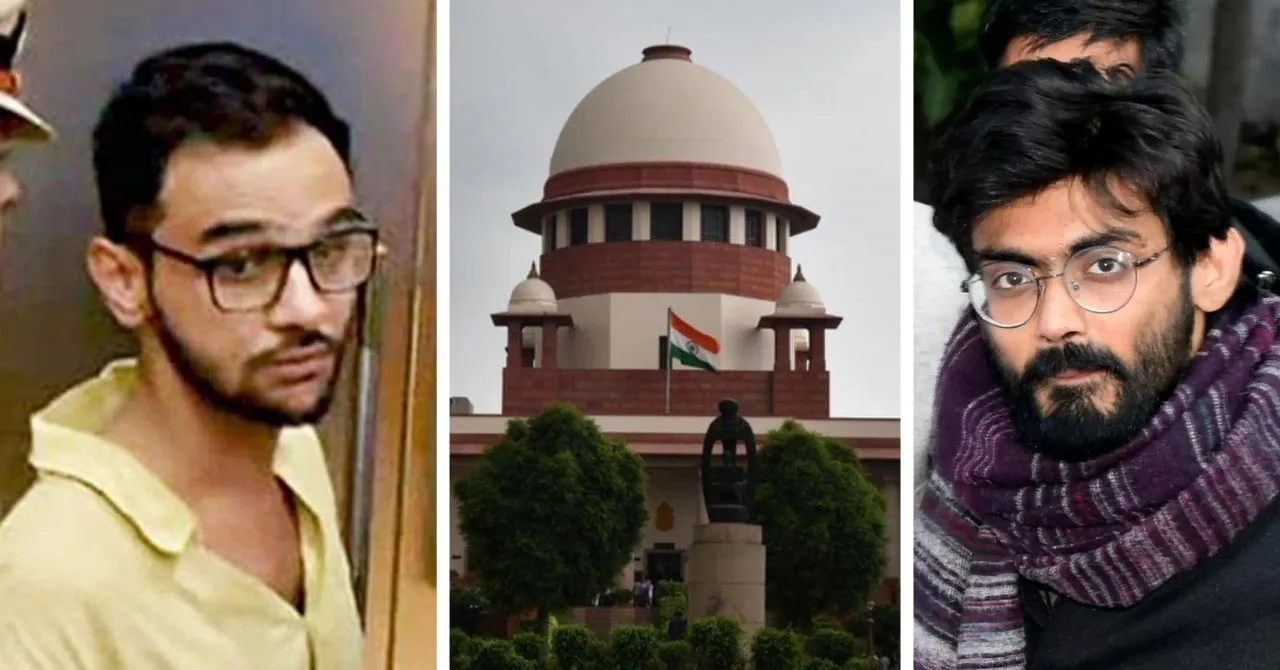
Umar Khalid and Sharjeel Imam have approached the Supreme Court challenging the Delhi High Court's refusal of their bail pleas in the northeastern Delhi riots case. Their prolonged imprisonment brings significant legal questions into focus, particularly concerning their rights as undertrials under UAPA.
4 min read