Scales of Justice and Stardom: How Indian Courts Handle Celebrity Bail Cases and High-Profile Legal Scrutiny
This article analyzes how Indian courts treat celebrity bail cases, emphasizing that celebrity status does not equate to special privileges in judicial proceedings.
- By
- BailNow Research Team
- Published
- Reading time
- 9 min read
On this page
From Public Adulation to Judicial Accountability: Why Popularity Is Never a Shield for Impunity Under Indian Criminal Jurisprudence
Examining Landmark Precedents, Special Treatment Debates, and the Equal Application of Article 21 to Icons and Common Citizens Alike
By Legal Editor
New Delhi: October 13, 2026:
Few events capture public attention, media frenzies, and nationwide debates quite like a prominent celebrity or public figure facing criminal charges and navigating the labyrinth of India’s bail system. When flashbulbs illuminate court premises, millions of fans track every legal manoeuvre, and prime-time news panels dissect a star's prospects of walking free, a fundamental question echoes through the chambers of the judiciary: Does fame alter the scales of justice?
In a constitutional democracy governed by the rule of law, the answer is an unequivocal and resounding no. Yet, the intersection of celebrity status and criminal procedure has perpetually tested the resilience, impartiality, and vigilance of Indian courts. From high-stakes financial disputes and cheque-bounce litigation to grave criminal allegations, the judiciary has repeatedly drawn a sharp, unyielding line: personal popularity, wealth, and social influence cannot buy exemption from criminal accountability.
This comprehensive legal analysis explores how Indian courts—ranging from trial magistrates to the Supreme Court—handle celebrity bail cases, the philosophical framework governing high-profile pre-trial release, systemic challenges regarding prison treatment, and the evolving judicial stance that ensures the law treats the powerful and the ordinary with absolute parity.
Part 1: The Constitutional Bedrock — Equality Before Law and Personal Liberty
To understand the legal dynamics of celebrity bail hearings, one must return to the foundational pillars of the Constitution of India. Two core provisions dictate every judicial order concerning pre-trial liberty:
[Constitutional Framework for Bail]
│
├──> Article 14 (Right to Equality) ──> No person, regardless of fame or wealth, stands above the law.
│
└──> Article 21 (Protection of Life & Liberty) ──> Deprivation of liberty requires fair, just, and established legal procedure.
1. Article 14: The Great Leveller
Article 14 of the Constitution guarantees that the State shall not deny to any person equality before the law or the equal protection of the laws within the territory of India. In the context of criminal jurisprudence, this principle means that an accused individual's professional achievements, box-office collections, political clout, or social fan following hold zero weight when a court evaluates a bail application.
2. Article 21: Liberty as a Inalienable Right
Article 21 protects personal liberty, ensuring that no person is deprived of their freedom except through a fair and just procedure established by law. Because pre-trial detention is never meant to be punitive, courts are tasked with balancing an individual's right to liberty against the state's interest in conducting an unhindered, unbiased investigation—irrespective of whether the accused is an ordinary citizen or an A-list celebrity.
Part 2: Landmark Judicial Warnings — Popularity Is Not a Shield
In recent years, the higher judiciary has felt compelled to issue stern warnings against the subtle expectation of preferential treatment that often surrounds high-profile defendants.
1. The Supreme Court's Firm Stance on Influence
In landmark pronouncements addressing high-profile criminal matters—such as the high-stakes bail proceedings concerning prominent film personalities and public figures (including observations from bench hearings in cases like actor Darshan’s legal proceedings)—the Supreme Court of India explicitly cautioned that popularity cannot be a shield for impunity.
The apex court noted that celebrities often serve as social role models, meaning their public accountability is greater, not lesser. A bench of the Supreme Court famously observed that influence, massive financial resources, and social status can never form a lawful basis for granting bail when there is a genuine risk of prejudice to an ongoing investigation, witness intimidation, or evidence tampering.
2. Guarding Against "Special Privileges" in Custody
Public scepticism often centers on whether wealthy or famous individuals receive luxurious treatment inside correctional facilities. The judiciary has met this concern with aggressive oversight. On multiple occasions, higher courts have warned prison authorities that the discovery of preferential treatment—colloquially referred to as "five-star treatment"—for high-profile inmates will invite immediate judicial intervention, including the direct suspension of negligent jail superintendents and administrative officials.
Part 3: Anatomy of Celebrity Legal Troubles — From Financial Defaults to Grave Crimes
Celebrities typically find themselves before criminal courts across two distinct categories of legal disputes: commercial and financial defaults (such as breach of contract, unpaid loans, and cheque dishonouring) and heinous or serious criminal allegations (such as assault, narcotics, or grave bodily harm). Each category triggers vastly different legal mechanisms.
[Classification of Celebrity Legal Cases]
│
├──> Financial & Commercial Disputes (e.g., Cheque Bounce, Investor Defaults)
│ │
│ └──> Focus: Settle dues, execute undertakings, balance restitution with liberty.
│
└──> Heinous / Serious Criminal Allegations (e.g., Assault, NDPS, Major Crimes)
│
└──> Focus: Strict statutory bars, flight risk, witness intimidation, zero tolerance for status.
1. Financial Default and Cheque Bounce Cases
Many public figures, actors, and producers enter high-risk commercial ventures that occasionally collapse, leading to prolonged litigation under Section 138 of the Negotiable Instruments Act or criminal breach of trust provisions.
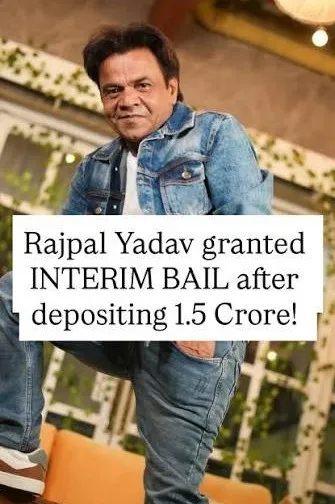
- The Legal Tug-of-War: High-profile financial disputes—such as long-running legal battles involving veteran actors like Rajpal Yadav facing cheque-bounce convictions over unpaid film loans—demonstrate how courts approach financial liability.
- Judicial Approach: While courts may occasionally suspend sentences or grant interim relief solely to allow an individual a genuine opportunity to settle debts with creditors, prolonged failure to honour court-backed commitments inevitably results in strict judicial custody. Judges frequently remind litigants that fame does not excuse financial fraud or broken legal undertakings.
2. Serious Criminal Charges and the Rigors of Special Statutes
When celebrities face serious criminal allegations—ranging from narcotics charges under the NDPS Act to high-profile assault or murder investigations—the standard for securing bail becomes exceptionally rigorous.
- Investigating agencies and public prosecutors frequently argue that because of their immense wealth and influence, famous individuals possess the capacity to influence key witnesses, manufacture evidence, or flee the jurisdiction.
- Consequently, courts demand robust guarantees, strict travel restrictions, regular police station reporting, and the surrender of passports as mandatory prerequisites for any pre-trial release.
Part 4: Media Trials, Public Sentiment, and Judicial Independence
One of the unique pressures surrounding celebrity bail hearings is the intense glare of the media and public opinion.
1. The Danger of Trial by Media
When a celebrity is arrested, 24-hour news channels and social media platforms frequently conduct "media trials," pronouncing guilt or demanding immediate imprisonment long before a trial court evaluates evidence. Conversely, massive fan clubs often mobilize online campaigns demanding immediate release based purely on emotional loyalty.
2. Insulation of the Judiciary
Indian jurisprudence dictates that courts must remain completely insulated from public sentiment, social media outrage, and fan-following pressure. Judges decide bail applications strictly on the four corners of the criminal code:
- The Prima Facie Case: Does the material collected by police show reasonable grounds connecting the accused to the crime?
- Flight Risk: Is the accused likely to abscond and evade the jurisdiction of Indian courts?
- Tampering Threat: Will the accused tamper with documentary evidence or coerce vulnerable witnesses?
If these risks are successfully mitigated and statutory requirements are met, bail is granted. If not, release is denied—regardless of how popular the defendant might be.
Part 5: Comparing Ordinary vs. High-Profile Bail Proceedings
While the substantive law (the BNSS, BNS, and special statutes) applies identically to every citizen, practical differences often emerge in how high-profile cases are managed administratively.
Parameter | Ordinary Citizens | Celebrity / High-Profile Defendants |
|---|---|---|
Legal Representation | Often rely on legal aid counsel or general practitioners. | Frequently retain elite senior advocates and large legal teams. |
Media Visibility | Localized or minimal public reporting. | Intense national media scrutiny and round-the-clock news coverage. |
Security & Logistics | Standard court production protocols. | Requires specialized police cordons, media management, and secure transit to prevent public chaos. |
Bail Conditions | Routine personal bonds and local sureties. | Often subjected to stringent electronic monitoring, heavy monetary bonds, and mandatory passport surrenders. |
Frequently Asked Questions (FAQs)
Q1: Do celebrities get special preference or faster bail hearings in Indian courts?
A: Legally, no. The substantive and procedural laws apply equally to all citizens under Article 14 of the Constitution. While high-profile defendants often hire senior legal counsel to move urgent petitions swiftly, courts evaluate bail strictly based on legal merits, evidence, and statutory rules, not fame.
Q2: What did the Supreme Court say regarding celebrity status and bail?
A: The Supreme Court has explicitly ruled that popularity cannot be a shield for impunity. The apex court emphasized that an individual's wealth, influence, or fame does not entitle them to preferential treatment, and that accountability is actually greater for public figures who serve as social role models.
Q3: How do courts handle bail for celebrities facing financial fraud or cheque-bounce cases?
A: In financial default cases, courts focus heavily on restitution and honouring settlement commitments. While interim relief or suspended sentences may be granted to give the accused a chance to clear legitimate dues, persistent failure to honour undertakings given to the court routinely results in revocation of relief and imprisonment.
Q4: Can media trials or public fan campaigns influence a judge's decision to grant or deny bail?
A: No. Indian judges are bound by judicial oath to act independently and impartially, relying strictly on evidentiary records, statutory provisions, and constitutional principles rather than public sentiment, media pressure, or online campaigns.
Q5: What standard conditions are typically imposed on high-profile individuals when granted bail?
A: Alongside standard personal and surety bonds, courts frequently impose rigorous conditions on celebrities, including the mandatory surrender of passports to prevent international flight, regular reporting to investigating officers, strict prohibitions against contacting or intimidating witnesses, and restrictions on leaving specified territorial jurisdictions without prior court permission.
Related articles
 Bail Basics
"Bail vs. Jail": Untangling the Supreme Court’s Evolving Stance on Personal Liberty and the Crisis of Pre-Trial Detention
This article examines the Supreme Court's evolving approach to bail, addressing the themes of personal liberty and pre-trial detention under Article 21 of the Constitution of India.
7 min read
 Bail Basics
Understanding Liberty and Suspension: The Definitive Guide to the Difference Between Parole and Bail in India
This article elucidates the distinctions between bail and parole in India, focusing on their legal implications, frameworks, and the rights involved. Understand how these legal tools affect personal liberty and justice.
8 min read