Delhi High Court Refuses Bail to Ex-Dwarka Anti-Narcotics Cell Chief Over ₹48.87 Lakh Extortion Probe
The Delhi High Court denied bail to Subhash Chand, former head of the Anti-Narcotics Cell, citing serious corruption charges and an unexplained cash recovery of ₹48.87 lakh.
- By
- BailNow Research Team
- Published
- Reading time
- 5 min read
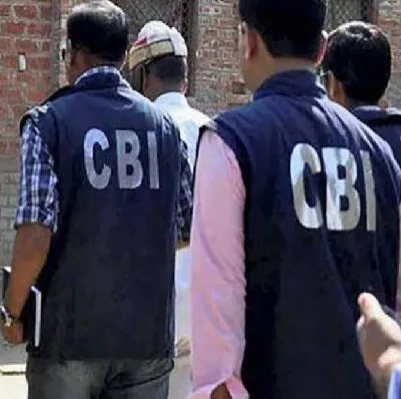
Justice Girish Kathpalia refused relief, citing the gravity of the corruption charges, unexplained cash recovery of ₹48,87,600, and the influential position held by the senior police officer.
By Legal Reporter
New Delhi, November 19, 2026: The Delhi High Court has dismissed the regular bail plea of Subhash Chand, the former in-charge of the Delhi Police’s Anti-Narcotics Cell (ANC) in Dwarka, who stands accused of running an extortion racket by threatening citizens with false implication under the Narcotic Drugs and Psychotropic Substances (NDPS) Act. Pronouncing the oral judgment in Subhash Chand v. Central Bureau of Investigation (BAIL APPLN. 3153/2026), Justice Girish Kathpalia refused relief, citing the gravity of the corruption charges, unexplained cash recovery of ₹48,87,600, and the influential position held by the senior police officer.
Anatomy of the CBI Trap and Unexplained Cash Seizure
The criminal investigation stems from a written complaint lodged with the Anti-Corruption Branch of the Central Bureau of Investigation (CBI) on April 21, 2026. According to the prosecution’s chargesheet, subordinates attached to the Dwarka Anti-Narcotics Cell initially demanded ₹25 lakh from the complainant to shield her from a fabricated narcotics case. When she expressed her inability to pay, an official telephoned "Subhash"—allegedly the petitioner—following which the demand was scaled down to ₹15 lakh, with an immediate tranche of ₹5 lakh sought.
During verification proceedings conducted in the presence of independent witnesses, the complainant informed Head Constable Ajay Kumar via a WhatsApp call that she could arrange only ₹2 lakh. The CBI subsequently laid a trap at the Dwarka ANC office on the evening of April 21, catching the Head Constable red-handed while demanding and accepting the ₹2 lakh bribe.
Follow-up searches at the Dwarka office yielded circumstantial evidence that heavily weighed against Chand’s defence:
- Unaccounted Cash: Investigators recovered ₹48,87,600 in cash from the window of a restroom attached directly to Chand’s official chamber.
- Office Irregularities: The CBI seized a currency counting machine inside Chand’s official room and discovered a dummy CCTV camera installed on the premises—neither of which the accused could satisfactorily explain.
- Prior Extortion Allegation: The probe also uncovered an alleged antecedent demand of ₹20 lakh made by Chand on March 18, 2026, linked to the detention of the complainant’s daughter in an NDPS matter.
Judicial Scrutiny: Abuse of Authority Outweighs Procedural Defences
In refusing bail under Section 61(2) of the Bharatiya Nyaya Sanhita (BNS) and Section 7 of the Prevention of Corruption Act, the official Delhi High Court order dismantled the petitioner's primary arguments. Chand’s counsel contended that the ₹48.87 lakh cash was recovered from an area accessible to the public and that the senior officer had handed over his mobile phone to investigators without a formal seizure memo.
Justice Kathpalia rejected both claims as implausible at the pre-charge stage. The Court noted that record material established the attached restroom window was accessible exclusively to the petitioner, leaving the massive cash hoard entirely unexplained. Furthermore, the bench found it unbelievable that a seasoned police officer in charge of a specialized cell would surrender his personal mobile phone without demanding an official receipt.
From a broader institutional standpoint, the ruling underscores the judiciary's strict threshold for custodial bail when law enforcement officials weaponize stringent statutes like the NDPS Act—where bail provisions are notoriously rigorous—as instruments of extortion. By highlighting Chand's dominant supervisory role and repeated references to his name during trap conversations, the Court signalled that filing a chargesheet alone does not dilute the risk of witness intimidation or evidence tampering in high-level police corruption cases. The Court clarified that its observations were strictly confined to the bail adjudication and would not prejudice the trial court's independent evaluation.
Frequently Asked Questions (FAQs)
Why did the Delhi High Court deny bail to former ANC chief Subhash Chand?
Justice Girish Kathpalia denied regular bail due to the gravity of the allegations, repeated references to Chand during CBI trap proceedings, an unexplained recovery of ₹48,87,600 from a restroom attached to his chamber, and his influential position as head of the unit.
What legal provisions are invoked in the CBI case against the Dwarka ANC officials?
The CBI’s Anti-Corruption Branch registered the FIR (RC No. 0032026A0026) under Section 61(2) of the Bharatiya Nyaya Sanhita (criminal conspiracy) and Section 7 of the Prevention of Corruption Act (offence relating to a public servant being bribed).
Where was the ₹48.87 lakh cash recovered during the CBI search?
According to the CBI chargesheet cited in the Delhi High Court order, ₹48,87,600 was recovered from the window of a restroom attached directly to Subhash Chand's official room at the Dwarka Anti-Narcotics Cell office, alongside a currency counting machine inside his room.
Does the High Court's bail rejection affect the final trial outcome?
No. Justice Kathpalia explicitly noted in the November 17, 2026 order that the Court's observations were limited strictly to deciding the bail plea, and the trial court will assess the case independently based on evidence on record.
Related articles
 Criminal Procedure
Holding Public Accountability to Higher Standards: The Punjab & Haryana High Court’s Landmark Intervention on Public Servant Reinstatement in Corruption Trials
The Punjab & Haryana High Court intervened to uphold public accountability in corruption trials, addressing bail and reinstatement of public servants charged with serious offenses.
8 min read
 Criminal Procedure
News Snacks
The Supreme Court has granted bail to former Rajasthan minister Mahesh Joshi in the ₹979 crore Jal Jeevan Mission corruption case, highlighting the importance of trial over prolonged pre-trial detention.
3 min read