News Snacks
This article delves into the Karnataka High Court's ruling granting interim bail to Pradoosh S. Rao in the Renukaswamy murder case, highlighting the delicate balance between humanitarian concerns and trial integrity.
- By
- BailNow Research Team
- Published
- Reading time
- 4 min read
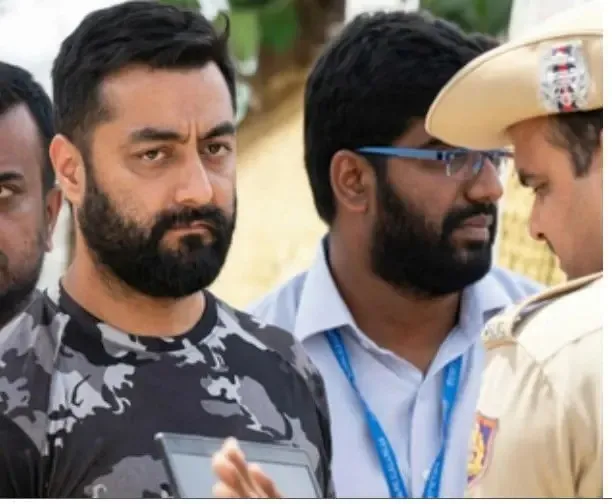
Legal Balancing Act: Evaluating the Interim Bail of Approver Pradoosh S. Rao in the Renukaswamy Murder Case
Judicial Discretion and Humanitarian Relief in High-Profile Criminal Proceedings
Scrutinizing the Delicate Interface Between Approver Security, Prosecution Integrity, and defence Objections
By Legal Reporter
New Delhi: November 07, 2026:
The intersection of high-profile criminal trials, statutory discretion, and humanitarian jurisprudence came into sharp focus when the Karnataka High Court ordered the release of Pradoosh S. Rao on conditional interim bail. Rao, a key approver in the widely followed Renukaswamy murder case—in which Kannada actor Darshan Thoogudeepa is implicated as a primary accused—was granted permission to attend religious rites commemorating his late father’s first death anniversary. While interim relief on compassionate grounds is a routine facet of criminal jurisprudence, the unique status of Rao as an approver transforms a procedural furlough into a complex legal talking point.
Analytical Overview of the High Court's Order
Justice Anant Ramanath Hegde’s ruling partially granted a plea for a 20-day release, trimming the duration to a strictly monitored five-day window spanning November 7 to November 12. The parameters established by the bench reflect an acute awareness of the security and evidentiary risks associated with releasing a state approver.
Under the directives, Rao must be escorted from prison to his residence at 8:00 AM daily and returned to custody no later than 6:00 PM. Furthermore, the court mandated the submission of an exhaustive roster detailing attending family members and officiating priests to the trial court, prison administration, and the City Armed Reserve Police. Most critically, a blanket prohibition was instituted barring Rao from communicating with police officers connected to the case, witnesses, or their close relatives.
This meticulous scaffolding of conditions highlights the judiciary's attempt to balance humanitarian equity with the unyielding demands of trial integrity.
The Defence Perspective and Evidentiary Stakes
The decision did not pass without vehement opposition from the defence. Senior counsel representing actor Darshan vigorously contested the bail application. The core argument hinged on the fragile sanctity of an approver's testimony. Under Indian criminal jurisprudence, an approver—having turned witness for the state under Section 307 of the CrPC in exchange for a tender of pardon—holds a central position in building the prosecution’s narrative.
The defence raised apprehensions that prolonged movement outside judicial custody, coupled with past interactions under police escorts, could expose the approver to external influences, potentially tutoring or compromising the evidentiary value of upcoming statements. These arguments underline the high-stakes tactical chess match typical of high-profile criminal trials, where the credibility and psychological autonomy of an approver can decisively tilt the scales of justice.
Broader Jurisprudential Implications
From an analytical standpoint, this case underscores a timeless legal dilemma: how far should the state bend to accommodate fundamental human rights and personal exigencies when an individual is enmeshed in a heinous crime investigation? Courts consistently maintain that statutory custody should not override basic humanitarian considerations, provided adequate safeguards are engineered to prevent tampering. By substituting unmonitored freedom with rigid police surveillance and absolute non-communication clauses, the Karnataka High Court has reinforced the principle that compassionate relief must remain strictly calibrated and legally contained.
Frequently Asked Questions (FAQs)
1. Who is Pradoosh S. Rao in the Renukaswamy murder case?
Pradoosh S. Rao is an accused-turned-approver in the high-profile murder case of 33-year-old Renukaswamy, which involves Kannada actor Darshan Thoogudeepa. Rao was granted a tender of pardon to provide crucial insider testimony for the prosecution.
2. What are the specific conditions of Pradoosh S. Rao's interim bail?
The Karnataka High Court permitted Rao's release from November 7 to 12 strictly to attend his father’s death anniversary rituals. Conditions require him to be escorted from prison to his home at 8:00 AM and returned by 6:00 PM daily, submit lists of attendees and priests, and strictly avoid any contact with witnesses, police handlers, or individuals linked to the case.
3. Why did the defence oppose granting bail to the approver?
The defence counsel representing actor Darshan argued that releasing an approver risks compromising the sanctity of their evidence. They expressed concerns that outside contact or movement outside prison walls could leave the approver vulnerable to external influence or coaching by prosecuting entities.
Related articles
 Bail Research
Supreme Court Ruling: Criminal Antecedents Cannot Favor Bail Applications, Prior Acquittals Demand Higher Caution
The Supreme Court's recent ruling clarifies that prior acquittals and bail orders cannot favor bail applications, demanding a more cautious judicial approach for repeat offenders.
6 min read
 Bail Research
CBI Opposes Defence CEO Ashish Kansal’s Bail in ₹500 Crore Ammunition Deal Bribery Case
The CBI court has denied bail to Ashish Kansal, CEO of SMPP Limited, in a major ₹500-crore defence bribery case, emphasizing the serious implications for national security.
6 min read