'Disturbing' Failure of Rule of Law: Supreme Court Pulls Up UP Government Over 1.5-Month Illegal Detention Post-Bail
The Supreme Court has condemned the UP government's failure to release a citizen post-bail and is considering financial compensation for the violation of personal liberty under Article 21.
- By
- BailNow Research Team
- Published
- Reading time
- 6 min read
On this page
Accountability on Trial: Why Post-Bail Detention Violates Article 21 and Undermines Personal Liberty
Judicial Scrutiny Deepens: Apex Court Demands Explanations and Considers Heavy Compensation for Unlawful Custody
By Legal Editor
New Delhi: November 06, 2026:
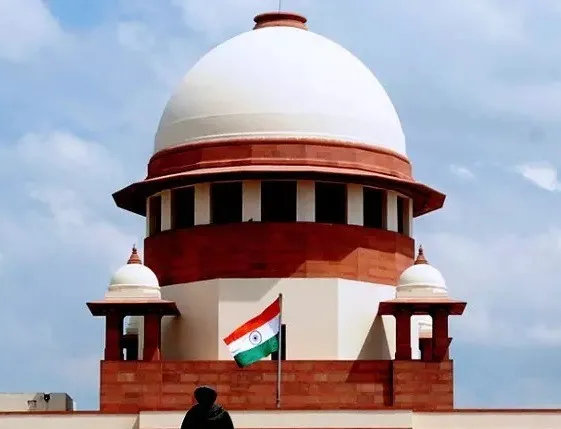
In a scathing indictment of executive apathy and systemic delay, the Supreme Court of India recently termed the continued detention of a citizen after being granted regular bail as "disturbing" and "unusual." Presided over by a bench comprising Justice JB Pardiwala and Justice Manmohan, the apex court pulled up the Uttar Pradesh government, demanding to know why the state should not be ordered to pay substantial financial compensation for this flagrant violation of personal liberty.
The case—Saddam v. State of UP—brings to light a deeply concerning administrative bottleneck where judicial orders granting freedom fail to translate into actual release, trapping individuals in limbo due to bureaucratic red tape and institutional inertia. This detailed analysis examines the factual matrix, the legal arguments, constitutional implications under Article 21, and the broader judicial trend toward holding state apparatuses accountable through punitive compensation.
Factual Background: From Cyber Fraud Allegations to Prolonged Custody
The genesis of the case traces back to an FIR registered in Baghpat, Uttar Pradesh. The petitioner, Saddam, was booked under Section 108 of the Bharatiya Nyaya Sanhita (BNS), 2023 (abetment of suicide) and Section 66D of the Information Technology Act, 2000 (punishment for cheating by personation by using computer resources).
The Chain of Events:
- The Allegations: The state police accused the petitioner of involvement in cyber fraud and actions that allegedly caused severe mental distress to a deceased individual, ultimately culminating in suicide.
- The High Court Stalemate: Seeking relief, the petitioner moved the Allahabad High Court for bail. Shockingly, the bail application was adjourned 12 times without an effective hearing on merits or any decisive order concerning regular or interim release.
- Supreme Court Intervention: Aggrieved by the indefinite delays and continued incarceration, the petitioner approached the Supreme Court under Article 136. Taking note of the prolonged custody undergone, the stage of proceedings, and overall facts and circumstances, the apex court enlarged him on regular bail on September 28, 2026.
- The Continuing Violation: Despite the formal issuance of the bail order on September 28, 2026, the petitioner remained locked behind bars for an additional month and a half. This glaring discrepancy prompted a fresh miscellaneous application flagging the blatant contempt of judicial orders.
Legal Analysis: The Anatomy of Illegal Detention Post-Bail
When a court of competent jurisdiction grants bail, the legal status of the accused changes immediately. Continued detention post-bail ceases to possess the backing of judicial custody or judicial warrant; it transforms into unlawful or illegal detention.
1. Breach of Article 21 of the Constitution
Article 21 guarantees that “No person shall be deprived of his life or personal liberty except according to procedure established by law.” Once bail is granted, the continued holding of an individual is without the authority of law, directly violating fundamental constitutional guarantees.
2. Mechanical Adjournments vs. Constitutional Mandates
The Supreme Court expressed deep anguish over the administrative and judicial delays at the High Court level, where the bail plea was routinely adjourned 12 times. The apex court's observations signal a strict warning against casual delays in matters concerning personal freedom.
3. Administrative Laches and Bureaucratic Friction
Often, delays in release happen due to delayed communication of bail orders, clerical omissions, or bureaucratic red tape between judicial registries and prison authorities. However, the Supreme Court has repeatedly emphasized that systemic inefficiency cannot be used as an excuse to strip a citizen of their liberty.
The Doctrine of Constitutional Tort and Compensation
A landmark aspect of the Supreme Court's intervention in this case is the issuance of a show-cause notice directing the Uttar Pradesh government to explain why financial compensation should not be awarded to the petitioner for unlawful detention.
"We have a very unusual case before us. Something very disturbing and we take serious cognizance of the same," the bench remarked, underlining the gravity of the executive lapse.
Emerging Judicial Precedents on State Compensation:
- Compensatory Jurisprudence: Indian courts have increasingly moved toward invoking public law remedies under constitutional torts, where the state is held financially liable for the wrongful acts, negligence, or delays of its machinery (police and prison authorities).
- Recent Benchmarks: This is not an isolated instance. In similar matters, the Supreme Court has previously ordered interim compensation (such as ₹5 lakh for delays caused by clerical omissions) and awarded up to ₹6 lakh when individuals suffered prolonged incarceration due to flawed investigations by the UP Police.
Broader Implications for the Criminal Justice System
The Supreme Court’s strict stance in Saddam v. State of UP resonates across several structural dimensions of India's criminal justice framework:
- Accountability of Prison Authorities: Jail superintendents and administrative staff are duty-bound to process release orders on an immediate, priority basis upon receipt. Delayed execution exposes the state to heavy financial liability.
- Digital Integration of Court Orders: The push for real-time transmission of authenticated bail orders (via projects like FASTER - Fast and Secure Transmission of Electronic Records) seeks to eliminate communication lags between apex/high courts and district prisons.
- Judicial Sensitivity to Personal Liberty: By flagging the matter as "disturbing," the Supreme Court has reinforced that procedural delays in safeguarding liberty will invite severe judicial consequences.
Frequently Asked Questions (FAQs)
1. What was the core issue raised in the Supreme Court case Saddam v. State of UP?
The core issue was the continued illegal detention of the petitioner for after the Supreme Court had already granted him regular bail on September 28, 2026.
2. Which legal sections were invoked against the accused?
The accused was booked under Section 108 of the Bharatiya Nyaya Sanhita (BNS), 2023 (abetment of suicide) and Section 66D of the Information Technology Act, 2000 (cyber fraud/cheating).
3. Why did the petitioner approach the Supreme Court in the first place?
The petitioner approached the Supreme Court because his bail application before the Allahabad High Court had faced repeated delays and was adjourned 12 times without a decision on merits.
4. What action did the Supreme Court take against the UP Government?
Apart from ordering his immediate release, the Supreme Court issued a show-cause notice demanding an explanation from the Uttar Pradesh government as to why appropriate monetary compensation should not be ordered for the illegal detention.
5. When is the matter next listed for hearing?
The case is scheduled to be heard next on December 3, 2026.
6. What constitutional right is violated when a person is kept in jail despite getting bail?
Keeping an individual detained after a bail order has been issued violates Article 21 of the Constitution of India, which guarantees the right to life and personal liberty.
Related articles
 Bail Basics
Supreme Court Directs Uttar Pradesh to Identify Undertrials Stuck in Jail Despite Bail Due to Financial Constraints
The Supreme Court has directed Uttar Pradesh to identify undertrial prisoners stuck in jail due to inability to meet bail conditions, addressing critical issues in the criminal justice system.
4 min read
 Bail Basics
Supreme Court Clarifies Judicial Boundaries: High Courts Cannot Direct Trial Courts to Grant Regular Bail on Preset Conditions While Rejecting Anticipatory Bail
The Supreme Court has clarified the limits of High Court powers during bail proceedings, emphasizing that trial courts must retain independent discretion in granting bail. This landmark ruling restores judicial balance within the Indian criminal justice system.
7 min read