Orissa High Court Rules: Transferred Judges Can Claim Post-Retirement Allowances From Parent State
The Orissa High Court has ruled that judges transferred before retirement can claim post-retirement benefits from their parent state, ensuring justice for retiring judiciary members.
- By
- BailNow Research Team
- Published
- Reading time
- 5 min read
On this page
Landmark Ruling Clarifies That Retiring From a Transferred High Court Does Not Disentitle a Judge From Receiving Post-Retirement Benefits and Allowances in Their Parent State
Securing Post-Retirement Justice for Judiciary Members
By Legal Editor
New Delhi: November 06, 2026
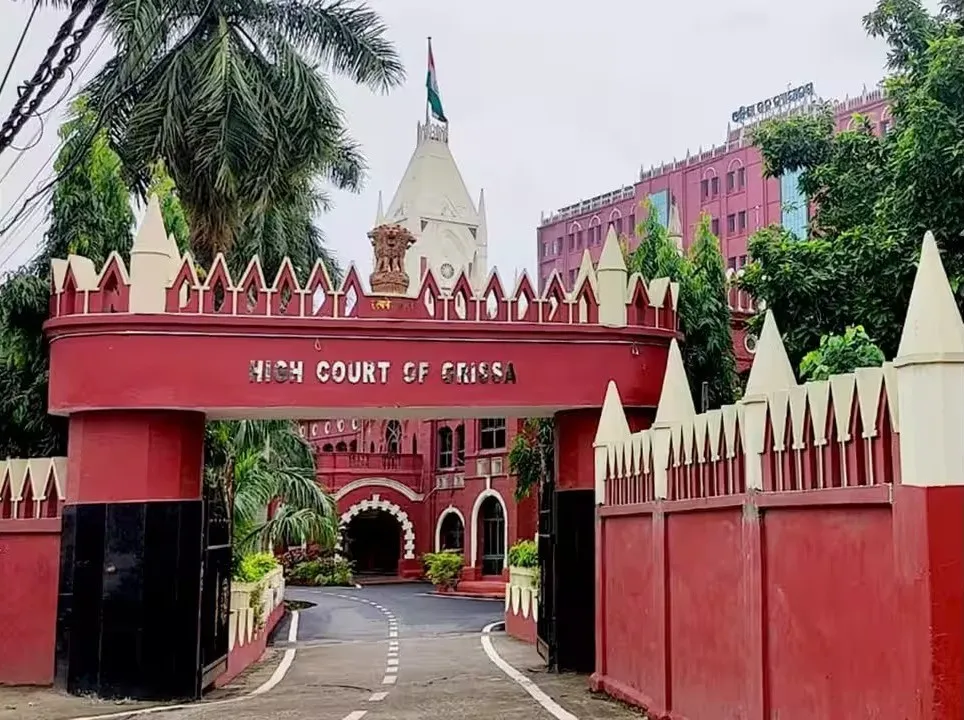
Retirement after decades of public service on the bench is meant to be a period of well-earned rest and security. However, for judges transferred to different High Courts during their careers, claiming post-retirement allowances often turned into a bureaucratic maze. Addressing this gap, a division bench of the Orissa High Court delivered a significant ruling on November 2, 2026.
The court held that a judge transferred to another High Court before retirement holds the legal right to claim post-retirement allowances from the state where they were originally appointed (their parent High Court), setting aside restrictive state government orders.
Case Background: The Legal Battle of Justice Chitta Ranjan Dash
The ruling stems from a petition filed by Justice (Retired) Chitta Ranjan Dash.
Judicial Tenure: Justice Dash was initially appointed to the Orissa High Court on October 7, 2009.
Transfer: In June 2022, he was transferred to the Calcutta High Court.
Retirement: He officially retired on May 20, 2024, after completing nearly 13 years of service at the Orissa High Court and concluding his tenure in West Bengal.
Following his retirement, Justice Dash sought post-retirement benefits—such as domestic help, driver expenses, security, telephone, and secretarial assistance—from his parent state (Odisha). However, the Odisha government issued an order on July 31, 2025, sanctioning *only* medical facilities while rejecting other allowances on the grounds that he had retired from the Calcutta High Court.
Challenging this restriction, Justice Dash approached the Orissa High Court.
The Court’s Ruling and Supreme Court Precedent
A division bench comprising Justice S.K. Panigrahi and Justice M.S. Raman firmly rejected the state government's stand. The bench relied heavily on a crucial clarification issued by the Supreme Court of India on April 15, 2025.
The Apex Court had previously clarified that for transferred judges, the responsible state government is either:
1. The state government where the seat of the High Court is situated in which the retired judge was firstly appointed (Parent High Court), OR
2. The state government where the seat of the High Court is situated **from which the judge has retired**.
The Orissa High Court noted that Justice Dash squarely fell under this interpretation and that the Odisha government could not deny his claims merely because his final working station was in another state.
Directives Issued by the Bench
The High Court directed the Odisha government to:
* Extend all admissible post-retirement benefits, including allowances for a domestic help, driver, secretarial assistance, security, and telephone facilities.
* Calculate and disburse all financial arrears within **eight weeks** of receiving the judgment copy.
* Ensure verification safeguards to confirm that the petitioner is not simultaneously drawing duplicate facilities from the Calcutta High Court or any other state.
Financial Scope of Post-Retirement Entitlements
Under the Odisha government's notification dated April 24, 2025, retired High Court judges are entitled to structured monthly allowances:
* **₹45,000 per month** toward domestic help and driver expenses.
* **₹15,000 per month** toward telephone, internet, secretarial services, and security.
* An **annual escalation of 5%** built into these allowances.
Observations on Judicial Dignity
In a strong and pointed remark underscoring institutional respect for the judiciary, the division bench observed:
> The facilities extended to retired judges are not favours or concessions. Retired judges should not be forced to repeatedly approach government departments to secure facilities recognised as necessary after a lifetime of public service.
Legal experts have welcomed this stance, noting that it prevents retired judicial officers from getting caught in inter-state administrative red tape regarding who bears pensionary and post-retirement perks.
Frequently Asked Questions (FAQs)
1. What was the core issue in the Orissa High Court case?
The case dealt with whether a High Court judge transferred to another state before retirement can claim post-retirement allowances (such as for drivers, domestic help, and security) from their parent state government or only from the state of their final retirement.
2. Who filed the petition?
The petition was filed by Justice (Retired) Chitta Ranjan Dash, who served for nearly 13 years at the Orissa High Court before being transferred to the Calcutta High Court, where he retired in May 2024.
3. Which legal precedent did the High Court rely upon?
The bench relied upon a clarification issued by the Supreme Court of India on April 15, 2025, which defined state liability for post-retirement benefits of transferred judges.
4. What benefits are eligible under the Odisha government's guidelines?
Eligible retired judges receive ₹45,000 monthly for a driver and domestic help, and ₹15,000 monthly for telephone, internet, security, and secretarial support, with a 5% annual increase.
5. Can a retired judge claim benefits from multiple states simultaneously?
No. The judgment explicitly subjects the release of benefits to verification ensuring that the petitioner is not drawing identical allowances or facilities from another High Court or state government.
Related articles
 Case Analysis
MP High Court Denies Bail to Former Judge Giribala Singh in Twisha Sharma Death Case: Key Evidence Awaited
The MP High Court denied bail to former judge Giribala Singh in the Twisha Sharma death case, emphasizing the need for pending forensic reports amid serious allegations.
6 min read
 Case Analysis
News Snacks
The Allahabad High Court recently denied post-conviction bail to key figures in a high-profile conversion case while granting it to eight others, highlighting the differentiation of individual roles and charges involved.
5 min read