News Snacks
The Supreme Court of India transfers Mohammad Azam Khan's bail plea to the Allahabad High Court, spotlighting critical legal debates surrounding the PMLA and political implications in Uttar Pradesh.
- By
- BailNow Research Team
- Published
- Reading time
- 5 min read
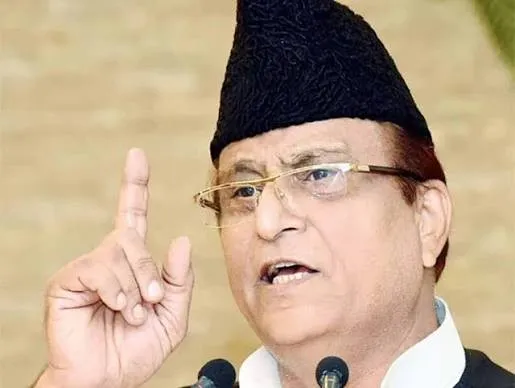
Supreme Court Transfers Azam Khan’s Bail Plea to Allahabad High Court: A Critical Legal and Political Analysis
Legal Scrutiny and Apex Court Directives on PMLA Arrests
The Interplay Between State Action, Institutional Oversight, and Electoral Timing
By Legal Reporter
New Delhi: November 06, 2026:
The legal battles surrounding veteran Samajwadi Party leader Mohammad Azam Khan took a significant turn when the Supreme Court of India declined to entertain a direct writ petition challenging his arrest, choosing instead to transfer the high-profile matter to the Allahabad High Court. The case—stemming from a fresh money laundering probe launched by the Enforcement Directorate (ED)—highlights complex questions regarding criminal procedure, the invocation of the Prevention of Money Laundering Act (PMLA), and the timing of high-stakes law enforcement actions.
As the judiciary navigates the procedural boundaries between the apex court and regional benches, the case has intensified political discourse across Uttar Pradesh amidst ongoing legislative preparations.
Background and Chronology of the Legal Proceedings
The sequence of events leading to the Supreme Court's intervention unfolded rapidly at the end of October 2026. On October 31, 2026, the 78-year-old former Uttar Pradesh minister and his son, Abdullah Azam Khan, were released from Rampur Jail after securing bail in an older dual PAN card case. However, freedom was short-lived; immediately upon stepping out of the prison gates, Azam Khan was taken into custody by the Enforcement Directorate in connection with a separate money laundering case linked to the Mohammad Ali Jauhar University Trust.
Following his arrest, Khan was produced before a special Prevention of Money Laundering Act (PMLA) court in Ghaziabad on November 1, 2026, which remanded him to 14 days of judicial custody. Challenging both the legality of the ED arrest and the subsequent judicial remand, Khan’s legal team, led by Senior Advocate Kapil Sibal, moved the Supreme Court directly.
A bench comprising Chief Justice Surya Kant and Justice Joymalya Bagchi evaluated the preliminary submissions. While acknowledging the gravity of the defence’s contentions regarding the timeline of the underlying predicate offences—some dating back to 2006 with police FIRs registered in 2019—the apex court opted against exercising its extraordinary writ jurisdiction under Article 32 to directly grant bail. Instead, the bench transferred the petition to the Allahabad High Court, directing the Chief Justice of the High Court to place the matter before a division bench with a specific instruction to consider interim release orders.
Analytical Dimensions: Jurisprudence, Prosecution, and Défense Arguments
1. The Threshold of PMLA and Predicate Offences
The core legal debate centers on how older police First Information Reports (FIRs) translate into "proceeds of crime" under the PMLA framework. The prosecution, represented by the Enforcement Directorate, maintains that its investigation uncovered systemic financial irregularities, illegal land acquisitions from farmers, and diversion of public funds toward the infrastructure of the Jauhar Trust, leading to provisional asset attachments valued in the hundreds of crores.
Conversely, the defence has strongly contested the legal nexus, questioning how decades-old disputes can be legally categorized under modern anti-money laundering provisions. Legal analysts note that the debate over what constitutes valid proceeds of crime and the retrospective application or continuity of financial offenses remains a pivotal point of contention in contemporary Indian criminal jurisprudence.
2. Allegations of Procedural Persecution and Timing
During the Supreme Court hearings, the defence raised sharp objections regarding what it termed "pure persecution". Counsel argued that executing a fresh arrest immediately upon securing bail in a preceding matter effectively nullifies the judicial relief granted by higher courts and results in continuous incarceration. Furthermore, arguments were presented touching upon the timing of the enforcement actions vis-à-vis regional political cycles in Uttar Pradesh, drawing intense scrutiny from political commentators who debate the balance between rigorous anti-corruption enforcement and the protection of personal liberty for aging political figures.
Frequently Asked Questions (FAQs)
Q1: Why did the Supreme Court refuse to hear Azam Khan’s bail plea directly?
A: The Supreme Court chose not to exercise its direct writ jurisdiction under Article 32, opting instead to direct the petitioner to the appropriate regional forum—the Allahabad High Court. The apex court requested the High Court's Chief Justice to list the matter before a division bench and explicitly urged that interim orders concerning his bail plea be addressed.
Q2: What are the specific charges against Azam Khan in this case?
A: The fresh case filed by the Enforcement Directorate is rooted in a PMLA investigation connected to the Mohammad Ali Jauhar Trust and University. The probe builds upon multiple police FIRs alleging irregularities, including forced land acquisitions and the alleged diversion of public resources and funds.
Q3: When is the next major legal hearing scheduled in this matter?
A: Pursuant to the Supreme Court's directives, the matter has been scheduled for hearing before a division bench of the Allahabad High Court.
Related articles
 Bail Research
News Snacks
The Supreme Court has granted bail to Sandip Ghosh, former principal of RG Kar Medical College, after over two years in custody due to slow trial progress. This decision highlights issues of judicial delays and the balance of rights in the legal system.
3 min read
 Bail Research
Supreme Court Mandates Written Grounds for ED Arrests Under PMLA
The Supreme Court strengthens constitutional rights by mandating the Enforcement Directorate to provide written grounds at the time of arrest under the PMLA, ensuring accountability and safeguarding liberty.
11 min read