News Snacks
This article delves into the pressing issues of undertrial prisoners in India, outlining systemic challenges and the vital role of initiatives like GNLU’s Nyay Abhigam in improving access to justice.
- By
- BailNow Research Team
- Published
- Reading time
- 4 min read
On this page
Justice Delivery and Institutional Accountability: Analyzing India’s Mounting Undertrial Crisis
Systemic Case Management and Next-Day Follow-ups are Critical to Dismantling Prison Overcrowding
Academic Initiatives like GNLU’s ‘Nyay Abhigam’ Bridge Access-to-Justice Gaps for Marginalized Inmates
By Legal Reporter
New Delhi: October 29, 2026:
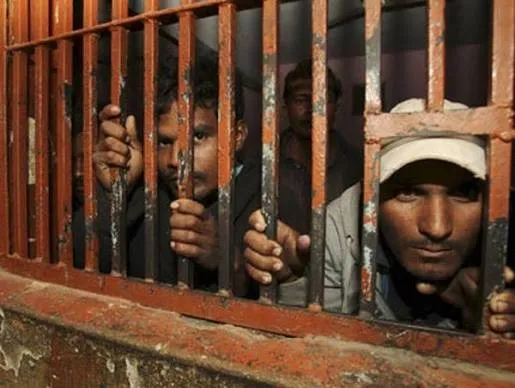
The Indian criminal justice system faces a structural dilemma marked by a swelling population of inmates awaiting trial. Addressing this challenge during the valedictory function of the Gujarat National Law University’s (GNLU) Nyay Abhigam initiative—launched with support from the Azim Premji Foundation—Bombay High Court judge Justice Advait M. Sethna underscored a vital reality: systemic case management and rigorous tracking are non-negotiable prerequisites for reform. Citing figures attributed to the National Crime Records Bureau (NCRB), Justice Sethna noted that approximately 76% of prisoners in India are undertrials, with Gujarat alone accounting for over 11,000 such detainees.
The Analytical Imperative: Why Tracking Matters
The staggering proportion of pre-trial detainees highlights an institutional lag in case disposal. Justice Sethna stressed that every judicial matter must be tracked methodically by its unique number, accompanied by follow-ups the very next day to prevent oversight, eliminate delayed judgments, and ensure timely final disposal.
When cases languish without proactive oversight, the fundamental right to a speedy trial—frequently upheld by the Supreme Court—is compromised. The consequences of this delay extend far beyond administrative inefficiency:
- Prison Overcrowding: Facilities across the nation operate well beyond sanctioned capacities, straining basic human rights, sanitation, and medical infrastructure.
- Socio-Economic Disadvantage: A vast majority of undertrials belong to marginalized or economically vulnerable sections. Lacking financial resources for legal representation or bail bonds, they remain incarcerated for offenses that might ultimately carry lesser sentences than the time already served.
- Erosion of Presumption of Innocence: Prolonged pre-trial detention effectively turns pre-trial custody into a punitive measure before guilt is legally established.
Grassroots Legal Interventions: The Role of ‘Nyay Abhigam’
Initiatives like GNLU’s Nyay Abhigam serve as vital bridges between academic institutions, civil society, and the judiciary. By focusing on enhancing access to justice for undertrial prisoners, such programs foster legal aid clinics, proactive case tracking, and paralegal support. Collaborations with philanthropic entities like the Azim Premji Foundation amplify these efforts, ensuring that marginalized detainees receive adequate representation and procedural guidance to navigate complex bail applications and statutory provisions.
Frequently Asked Questions (FAQs)
1. What percentage of prisoners in India are undertrials according to recent judicial observations?
As highlighted by Justice Advait M. Sethna referencing NCRB data, approximately 76% of all prisoners in India are undertrials, representing millions of individuals awaiting the conclusion of their trials.
2. What specific solution did Justice Sethna propose to curb delays in the justice delivery system?
Justice Sethna advocated for rigorous, systematic case management where every case is strictly tracked by its assigned number, coupled with immediate follow-ups the very next day to prevent cases from slipping through the cracks.
3. What is the objective of the GNLU ‘Nyay Abhigam’ initiative?
Supported by the Azim Premji Foundation, the Nyay Abhigam initiative launched by Gujarat National Law University aims to enhance access to justice, legal aid, and institutional support for undertrial prisoners.
4. Why are undertrial prisoner numbers a matter of serious concern?
A high proportion of undertrials leads to severe prison overcrowding, places a heavy financial and psychological burden on vulnerable communities, and undermines the constitutional principle that an accused person is presumed innocent until proven guilty.
Related articles
 Bail Basics
Supreme Court Directs Uttar Pradesh to Identify Undertrials Stuck in Jail Despite Bail Due to Financial Constraints
The Supreme Court has directed Uttar Pradesh to identify undertrial prisoners stuck in jail due to inability to meet bail conditions, addressing critical issues in the criminal justice system.
4 min read
 Bail Basics
"Bail vs. Jail": Untangling the Supreme Court’s Evolving Stance on Personal Liberty and the Crisis of Pre-Trial Detention
This article examines the Supreme Court's evolving approach to bail, addressing the themes of personal liberty and pre-trial detention under Article 21 of the Constitution of India.
7 min read