News Snacks
The Naagzilla financial scandal uncovers alleged embezzlement within Bollywood, as the Dindoshi Sessions Court denies anticipatory bail to key production executives amidst significant fiscal discrepancies.
- By
- BailNow Research Team
- Published
- Reading time
- 4 min read
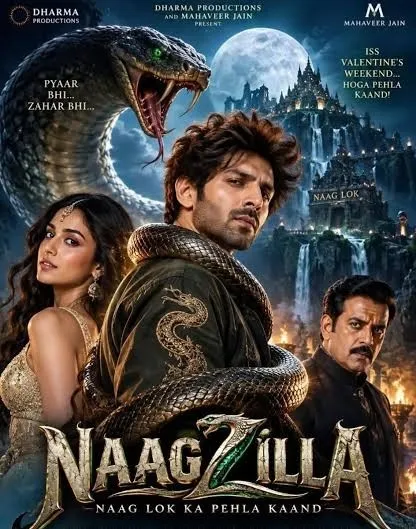
Inside the ‘Naagzilla’ Financial Scandal: Accountability and Transparency in Modern Bollywood Production
The Alleged INR 3.92 Crore Embezzlement and the Dindoshi Sessions Court Ruling
Analyzing the Structural Vulnerabilities in Big-Budget Film Financing and Management SOPs
By Legal Reporter
New Delhi: November 02, 2026:
The intersection of high-stakes commercial cinema and internal corporate governance has once again drawn intense public scrutiny. The financial controversy surrounding the high-budget upcoming feature film Naagzilla: Naag Lok Ka Pehla Kaand—co-produced by Karan Johar’s Dharma Productions and Mahaveer Jain Films, and starring Kartik Aaryan—has shifted from private corporate audits to active criminal proceedings. Following the Dindoshi Sessions Court's decision to deny anticipatory bail to three production executives, this case offers a critical lens through which to examine financial management, accountability, and systemic vulnerabilities within the Hindi film industry.
The Anatomy of the Alleged Fraud: Modus Operandi and Internal Audits
The legal battle commenced after an internal financial audit initiated by the production banners uncovered significant fiscal discrepancies. According to filings and police reports, an estimated INR 3.92 crore was siphoned off from the film’s massive INR 82.50 crore budget.
The primary subjects of the police investigation include:
- Kuldeep Singh Champawat: Financial consultant and signing authority.
- Mahipal Karan Rathore: Executive producer.
- Shivkumar Tiwari: Line producer.
Investigators outline a calculated bypass of established Standard Operating Procedures (SOPs). The accused allegedly collaborated to clear transactions amounting to nearly INR 3.93 crore without valid supporting vouchers, invoices, or original bills. The primary methods utilized included inflating external vendor invoices (such as turning an original INR 85,000 vendor quote into an inflated INR 1.30 lakh claim), routing payments to shell entities providing zero actual services to the film, and allegedly demanding illegal commissions or luxury kickbacks (such as high-end mobile phones) from vendors in exchange for project contracts.
Judicial Reasoning: Why Anticipatory Bail Was Denied
The Dindoshi Sessions Court’s refusal to grant pre-arrest protection marks a stern judicial stance against white-collar corporate malfeasance in the entertainment sector. Representing the prosecution, the investigating officer argued that custodial interrogation is vital to trace the trail of siphoned funds, recover digital assets, and prevent the potential tampering of crucial financial records.
In economic offenses of this scale, the integrity of the evidence largely depends on electronic logs, communication threads between production controllers and vendors, and banking transaction trails. The court's ruling underscores that individuals holding fiduciary responsibilities on multi-crore projects cannot expect leniency when confronted with systemic financial misappropriation.
Industry Implications: Re-evaluating Budget Oversight in Bollywood
The Naagzilla controversy highlights a broader structural challenge facing modern Bollywood production houses. As budgets scale upwards of INR 80 to 100 crores, studio reliance on decentralized line production teams, third-party consultants, and fast-paced cash-flow cycles often creates blind spots in real-time accounting.
Historically, production accounting was viewed as a secondary administrative function. However, incidents like this demonstrate that rigorous, independent auditing must be integrated at every tier of pre-production and principal photography. Major banners are now expected to overhaul their vendor onboarding processes, institute automated ERP tracking for micro-expenses, and decouple signing authorities from day-to-day cash disbursements to safeguard investor capital.
Frequently Asked Questions (FAQs)
1. What is the background of the Naagzilla financial controversy?
An internal audit revealed that approximately INR 3.92 crore was allegedly siphoned off from the budget of the film Naagzilla: Naag Lok Ka Pehla Kaand. This led to a formal police complaint and FIR against three key production personnel.
2. Who are the primary individuals accused in the case?
The accused include consultant Kuldeep Singh Champawat, executive producer Mahipal Karan Rathore, and line producer Shivkumar Tiwari. They were hired to manage finances, junior artists, and logistics for the production.
3. What specific allegations have been levelled against the accused?
Investigators state that the trio bypassed corporate SOPs to disburse funds without supporting bills. Allegations include inflating vendor invoices, channelling payments to non-functional entities, and accepting kickbacks or illegal commissions from vendors.
4. Which production banners are backing Naagzilla?
The film is a major collaboration co-produced by Karan Johar’s Dharma Productions and Mahaveer Jain Films, featuring leading actors Kartik Aaryan and Kiara Advani.
5. What was the court's verdict regarding the bail pleas?
The Dindoshi Sessions Court in Mumbai dismissed the anticipatory bail pleas filed by all three accused, accepting the prosecution’s argument that custodial interrogation is necessary due to the risk of evidence tampering.
Related articles
 Case Analysis
News Snacks
This article analyzes the Calcutta High Court's denial of anticipatory bail for Indranil Sen in the Durga Puja ticket scam, highlighting cultural exploitation and legal ramifications.
5 min read
 Case Analysis
'You Were Never in Jail': Kerala High Court's Scathing Probe Order Into Ex-Top Cop Tomin Thachankary's Hospital Stay
Kerala High Court scrutinizes former DGP Tomin Thachankary's hospitalisation during custody, questioning elite privileges and bail conditions in a landmark case.
4 min read