News Snacks
The Rajasthan High Court is investigating fraudulent bail orders amid serious concerns over digital security vulnerabilities in judicial systems.
- By
- BailNow Research Team
- Published
- Reading time
- 4 min read
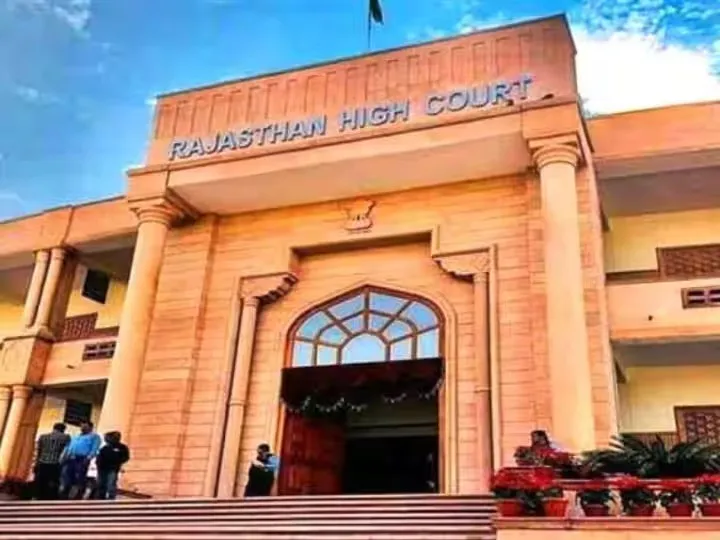
Security Breach at Rajasthan High Court: Fake Bail Orders Surface Online, Triggering High-Level Judicial Inquiry
Digital Vulnerabilities Exposed as Fabricated NDPS Bail Orders Slip Past Portals
Legal Experts Call for Immediate Cyber Audit of Judiciary Systems Across India
By Legal Reporter
New Delhi: November 04, 2026:
The Rajasthan High Court administration has launched a rigorous high-level inquiry after two fraudulent judicial orders granting regular bail to an accused in a major narcotics case surfaced directly on its official website. The incident has brought digital security vulnerabilities within judicial tech infrastructure under intense scrutiny, raising alarming questions regarding authentication protocols and document tampering within India's court portals.
Anatomy of the Breach: Chronology and Discrepancies
The controversy centers around Kalvindra Singh Panesar, a 53-year-old resident of Punjab who was arrested in the Sri Ganganagar district following the alleged seizure of 8.061 kilograms of opium. The case was formally registered under stringent provisions of the Narcotic Drugs and Psychotropic Substances (NDPS) Act at the Rajiyasar police station.
According to case files, Panesar had initially secured a 30-day interim bail on medical grounds. However, complications arose after the interim period expired. Advocate Kailash Khilery, who represented the accused during the initial proceedings, noted that he chose not to press a subsequent regular bail application after his client failed to surrender. Consequently, the family obtained a no-objection certificate (NOC) and took custody of the case files, while Panesar remained absconding.
Despite the lack of active legal pursuit from counsel, two contradictory orders appeared on the official high court website:
- The October 15 Order: Bore registration number 18,756 and stated that the regular bail application was disposed of as 'not pressed'.
- The October 26 Order: Bore registration number 15,786, explicitly stating that Panesar’s regular bail application was allowed and his interim bail converted to regular bail. This order was attributed to a single bench headed by Justice Chandra Shekhar Sharma.
Red Flags and Institutional Response
The authenticity of these documents quickly unravelled under basic scrutiny from legal professionals and court staff. Advocate Khilery flagged suspicious elements after being informed by local counsel about the purported relief. Crucially, on the date of the October 26 order, Justice Sharma was presiding over a division bench rather than a single bench, meaning no single-bench cause list for such matters existed.
Further administrative checks exposed glaring technical inconsistencies:
- Registration Number Discrepancies: Court records revealed that criminal bail application numbers for the year had only reached 15,047 by Tuesday evening, making the numbers 15,786 and 18,756 mathematically and procedurally impossible.
- Prosecution Anomalies: Additional Advocate General Deepak Chaudhary pointed out that the public prosecutor named in the order, A. Sharma, was not currently serving in that capacity at the high court.
Registrar (Judicial) Narendra Kumar confirmed that a formal inquiry has been initiated by the judicial branch to investigate how fabricated files bypassed security filters and populated the official portal. Detailed comments and systemic fixes are expected following the conclusion of the probe.
Frequently Asked Questions (FAQs)
Q1: What triggered the inquiry by the Rajasthan High Court? A: The inquiry was launched after two suspicious and contradictory judicial orders granting regular bail to an NDPS accused (Kalvindra Singh Panesar) appeared on the court’s official website, despite the accused being absconding and legal counsel not pressing the application.
Q2: What specific legal discrepancies were identified in the uploaded orders? A: Key red flags included impossible registration numbers (e.g., numbers exceeding the actual tally of filed bail applications for the year), attribution of the order to a judge sitting on a division bench rather than a single bench, and the naming of a public prosecutor not currently holding office.
Q3: Which laws were involved in the primary case against the accused? A: The accused, Kalvindra Singh Panesar, was booked under Sections 8/18, 25, and 29 of the Narcotic Drugs and Psychotropic Substances (NDPS) Act following the seizure of over 8 kilograms of opium.
Q4: What actions are being taken by the court administration? A: The high court administration, led by Registrar (Judicial) Narendra Kumar, has demanded a comprehensive report from its judicial branch to trace how the unverified documents were uploaded, pointing toward a wider security and procedural review of digital portal management.
Related articles
 Bail Research
CBI Opposes Defence CEO Ashish Kansal’s Bail in ₹500 Crore Ammunition Deal Bribery Case
The CBI court has denied bail to Ashish Kansal, CEO of SMPP Limited, in a major ₹500-crore defence bribery case, emphasizing the serious implications for national security.
6 min read
 Bail Research
News Snacks
This article discusses a case where local bar boycotts prevented the execution of a Supreme Court bail order, highlighting the ramifications for justice and individual rights.
4 min read