News Snacks
The Delhi High Court has denied bail to Habib Ur Rahman, accused of military espionage, citing national security concerns while balancing pre-trial rights.
- By
- BailNow Research Team
- Published
- Reading time
- 5 min read
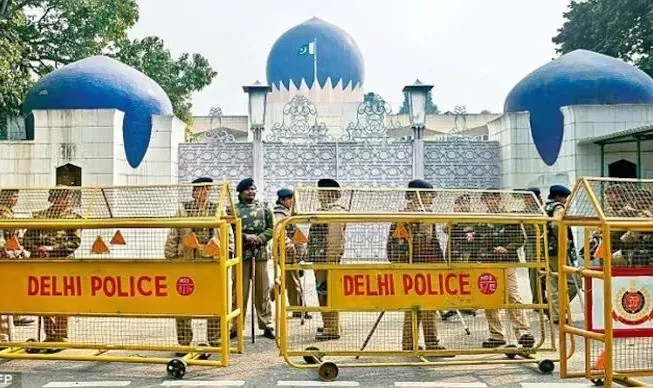
Delhi High Court Denies Bail to Accused in Military Espionage Case: Balancing National Security with Pre-Trial Rights
Navigating the Thin Line Between State Sovereignty and Personal Liberty Under the Official Secrets Act
Judicial Scrutiny Intensifies as Courts Weigh the Gravity of Classified Intelligence Leaks Against Prolonged Incarceration
By Legal Reporter
New Delhi: October 23,2026:
The modern legal landscape in constitutional democracies often grapples with a formidable tension: safeguarding national security while upholding the fundamental rights of individuals under trial. This delicate balancing act was brought to the forefront when the Delhi High Court delivered a significant ruling in the case of Habib Ur Rahman v. State Through SHO, PS Special Cell, Delhi.
Justice Sanjeev Narula dismissed the regular bail application filed by Habib Ur Rahman, who was arrested in July 2021. Rahman stands accused of procuring sensitive, classified military intelligence and facilitating its transmission to an official at the Pakistan High Commission. This analytical news article examines the legal reasoning, the broader implications for national security jurisprudence, and the judicial stance on pre-trial detention under the Official Secrets Act, 1923.
The Core Allegations and Prosecution Case
According to the prosecution, the criminal conspiracy involved a multi-layered network. The primary allegations map out a coordinated effort to compromise India's strategic defence infrastructure:
- The Intermediary Role: Habib Ur Rahman allegedly functioned as a key conduit, bridging domestic military sources and foreign intelligence handlers.
- The Source: Co-accused Naik Clerk Paramjeet Kumar was reportedly identified as the source within the military apparatus who leaked restricted documents.
- The Foreign Recipient: The documents were allegedly funnelled toward Rana Muhammad Qasim Zia, designated as an official at the Pakistan High Commission.
- Compromised Military Intelligence: The recovered documentation purportedly included manuals on military training, the operationalization guidelines of the Armed Forces Special Operations Division (AFSOD), strategic intelligence dossiers, and other confidential records verified as genuine by Army authorities.
The state's case extended beyond simple disclosure statements or initial recoveries. Investigators compiled a robust evidentiary trail incorporating corroborated financial transaction trails, telephone subscriber details, and incriminating statements from Rahman’s own employee, Mohd. Arif, who allegedly hand-delivered documents directly to the Pakistan High Commission based on his employer's explicit instructions.
Analytical Legal Dimensions: National Security vs. Personal Liberty
1. Rejection of Statutory Label as an Absolute Bar
A central analytical takeaway from Justice Narula’s judgment is the nuanced handling of national security offenses. The Court explicitly clarified that cases involving the sovereignty and integrity of the nation do not automatically oust judicial scrutiny or preclude the consideration of bail. The gravity of an offense under the Official Secrets Act or the anticipation of a severe sentence cannot independently dictate whether liberty should be denied. Instead, the judiciary must evaluate the weight of the material presented on a case-by-case basis.
2. Deferring Evidentiary Weight to Trial
Counsel for the defence robustly argued that the documents were already safely secured in judicial custody, drastically minimizing any threat of evidence tampering. Furthermore, the defence emphasized the prolonged duration of incarceration—exceeding three years—with only a fraction of prosecution witnesses examined.
However, the High Court held that conducting a granular, conclusive evaluation of the evidentiary value or admissibility of individual circumstances at the bail stage would amount to a premature trial. The prima facie record compiled by the investigative agencies outweighed the arguments regarding time spent behind bars.
3. Medical Grounds and Institutional Care
The defence also sought relief on medical grounds, noting that Rahman is wheelchair-dependent and manages multiple chronic ailments. While acknowledging these health challenges, the Court reviewed a comprehensive medical evaluation report compiled by a specially constituted medical board at the All India Institute of Medical Sciences (AIIMS). The findings indicated that while the applicant required regular medical care, his conditions were treatable within custodial frameworks and did not present an absolute medical incompatibility with detention.
To balance human rights with judicial mandates, the High Court issued specific directions to the Jail Superintendent to ensure uninterrupted access to physiotherapy, specialist consultations, and prescribed treatments, utilizing external government hospitals whenever necessary.
Frequently Asked Questions (FAQs)
What are the main charges against Habib Ur Rahman?
Habib Ur Rahman has been charged under the Official Secrets Act, 1923, alongside various provisions of the Indian Penal Code. He is accused of procuring classified military documents—including files related to the Armed Forces Special Operations Division (AFSOD)—and transmitting them to an official at the Pakistan High Commission.
Why did the Delhi High Court deny bail despite the applicant spending over three years in custody?
While acknowledging that prolonged pre-trial detention is a critical factor, the High Court ruled that the prima facie gravity and sensitivity of the material presented by the prosecution outweighed the time spent in custody. The state produced substantial corroborative material, including financial transaction records, call logs, and employee testimonies, which warranted continued judicial scrutiny.
What did the Court decide regarding the accused's medical condition?
The Court examined a detailed assessment report from a medical board constituted by AIIMS. It found that although Rahman is wheelchair-dependent and suffers from multiple ailments, his medical needs can be adequately managed while in custody. Consequently, the Court did not grant regular bail on medical grounds, but explicitly directed prison authorities to provide timely specialist consultations, physiotherapy, and comprehensive hospital care.
Does the denial of bail mean the accused is proven guilty?
No. The Delhi High Court explicitly clarified that the denial of regular bail does not constitute a determination of guilt. All allegations and evidence presented by the prosecution must still undergo full testing and establish themselves during the course of the ongoing trial.
Related articles
 Bail Research
CBI Opposes Defence CEO Ashish Kansal’s Bail in ₹500 Crore Ammunition Deal Bribery Case
The CBI court has denied bail to Ashish Kansal, CEO of SMPP Limited, in a major ₹500-crore defence bribery case, emphasizing the serious implications for national security.
6 min read
 Bail Research
News Snacks
The Supreme Court of India transfers Mohammad Azam Khan's bail plea to the Allahabad High Court, spotlighting critical legal debates surrounding the PMLA and political implications in Uttar Pradesh.
5 min read