News Snacks
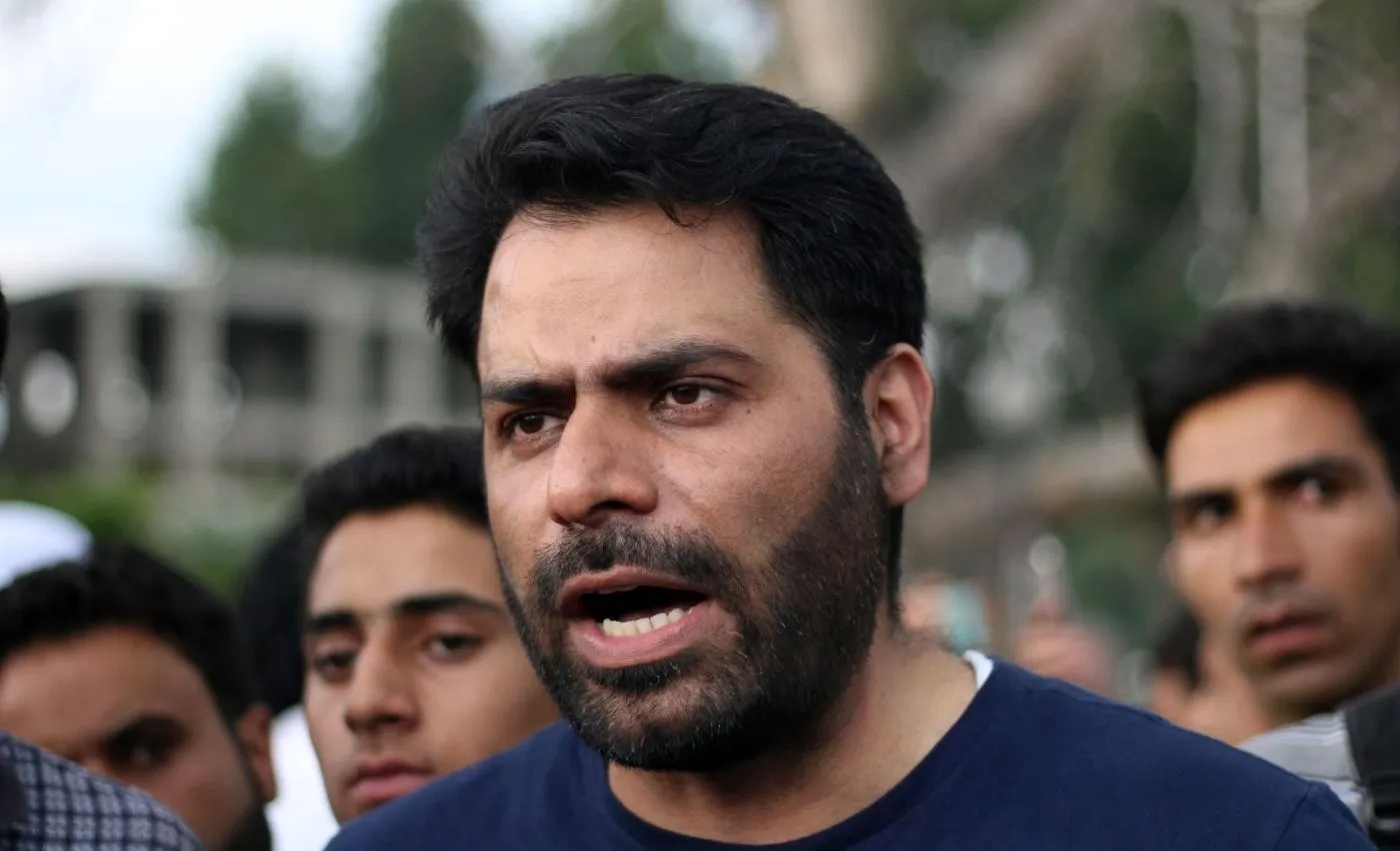
The Supreme Court upheld bail for Kashmiri activist Khurram Parvez, emphasizing the right to a speedy trial and the limitations of UAPA's stringent bail conditions.
- By
- BailNow Research Team
- Published
- Reading time
- 5 min read
On this page
Balancing Liberty and National Security: Supreme Court Upholds Bail for Kashmiri Rights Activist Khurram Parvez in UAPA Case
The Apex Court refused to interfere with the Delhi High Court's relief order, emphasizing that prolonged pre-trial incarceration under stringent anti-terror laws tests the outer limits of fundamental constitutional protections.
Legal analysts view the ruling as a significant judicial reaffirmation that statutory bars under the Unlawful Activities (Prevention) Act cannot perpetually override the right to a speedy trial under Article 21.
By Legal Reporter
New Delhi: October 31, 2026:
In a notable legal development, the Supreme Court of India dismissed a special leave petition filed by the National Investigation Agency (NIA), effectively upholding the bail granted to prominent Kashmiri human rights activist Khurram Parvez. The bench, comprising Justices MM Sundresh and PB Varale, declined to interfere with the Delhi High Court’s earlier judgment, bringing temporary legal closure to a high-profile detention that has drawn intense national and international scrutiny over the past half-decade.
Background of the Case and Allegations
Khurram Parvez, who serves as the program coordinator for the Jammu and Kashmir Coalition of Civil Society (JKCCS), was arrested by the NIA on November 22, 2021. The anti-terror agency alleged that Parvez was deeply embedded in a larger conspiracy orchestrated by the proscribed terrorist organization Lashkar-e-Taiba (LeT).
According to the prosecution, the network operated through a web of overground workers tasked with terror funding, recruiting operatives, and collecting sensitive intelligence regarding security forces and military installations. Investigators also claimed that Parvez played a role in mobilizing protests following the killing of militant commander Burhan Wani in 2016. For years, the prosecution maintained that the severity of these charges warranted continuous detention under stringent statutory provisions.
Judicial Scrutiny: Section 43D(5) vs. Article 21
The core legal friction in the case centered around the interplay between the stringent bail restrictions outlined in Section 43D (5) of the Unlawful Activities (Prevention) Act (UAPA) and the fundamental right to life and personal liberty guaranteed under Article 21 of the Constitution of India.
Under Section 43D (5) of the UAPA, a court is statutorily barred from releasing an accused person on bail if, after perusing the case diary or chargesheet, it is of the opinion that there are reasonable grounds for believing that the accusations are prima facie true. This reverse-onus provision makes securing bail in terror-related cases exceptionally difficult. Consequently, a trial court had rejected Parvez’s bail application in December 2024, holding that the allegations appeared prima facie true at that stage.
However, the legal landscape shifted when the Delhi High Court reviewed the matter. The High Court noted that Parvez had already spent nearly four-and-a-half years behind bars as an undertrial, with virtually no prospect of the trial concluding in the near future. Relying on progressive constitutional jurisprudence, the High Court held that prolonged incarceration erodes the statutory presumption of innocence and that an individual's right to a speedy trial under Article 21 can ultimately outweigh the statutory bars to bail under the UAPA.
By dismissing the NIA's challenge, the Supreme Court has allowed the Delhi High Court's conditional bail order to stand, reinforcing the principle that the state cannot keep individuals indefinitely incarcerated under the garb of preventive or pre-trial detention when trials are unduly delayed.
Frequently Asked Questions (FAQs)
1. Who is Khurram Parvez and why was he arrested?
Khurram Parvez is a prominent Kashmiri human rights activist and coordinator of the Jammu and Kashmir Coalition of Civil Society (JKCCS). He was arrested by the National Investigation Agency (NIA) in November 2021 under various provisions of the UAPA, with investigators alleging involvement in terror funding, recruitment for the Lashkar-e-Taiba, and collecting sensitive security information.
2. What was the Supreme Court's ruling on October 30, 2026?
A Supreme Court bench comprising Justices MM Sundresh and PB Varale dismissed the NIA's appeal challenging the Delhi High Court's order. By refusing to interfere with the verdict, the apex court effectively upheld the grant of bail to Parvez, subject to the conditions imposed by the High Court.
3. How does the UAPA complicate securing bail?
Section 43D (5) of the UAPA places severe restrictions on granting bail if the court believes the accusations against the accused are prima facie true. This places a heavy burden on the defence to disprove the state's initial allegations before a trial even commences.
4. Did the Supreme Court acquit Khurram Parvez of the charges?
No. The Supreme Court's decision is strictly restricted to the question of pre-trial bail. It does not constitute an evaluation or a finding on the merits of the substantive criminal charges. The trial against Parvez will continue, and the prosecution must still prove its case beyond a reasonable doubt in court.
Related articles
 UAPA Bail
News Snacks
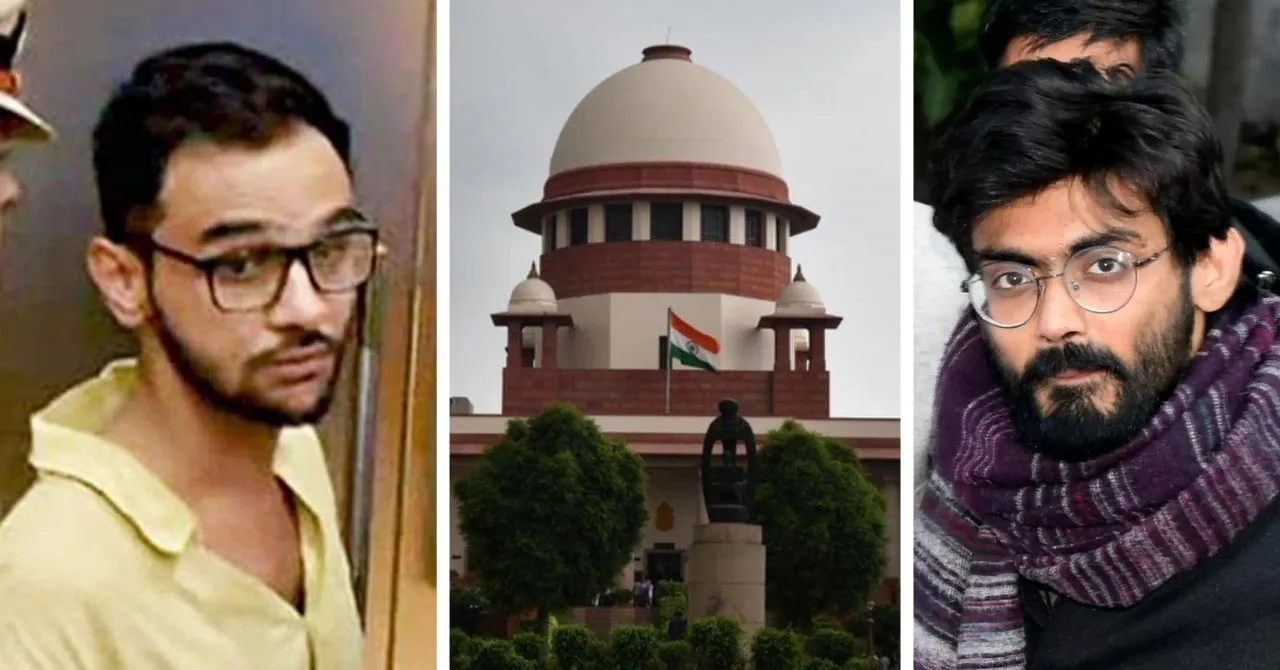
Umar Khalid and Sharjeel Imam have approached the Supreme Court challenging the Delhi High Court's refusal of their bail pleas in the northeastern Delhi riots case. Their prolonged imprisonment brings significant legal questions into focus, particularly concerning their rights as undertrials under UAPA.
4 min read
 UAPA Bail
Supreme Court Pulls Up Bihar Police and Gaya Court Over 14-Month Detention Without Production of UAPA Accused
The Supreme Court intervened in a case involving a UAPA accused detained for 14 months without production in court, demanding accountability from Bihar Police. The court granted interim bail pending further hearings.
6 min read